









From Boardrooms to Blackboards: The Unlikely Calling of a Storyteller
For many, the classroom is a destination they spend years trying to escape. For Mumbai-based writer and educator Sonya Dutta Choudhury, it was a path she consciously avoided for the better part of her professional life. Driven by the allure of corporate success, she initially pursued a path in banking and the marketing of luxury tableware, viewing teaching as a field lacking both the glamour and financial security she craved.
Yet, life often pivots on the most domestic of challenges. When her family expanded and financial pressures mounted, Choudhury began tutoring her own daughters in mathematics. What started as a kitchen-table exercise in fractions and multiplication tables soon expanded into the neighborhood. Soon, “Maths Cats” and “Reading Cats” were born—small-scale initiatives that required deep pedagogical preparation and infectious enthusiasm.
The Turning Point
The transition from a reluctant tutor to a dedicated educator did not happen overnight. After a brief foray into private teaching, Choudhury stepped away, convinced that scaling a business was not where her heart lay. She drifted back into the fast-paced world of journalism and corporate consulting, leaving the chalkboard behind.
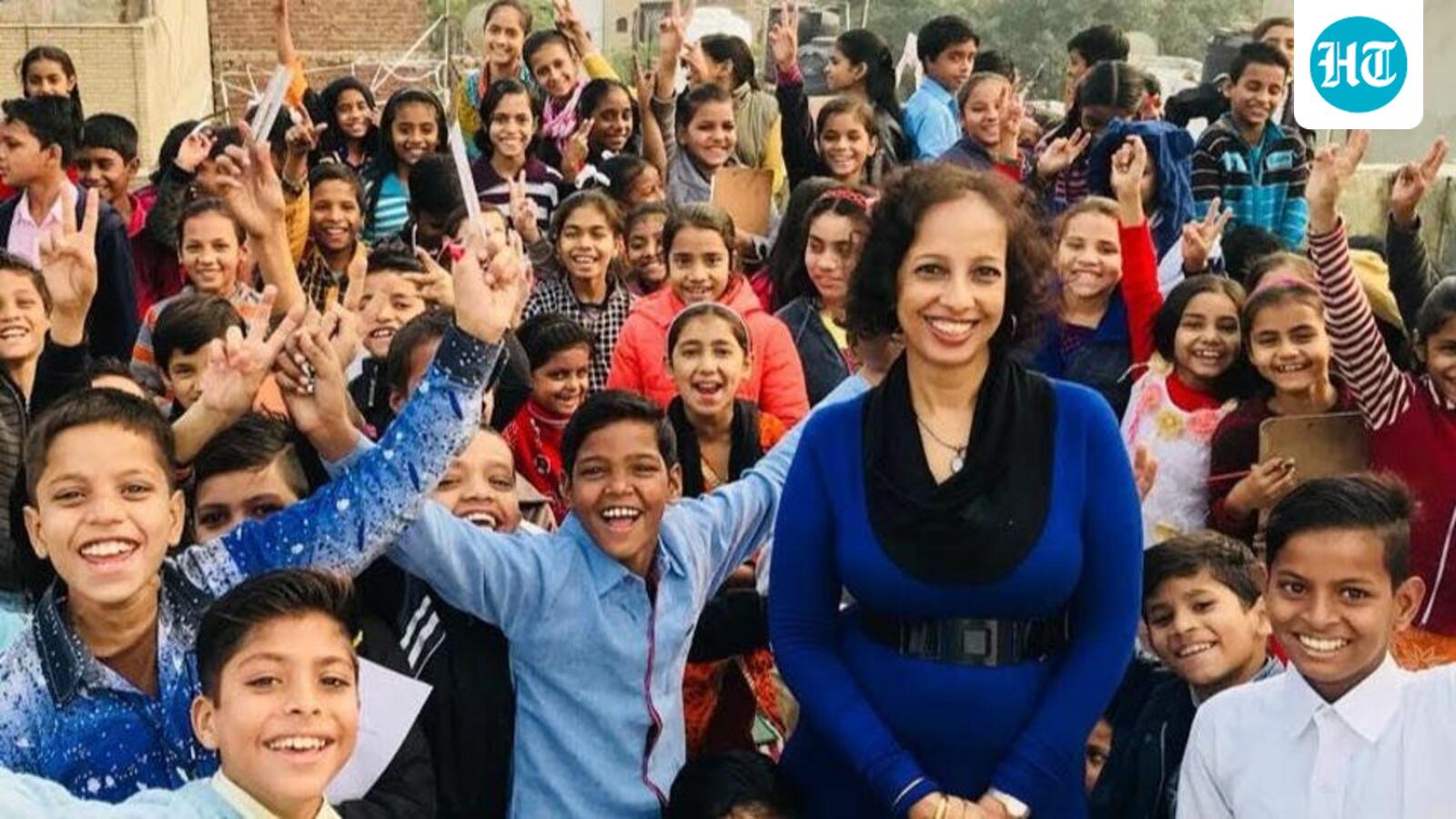
It was not until she began conducting school outreach programs for the Jaipur Literature Festival that the realization hit home. Whether she was addressing students at a prestigious private institution in Jaipur or a municipal school in Delhi’s Jahangirpuri, the energy of the classroom proved magnetic. Guided by the intellectual rigor of Azar Nafisi’s Reading Lolita in Tehran, Choudhury began to see the classroom as more than a place of rote learning—it became a sanctuary for imagination, critical thinking, and the transformative power of narrative.
The New Mandate: Storytelling as a Skill
Today, Choudhury has fully embraced her role as a teacher, specifically focusing on the art of Storytelling in Business and Persuasive Communication. She has moved away from the corporate ladder to focus on the human side of professional success. Her classes at institutions like Ashoka University and St. Xavier’s College, Mumbai, are anchored in the belief that the ability to articulate one’s journey is as vital to a career as a technical degree.
“I find myself thinking of the mentors who rewired how I saw the world,” Choudhury notes, reflecting on her own influences, such as her convent school teacher, Nargis, and IIM Calcutta professor Indivar Kamtekar. These figures, who could turn dry historical dates into compelling epics, provided the blueprint for her current teaching philosophy.
While the financial rewards of teaching rarely rival those of her former corporate roles, the emotional dividends are far higher. She maintains that the true measure of her work arrives in the form of handwritten notes and digital messages from students. These correspondences, thanking her for building their confidence or rekindling a dormant love for reading, serve as the ultimate validation of her career shift.
As Teacher’s Day approaches, Choudhury poses a quiet, universal challenge to her readers: to look back at the mentors who shaped their own trajectories. In a world increasingly obsessed with data and efficiency, she reminds us that the simple, human connection between a teacher and a student remains one of the most powerful catalysts for change.
Disclaimer: This content is auto-generated and paraphrased.
Source: Read Original News