




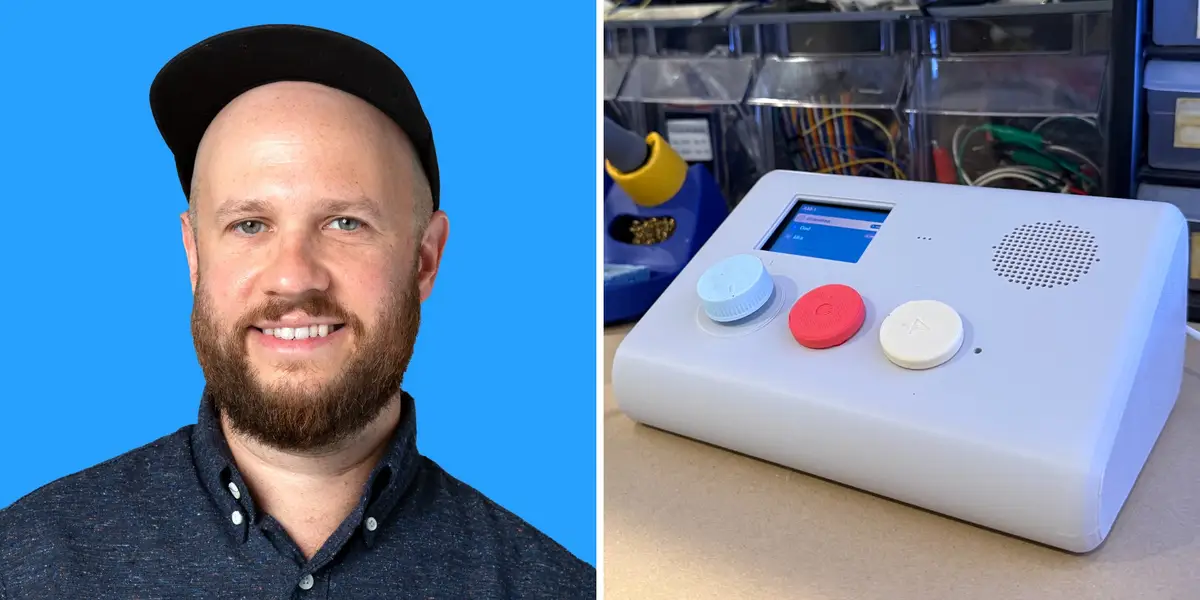
From bespoke car parts to 3D-printed human organs, a new wave of hobbyists is bypassing the steep learning curve of professional engineering by embracing a practice they call “vibe manufacturing.” Much like “vibe coding”—the growing trend of using AI to generate software through natural language—this approach uses advanced AI models to translate human concepts into tangible, physical objects.
### The Rise of Vibe Manufacturing
The trend centers on the ability of sophisticated large language models, such as OpenAI’s GPT-6 Astra, to act as both a design consultant and a project manager. Enthusiasts describe a process where they describe a need in plain English, and the AI handles the technical heavy lifting: creating CAD (computer-aided design) files, formatting them for specific manufacturers, and even navigating complex ordering forms on third-party fabrication websites.
For Jeff Deehan, a real estate developer and tinkerer based in East Lansing, the technology has bridged the gap between thought and reality. Recently, he required a custom steel mount to secure a camper to his truck. By simply speaking his requirements into his device, he prompted GPT-6 Astra to prototype the design. Within minutes, the AI had exported a DXF file, uploaded it to a custom metal-fabrication service, and processed the payment. Ten days later, the part arrived at his door, perfectly calibrated for the job.
### From Text-to-CAD to Robotics
While the initial hype surrounding AI was limited to writing emails or generating images, the push into physical hardware is gaining momentum. Open-source communities are rapidly developing “text-to-CAD” tools, with some repositories on GitHub already drawing tens of thousands of stars.
Design engineers are finding that these tools allow them to rapidly iterate on complex projects that would have previously required weeks of manual drafting. Jake Fitzgerald, an enthusiast building open-source robotics, successfully prototyped a functional, camera-equipped robot arm using AI-generated designs. While early experiments in this space were plagued by “compounding failures”—where the AI would incorporate design flaws into subsequent iterations—newer models have significantly improved in structural accuracy and logic.
### Bridging the Professional Gap
The implications for professional CAD engineering are sparking debate. Sourish Sharma, a 20-year-old student who used AI to convert medical MRI data into a 3D-printed model of his own brain, suggests that the barrier to entry has never been lower. “AI literally does replace CAD engineering completely,” Sharma noted, highlighting that the technology allows non-experts to produce high-precision outputs that once required years of formal training.
However, the technology remains in its infancy regarding large-scale manufacturing. While experts agree that “vibe manufacturing” is ideal for hobbyists and bespoke projects, it is not yet a replacement for traditional industrial engineering when it comes to complex or mass-produced machinery.
For many, the current value lies in the speed of iteration. David Plakon, an Austin-based tinkerer, has used AI to iterate on a custom voice-box design for his children nearly 15 times. By feeding design constraints into the chatbot, he is able to refine his prototype with every print. For these creators, the thrill is in the process—the ability to turn a casual idea into a functional piece of hardware before the day is out.
Disclaimer: This content is auto-generated for informational purposes only.
Source: Read Original News