








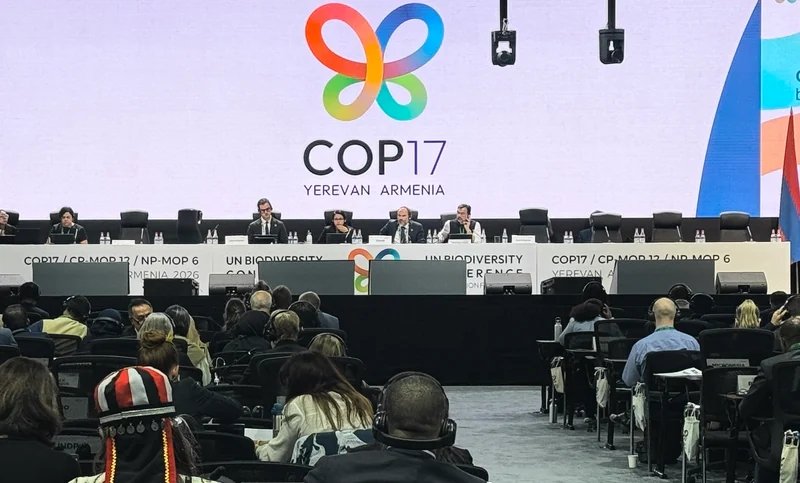
As the global community convened in Yerevan, Armenia, for the UN Biodiversity Conference (COP17), the spotlight turned toward the urgent implementation of the Kunming-Montreal Global Biodiversity Framework. Among the international delegations, Nordic ministers played a central role, advocating for a robust, science-based approach to halting nature loss while emphasizing the critical necessity of multilateral cooperation in an increasingly fractured geopolitical landscape.
For the Nordic countries—Denmark, Finland, Iceland, Norway, and Sweden—the agenda in Armenia was defined by three core pillars: the safeguarding of indigenous rights, the mobilization of financial resources, and the preservation of international environmental governance. As countries strive to meet the “30 by 30” goal—protecting 30% of the Earth’s land and sea by 2030—the Nordic delegation underscored that these targets cannot be achieved without the full, equitable participation of those who have historically stewarded the world’s most biodiverse regions.
“Biodiversity loss is not a national issue; it is a systemic failure that requires a unified, global response,” a representative from the Nordic delegation noted during the summit. “Our commitment to multilateralism is not merely diplomatic posturing—it is a functional necessity for planetary survival.”
A significant portion of the negotiations centered on the mechanisms for resource mobilization. With a substantial funding gap remaining to support biodiversity conservation in developing nations, the Nordic states pushed for transparent, scalable, and effective financial frameworks. They emphasized that public funding must act as a catalyst for private investment, ensuring that capital flows into nature-positive initiatives rather than activities that continue to degrade ecosystems. By prioritizing “nature-positive” economic policies, the Nordic ministers argued that biodiversity protection could be integrated into mainstream fiscal planning, rather than treated as a peripheral environmental concern.
Central to the Nordic position was the advocacy for indigenous peoples and local communities. Recognizing that indigenous territories encompass a significant percentage of the world’s remaining intact ecosystems, the ministers argued that environmental policy must move beyond consultation to active partnership. The delegation supported provisions that acknowledge indigenous knowledge systems as equivalent to Western scientific methodologies in conservation planning. By advocating for land-tenure security and the protection of environmental defenders, the Nordic countries aimed to ensure that the Global Biodiversity Framework respects human rights as a foundational element of its ecological success.
The backdrop of COP17 in Armenia served as a stark reminder of the challenges inherent in transboundary conservation. Amidst ongoing global tensions, the Nordic delegation maintained a consistent stance that environmental diplomacy must remain insulated from broader political disputes. By championing multilateral cooperation, they sought to reinforce the authority of the UN process, arguing that the collapse of international environmental agreements would inevitably lead to accelerated ecological degradation that respects no national borders.
As the conference proceedings progressed, the Nordic focus on accountability remained high. The delegation pushed for more rigorous monitoring and reporting mechanisms, arguing that ambitious targets are meaningless without the data to verify progress. By calling for improved transparency in how nations report their contributions to the Global Biodiversity Framework, the Nordic countries sought to ensure that COP17 marks a transition from abstract commitments to concrete, measurable action.
As the summit concluded, the Nordic influence was evident in the emphasis on a rights-based approach to conservation. By linking the survival of biodiversity directly to the empowerment of indigenous populations and the stability of multilateral institutions, the Nordic ministers helped set a clear trajectory for the coming years. While the gap between policy ambition and on-the-ground reality remains wide, the collaborative efforts in Yerevan highlighted that the path toward global nature recovery must be built on the twin foundations of equity and international trust.
Disclaimer: This content is auto-generated for informational purposes only.
Source: Read Original News