








Environmental Nuances Drive Developmental Adaptability in Reef Fish, New Study Reveals
OKINAWA, JAPAN – [Insert Date Here]
A groundbreaking multi-year study, published recently in Science Advances, sheds critical light on the intricate mechanistic link between environmental variation and developmental adaptability. Led by researchers from the International Research Laboratory 2028 (IRL EARLY), a joint venture between the Okinawa Institute of Science and Technology (OIST) and CNRS, and in collaboration with Dr. David Lecchini, an ecologist at CRIOBE in Moorea, the research utilized a common reef fish to explore how environmental disparities influence thyroid hormone signaling – a process fundamental to developmental regulation.
Through a sophisticated combination of transcriptomics, metabolomics, and other physiological analytical approaches, the team uncovered how the development of these fish dramatically shifts across diverse ecosystems.
“It’s surprising to see just how responsive development can be to the immediate environment, not just on evolutionary timescales but within an individual’s lifetime,” stated first author Dr. Marcela Herrera of OIST’s Marine-Eco-Evo-Devo Unit, which spearheaded this investigation. “We found that environment and development are far more tightly coupled than we assume, which raises the question of how much flexibility this gives animals when their environments change. This is especially important for animals threatened by climate change or habitat degradation.”
One Island, Many Ecosystems
The study focused on the waters surrounding Moorea Island, French Polynesia, where a mere few kilometers along the coastline host vastly different local ecosystems. From the dynamic mangrove forests at river mouths, characterized by fluctuating water levels, salinity, and low dissolved oxygen due to warm, murky waters, to the more stable rocky reefs and sandy beaches further along the coast, a mosaic of habitats exists. The mangrove’s tangled roots, despite challenging conditions, provide vital shelter for juvenile fish, while beach rocks offer crevices and sandy beaches cater to strong swimmers.
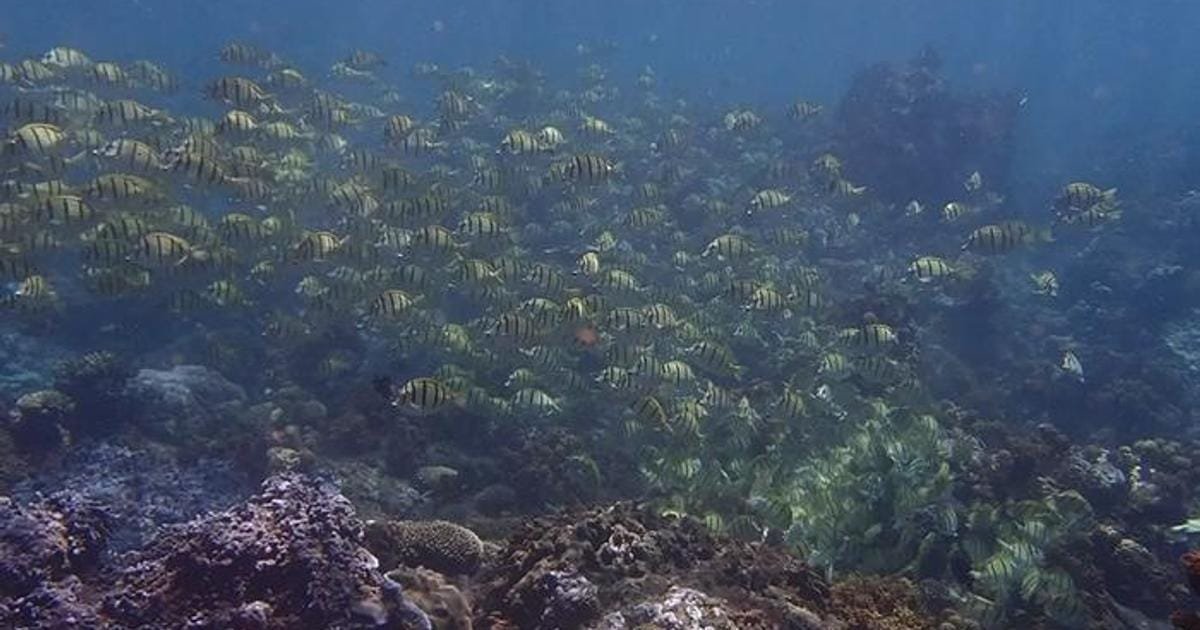
Remarkably, some species, such as the convict surgeonfish (Acanthurus triostegus), thrive across these contrasting environments. These fish begin life in the open ocean, migrating to these coastal nurseries where they undergo profound physical transformations to become juvenile fish. “This transition from open ocean to coastal nurseries is a dramatic and stressful shift: during the first day entering the reef, 90% of the juveniles are eaten by predators. Those who survive typically lose 20% of their weight during their first week. It is a real challenge for them,” highlighted Professor Vincent Laudet, Head of the Marine-Eco-Evo-Devo Unit and lead researcher.
Investigating Development: A Systems-Level Approach
To unravel the environment’s influence, researchers meticulously profiled fish biology across this critical transition. Previous observations had already suggested habitat-specific development, with mangrove fish, for example, exhibiting slower growth and darker pigmentation. The team sought to determine if these visible differences were mirrored at the level of gene expression and hormone signaling.
Studying both wild and lab-reared fish, measurements were taken over the first eight days of metamorphosis. They identified distinct genes expressed at various timepoints, including those responsible for thyroid hormone synthesis and genes controlled by thyroid hormones, such as those involved in pigmentation changes. Shifts in gene expression related to energy metabolism were also noted, indicating a switch from aerobic to anaerobic energy production.
“You could think of this as a change from endurance cardio to high-intensity intervals. As these fish move from the open ocean to coastal habitats, they shift from a metabolism built for sustained, long-distance swimming to one that can fuel the rapid rebuilding of their body for life on the reef,” Dr. Herrera explained.
Further experiments involved raising fish in temporary enclosures within mangrove, beach rock, and sandy beach environments. The results unequivocally demonstrated a distinct impact of habitat on development. Thyroid hormone levels varied significantly across habitats, as did the expression of genes within thyroid hormone pathways. Metabolic profiles also differed, with sandy beach fish exhibiting patterns consistent with higher energy expenditure. “In sandy beaches, resources are generally less abundant, so fish may have to exert more energy to find food or swim away from predators. Beach rock and mangrove ecosystems offer more protection and resources,” reasoned Herrera.
Given that thyroid hormones are known to regulate gene expression, particularly for key developmental processes and energy metabolism, the analyses collectively revealed that varying ecological contexts led to dramatically different thyroid hormone signaling, ultimately producing habitat-specific developmental outcomes.
“While biologists have long accepted that genes and environment both shape development, this study helps to answer a long-running question around how the two actually communicate,” concluded Laudet. “Thyroid hormones essentially act as a biological interface between the environment and development. They integrate environmental information to enable developing organisms to adjust their physiology and metabolism to local conditions.”