







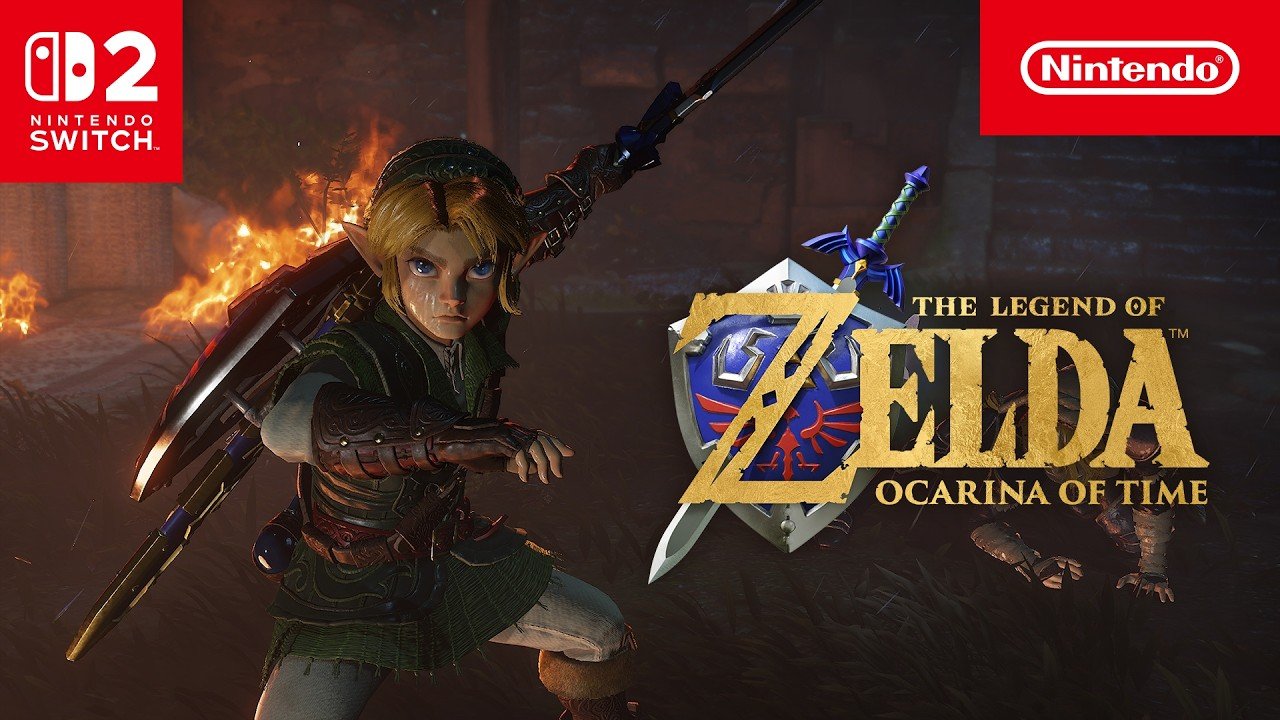
Redefining Classic Navigation and Interface
The upcoming remake of The Legend of Zelda: Ocarina of Time for the Nintendo Switch 2 marks a significant departure from the static user interfaces that defined the original 1998 title. Modern hardware capabilities allow for a dynamic heads-up display (HUD), giving players granular control over the information presented during gameplay. By introducing three distinct display modes—Standard, Pro, and Master—the developers are acknowledging the varying requirements of both returning veterans and newcomers to the series.
The Standard mode serves as the baseline, providing the complete array of status bars, mini-map indicators, and contextual prompts. The Pro mode filters this information, stripping away non-essential elements to prioritize screen real estate and visual fidelity. Finally, the Master mode offers a completely clean interface, removing all HUD elements. This addition is particularly relevant for high-level players who rely on spatial awareness and internal game logic rather than visual cues, pushing the title toward a more challenging and cinematic playstyle.
Refining Mechanical Precision
A core component of the Ocarina of Time experience has always been the Z-targeting system, which revolutionized how 3D action titles handled combat and camera focus. In the Switch 2 remake, the developers have implemented a toggle-based configuration that offers improved accessibility for different types of motor coordination. Users can choose between a Hold configuration, which requires continuous pressure on the ZL button to maintain a focus on an enemy, or a Toggle configuration, which functions as a binary switch.
This flexibility allows for greater control over complex encounters where sustained button pressure might lead to input fatigue. By separating the targeting mechanics from the standard input architecture, the remake ensures that players can customize their control scheme to match their preferred tactile style. This shift is part of a broader trend in current software development to provide users with deeper input remapping capabilities, ensuring that mechanical constraints do not hinder the player’s agency.
Integrating Modern Input and Accessibility
Beyond basic targeting, the title includes fine-tuned control over motion-sensing inputs. While earlier iterations of the franchise experimented with motion-based aiming, the implementation for the Switch 2 version is designed to be highly modular. Players can independently toggle motion control aiming, allowing for a hybrid control scheme that combines traditional analog stick aiming with the micro-adjustments provided by gyroscopic sensors.
Subtitles and text-delivery systems have also received a comprehensive update. With the capability to enable or disable subtitles globally, the game improves its utility for users in loud environments or those with hearing impairments. These technical additions reflect a commitment to broad accessibility standards, ensuring that the legendary mechanics of the title remain compatible with contemporary expectations for hardware-assisted precision and assistive features.
Expanding Content with New Systems
The technical updates are not limited to the interface; the remake introduces substantive gameplay additions that alter the flow of exploration. The newly revealed Hall of Fallen Foes acts as a repository for encounter data, potentially tracking defeat history or tactical statistics for the diverse array of enemies found throughout Hyrule. This system suggests a more data-driven approach to progress tracking than the original title, providing players with a comprehensive look at their interactions within the game world.
Furthermore, the introduction of Fairy Thoughts adds a layer of depth to the player’s companion system. These scripted interactions provide additional narrative context and world-building that were previously absent. From a technical standpoint, this indicates that the game engine is processing more complex character states and event triggers than the original hardware could support. By embedding this lore directly into the companion AI, the developers are leveraging the increased memory and processing overhead of the Switch 2 to deliver a denser storytelling experience without breaking the flow of traditional gameplay.
The Technical Evolution of Hyrule
The scheduled release on November 5, 2026, places this remake as a pillar of the Nintendo Switch 2 software library. While it remains a reimagining of a foundational classic, the technical underpinnings suggest a product designed to showcase the refined capabilities of the new console. The shift from a one-size-fits-all interface to a tiered display system, combined with modern control modularity and expanded data tracking, highlights how legacy titles can be modernized for contemporary audiences.
By balancing the rigid, time-tested logic of the original game with the flexible input and display configurations of modern software architecture, the developers have positioned this remake as both a preservation piece and a functional upgrade. As the industry continues to prioritize user-centered design, these specific quality-of-life adjustments ensure that the core mechanics of Ocarina of Time remain viable, readable, and engaging for a new generation of hardware, proving that even the most established games can benefit from a technical refresh.
Disclaimer: This content is auto-generated for informational purposes only.
Source: Read Original News