








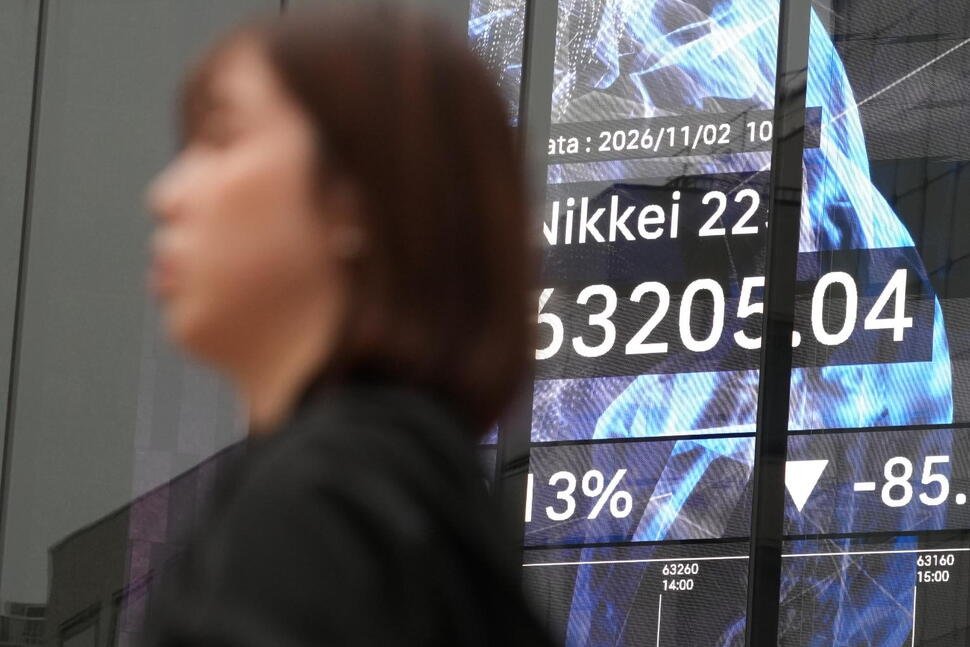
TOKYO — Global financial markets are facing a period of intense volatility as a massive selloff in the artificial intelligence sector ripples from Wall Street to the heart of Asia. Japan’s Nikkei 225 index plummeted by more than 6% during Friday morning’s opening session, signaling a sharp loss of investor confidence in the tech-heavy equities that have driven market growth for the better part of the last two years.
The sudden downturn follows a bruising Thursday session in the United States, where the S&P 500 plunged 4.4%. Market analysts are characterizing the decline as the most severe single-day drop since April 2025, a period defined by the market instability triggered by the introduction of the “Liberation Day” tariffs under the Trump administration.
## The AI Bubble Faces a Reality Check
The primary catalyst for the current market instability appears to be a systemic reassessment of the artificial intelligence boom. For months, AI infrastructure companies, semiconductor manufacturers, and large-scale cloud providers have enjoyed runaway valuations as capital flooded into generative AI development. However, Thursday’s selloff suggests that investors are beginning to question whether the astronomical capital expenditures in data centers and specialized hardware are yielding the promised profit margins.
As the industry enters the final quarter of 2026, concerns are mounting that the expected “AI productivity surge” has yet to materialize in corporate balance sheets. Large tech conglomerates, many of which are key components of the S&P 500, saw their stock prices slashed as institutional investors moved to hedge against overexposure to the volatile sector.
## Tech Giants and Search Engines Under Pressure
Google’s parent company, Alphabet, has been at the center of this tech-sector contraction. The company, which has aggressively pivoted its entire ecosystem around “AI-first” products and search integrations, has faced mounting scrutiny over the costs associated with running power-intensive, large-scale language models.
For Google, the challenge is twofold: they must maintain the expensive infrastructure required to lead in the AI race while simultaneously reassuring shareholders that their core advertising and search services remain insulated from the potential market correction. The broader tech industry is currently grappling with a “cost-to-utility” crisis. While AI-driven updates—such as automated enterprise coding tools and sophisticated analytical search features—have been rolled out rapidly, they have yet to offset the massive operational expenses of maintaining proprietary LLMs. Industry insiders expect that major tech firms will likely announce hiring freezes or significant austerity measures in the coming months as they shift focus from growth-at-all-costs to fiscal sustainability.
## Assessing the Long-Term Fallout
Economists in Tokyo are watching the ripple effects with caution. The Nikkei’s decline is not merely a reflection of sentiment but a reaction to the globalized nature of the supply chain. Because many Japanese electronics and robotics manufacturers serve as critical links in the AI hardware supply chain, any reduction in tech demand in the U.S. immediately impacts the production forecasts of major Japanese industrial firms.
Furthermore, the geopolitical backdrop remains complex. The lingering effects of the 2025 “Liberation Day” tariffs have left international trade relations fragile. Investors are now trapped between two opposing pressures: the persistent inflation caused by trade barriers and the sudden deflation of the AI growth narrative.
As central banks and financial institutions gather for meetings in New York this month, the primary topic of conversation is expected to be whether the tech sector can engineer a soft landing or if the current market turbulence is the beginning of a prolonged correction. For now, the global markets remain in a state of high alert, with investors waiting to see if the tech giants can demonstrate tangible revenue growth to justify their high-flying valuations during the upcoming earnings season.
Disclaimer: This content is auto-generated for informational purposes only.
Source: Read Original News