






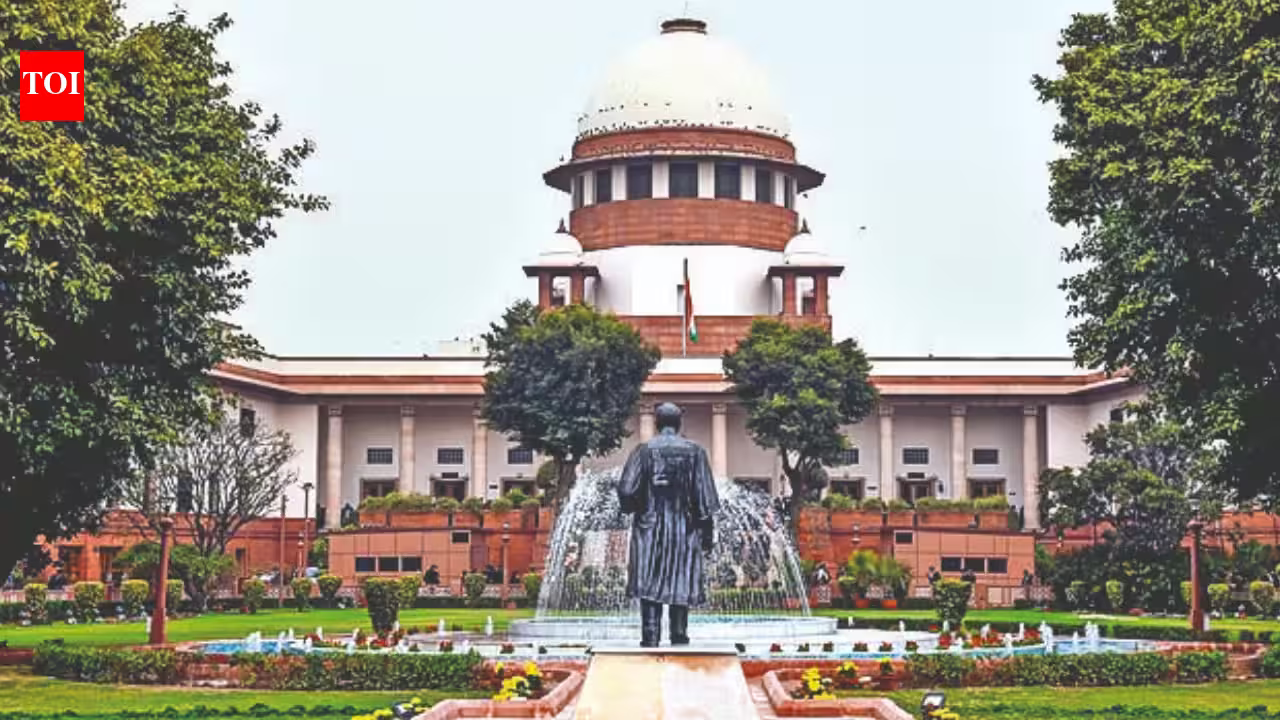

Supreme Court Slams “Grossly Inadequate” Infrastructure at NCLT and NCLAT
In a stern rebuke to the central government, the Supreme Court of India on Monday expressed deep concern over the crumbling infrastructure and critical staff shortages plaguing the National Company Law Tribunal (NCLT) and the National Company Law Appellate Tribunal (NCLAT). A bench led by Chief Justice of India Surya Kant, alongside Justices Joymalya Bagchi and V. Mohana, characterized the current state of these adjudicatory bodies as “unacceptable,” noting that they handle high-stakes insolvency matters involving thousands of crores of rupees.
A Critical Pillar of the Economy Under Siege
The apex court emphasized that these tribunals serve as the backbone of the nation’s economic and financial stability. During the proceedings, the bench highlighted that the banking sector, nationalized banks, and major infrastructure projects all fall under the jurisdiction of these tribunals. Given their pivotal role in resolving corporate debt and insolvency under the Insolvency and Bankruptcy Code (IBC), the court argued that the systemic neglect of their working environment poses a significant threat to the country’s business landscape.
The remarks followed a submission by senior advocate Sanjiv Sen, appearing on behalf of the NCLT Bar Association. Sen painted a grim picture of the operational realities at the Delhi tribunal, describing the premises as “dilapidated.” He detailed conditions that would hinder even the most basic clerical work, let alone complex legal proceedings: leaking roofs, persistent seepage, and a lack of fundamental support staff.
Operational Crippling and “Half-Day” Sittings
According to the legal counsel, the decay of the physical infrastructure has directly hampered judicial efficiency. Many benches are reportedly forced to curtail their business hours, sitting for only half a day due to the substandard conditions. The shortage of support staff, including essential personnel like judgment writers and technical assistants, has created a bottleneck that slows down the resolution of critical IBC cases.
The Supreme Court bench expressed disbelief at how such essential institutions are expected to deliver justice without the basic tools of the trade. “How will an institution function unless you provide the basic amenities? You don’t have buildings, you don’t have staff, you don’t have judgment writers, you don’t have proper, adequate technological inclusion,” the Chief Justice remarked, questioning the government’s approach to maintaining these vital bodies.
Urgent Call for Government Intervention
The court’s observation underscores a growing tension between the judiciary’s demand for efficient dispute resolution and the executive’s failure to provide the necessary resources to back that demand. With a significant number of member positions lying vacant, the capacity of the NCLT and NCLAT to handle the increasing volume of insolvency cases has been severely compromised.
Legal experts have long argued that the success of the IBC framework depends heavily on the speed and efficacy of the tribunals. By flagging these issues so strongly, the Supreme Court has signaled that it will no longer tolerate the “lifeline” of the economy being treated as an afterthought. The government is now under increased pressure to prioritize the immediate renovation of tribunal facilities and the expedited filling of vacancies to restore the functional integrity of the insolvency resolution mechanism.
Disclaimer: This content is auto-generated for informational purposes only.
Source: Read Original News