






India Grapples with End-of-Life Care as Landmark Euthanasia Ruling Meets Widespread Unawareness
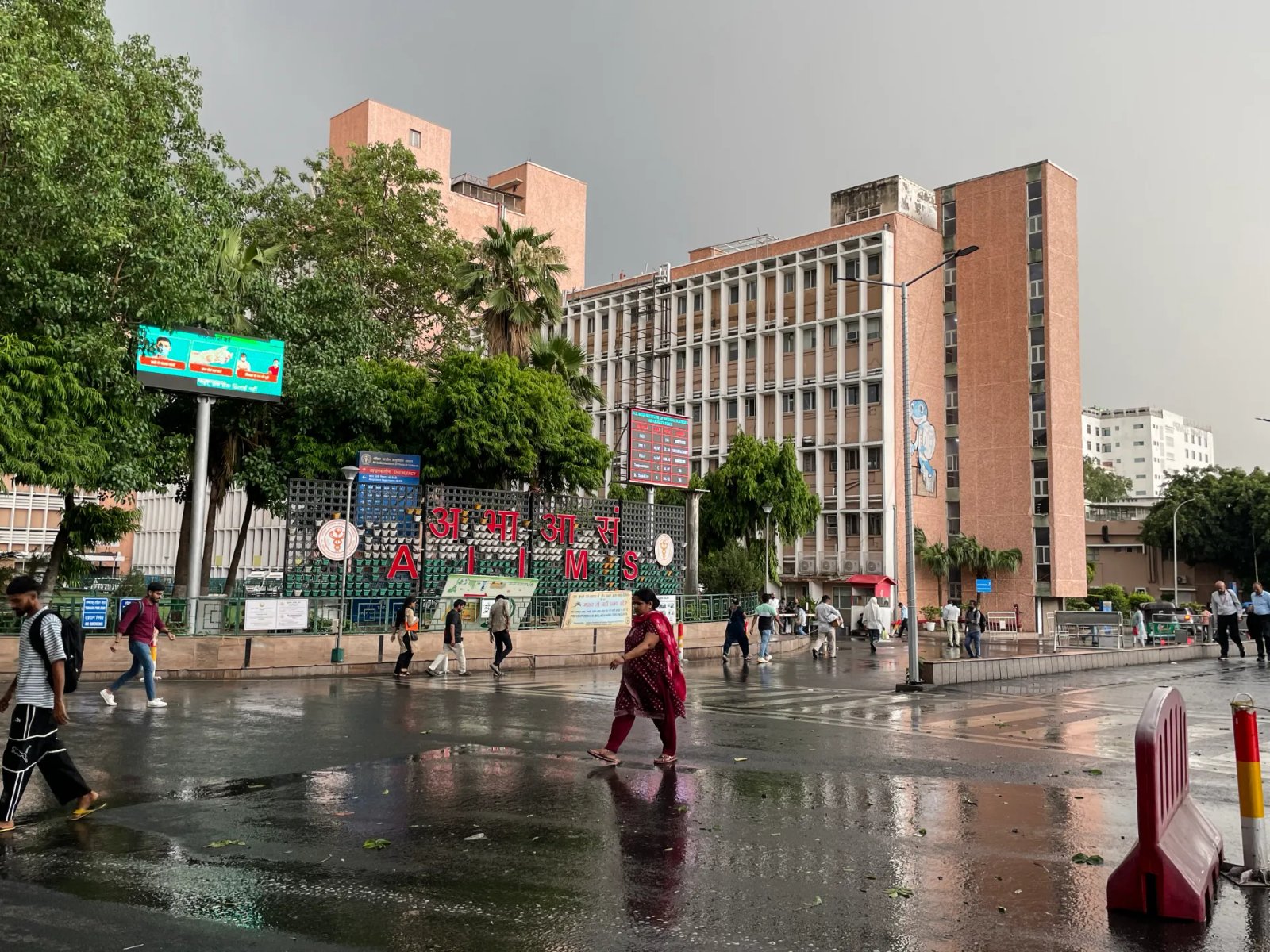
New Delhi, India – In the bustling wards of the All India Institute of Medical Sciences (AIIMS), India’s premier public hospital, a silent struggle unfolds daily. Families confront the agonizing reality of terminal illness, often without the knowledge, resources, or societal discourse to navigate the complexities of end-of-life care. This stark reality is highlighted by cases like Piyush Singh*, a 29-year-old battling advanced stomach cancer, whose mother, bewildered and desperate, sits by his side in the palliative care unit, unsure of what comes next.
Piyush has endured five rounds of chemotherapy with no improvement, and the focus has shifted from cure to comfort. His mother’s poignant question – "The world comes to AIIMS when they are not well. But where shall we go?" – encapsulates the despair of countless families facing similar predicaments. They are not seeking to hasten death, but rather to understand how to manage its inevitable approach when medical treatment ceases to be effective.
Just a few floors away, Aryan from Auraiya, Uttar Pradesh, faces a similar void as his 40-year-old brother, Amit, battles an aggressive mouth cancer. After two surgeries, radiation, and multiple chemotherapy rounds, doctors have conveyed the grim prognosis. "There is no duvidha [dilemma in Hindi]," Aryan states, reflecting the brutal clarity of a terminal diagnosis. He plans to take Amit home to Gurgaon with prescribed painkillers, but beyond that, the path is undefined. "I don’t know about palliative care. I don’t know how to ease his pain. I have nothing apart from the medicines I got today."
These stories are not isolated incidents. They are symptomatic of a broader national challenge. India recorded an estimated 1.56 million new cancer cases in 2024 alone, a figure that doesn’t include the millions suffering from traumatic brain injuries and degenerative neurological conditions who also reach a similar dead-end in their medical journeys. Despite an estimated seven to ten million people requiring palliative care in India, a 2025 analysis revealed that only a meager 4 percent receive it.
The fundamental issue often stems from a profound lack of awareness and preparedness. Many families have never heard of palliative care, let alone their legal right to document treatment preferences before a crisis. This ignorance is compounded by a deep-seated cultural reluctance to discuss death, a subject often deemed inauspicious. Such a worldview imbues end-of-life discussions with a moral weight that transcends medical considerations, leading families to defer crucial conversations until a loved one is critically ill, forcing difficult decisions in moments of intense grief.
From Caregiving to Court: The Evolving Legal Landscape
Amidst this societal void, the answers are increasingly being shaped by legal interventions. In 2018, India’s Supreme Court made a landmark ruling, recognizing the "right to die with dignity" as an intrinsic part of the fundamental right to life enshrined in Article 21 of the Indian Constitution. This ruling allowed patients to record their wishes regarding life-sustaining treatment, known as "living wills" or Advance Medical Directives, should they lose the capacity to decide in advanced stages of their ailment. The petition, filed by the NGO Common Cause, aimed to provide legal avenues for terminally ill individuals to refuse life-prolonging medical treatment.
Vipul Mudgal, director of Common Cause, emphasized the significance of the judgment: "It broadens the scope of Article 21. It now affirms, kind of completely, that the right to life includes the right to die with dignity. That is the bottom line for us."
However, for most Indians, this right largely remained on paper until a pivotal case in 2024. A family in Ghaziabad approached the Delhi High Court and subsequently the Supreme Court, seeking a decision on the fate of Harish Rana, a 32-year-old who had been in a vegetative state for nearly 13 years. This was the first instance in India where passive euthanasia, or the withdrawal of life support, was permitted by the highest court. On March 11, the Supreme Court directed the withdrawal of his life support at AIIMS, New Delhi, and he passed away two weeks later.
The Rana family’s 13-year ordeal, managing feeding tubes, tracheostomies, and urine bags, had taken an immense toll. "A family reaches such a decision when it sees no scope for improvement," stated Harish’s father, Ashok Rana. "Harish Rana could not speak, we were his voice. He was not in that state for 13 days or 13 months, but for 13 years." The profound question that drove them to court was, "I am around 63 years old, and my wife is 58 years old. If something happens to either of us, who would take care of him?"
The Uncharted Territory of Living Wills and Societal Resistance
Despite the landmark nature of the Rana case, experts believe it is unlikely to immediately set a widespread precedent. Death remains an uncomfortable topic in India, contributing to the rarity and unfamiliarity of living wills, even after their legalization in 2018. A 2019 survey by Healthcare at Home (HCAH) across seven major Indian cities revealed that 73 percent of urban Indians were unaware of their right to a living will. Even among those who knew, only 6 percent had drafted one.
"The Harish Rana case was made more complex because there was no living will," noted Manish Jain, the family’s lawyer. He highlighted the absence of "living will clinics across India," with only two currently operational – both in private hospitals, inaccessible to the majority of the population.
Concerns about the potential misuse of living wills led the Supreme Court to initially establish a complex set of guidelines. To be legally valid, a living will required the individual’s signature before two witnesses, countersigned by a magistrate. If the patient became terminally ill, a medical board of specialists with at least 20 years of experience was required, whose findings would then be reviewed by a district magistrate who would form a second medical board. Disagreements between boards escalated the matter to the High Court.
These stringent requirements were deemed unworkable by the Indian Society for Critical Care Medicine, leading them to petition the Supreme Court in 2019. In 2023, a five-judge bench simplified the process, removing the magistrate’s countersignature requirement, reducing the minimum medical experience for review boards to five years, and allowing for multiple nominees.
Vipul Mudgal argues that if families, doctors, and courts can make end-of-life decisions for an individual, the individual should also possess that autonomy. "If there is no meaning left in life, somebody is kept alive artificially, just beating the heart with some mechanical device, that life has no meaning." This recognition, he contends, not only respects individual autonomy but also alleviates the immense guilt often felt by family members tasked with such decisions.
However, these questions remain largely unanswered by legislative action. Living wills and the right to die exist solely through judicial interpretation, with no parliamentary law governing them. "There is no framework [of parliamentary law] passed by the parliament," Jain stated, noting that the Supreme Court has repeatedly requested the government to legislate on the issue since 2018.
Beyond legal frameworks, the absence of comprehensive palliative care means families like Piyush’s are left without guidance once treatment options are exhausted. Dr. Saipriya Tewari, a principal consultant in pain management and palliative care at Max Super Speciality Hospital, New Delhi, observes the confusion and distress of families told there is no further treatment. "What will they do after taking the patient home? Nobody tells them. It is only discussed if the palliative care doctor is involved in the treatment," she explained. "And even if the end is coming, then how do we maintain dignity in time? That is the question."
Piyush’s mother’s plea – "We are not able to think of a way out of this. Nobody is giving us any suggestions about where to go" – underscores the urgent need for a more comprehensive, empathetic, and legally supported approach to end-of-life care in India. The gap between legal recognition and practical implementation remains vast, leaving countless families to navigate the most profound moments of life in isolation and uncertainty.
*Names changed to protect the identity of the patients and their families.