







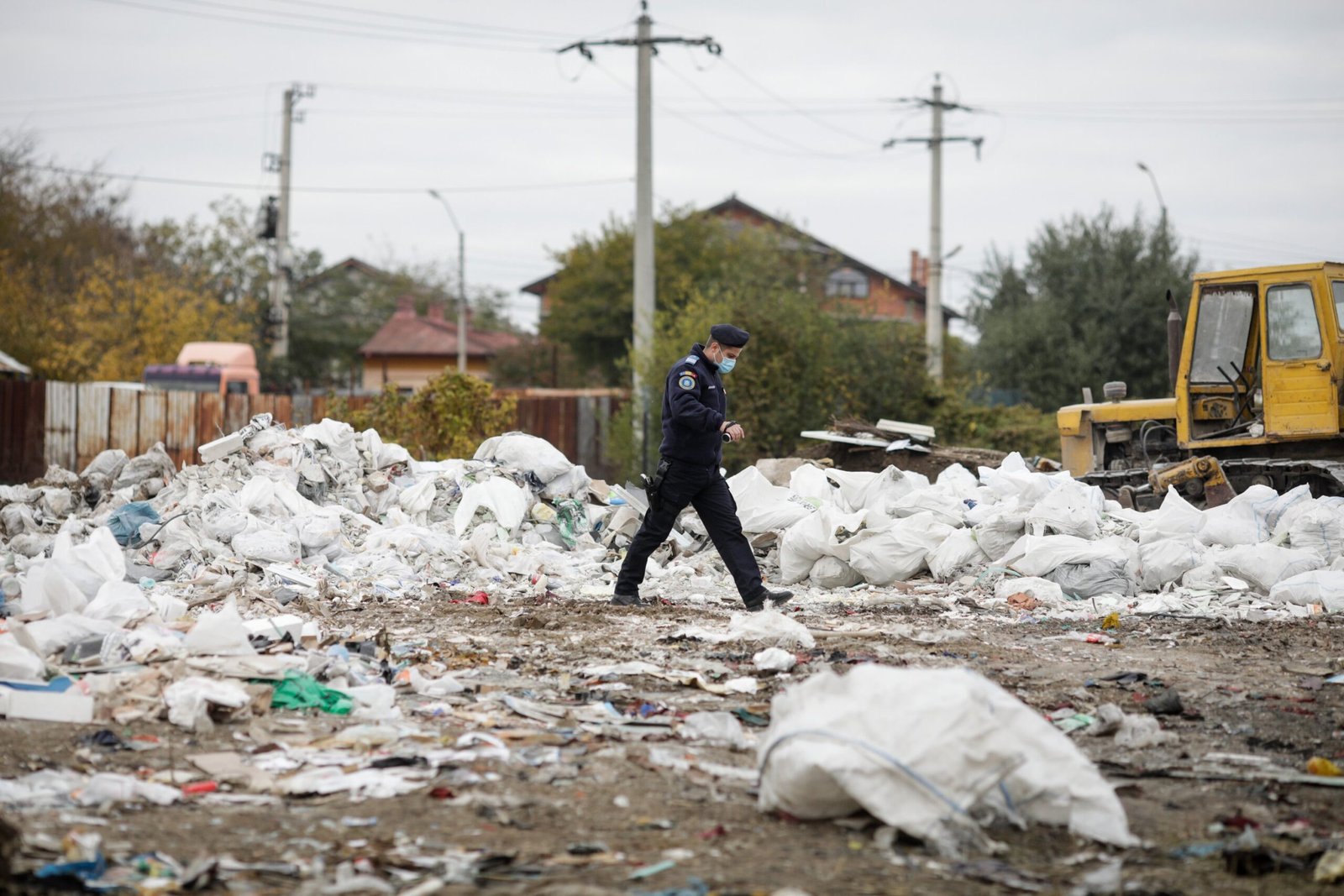
Bucharest’s persistent struggle with air quality reached a critical juncture on Thursday, September 25, as interim Environment Minister Diana Buzoianu formally requested that the prefectures of Bucharest and Ilfov declare a state of alert. The call comes in direct response to a surge in illegal waste-burning activities in Sinteşti, a locality notorious for the widespread incineration of industrial and domestic waste on the outskirts of the capital.
The practice of burning non-recyclable materials—ranging from discarded cables and tires to plastic waste—has long plagued the periphery of Bucharest, creating toxic plumes that frequently drift into the city’s residential sectors. These fires, often ignited under the cover of darkness to extract valuable metals, release hazardous pollutants including dioxins, furans, and particulate matter (PM2.5) into the atmosphere. The health implications for the local population and the broader Bucharest metropolitan area are severe, prompting the Ministry of Environment to shift from standard regulatory oversight to emergency intervention.
In her official request, Minister Buzoianu emphasized that the current regulatory measures have proven insufficient to curb the recurring environmental crime. By declaring a state of alert, authorities would gain the legal mandate to implement more aggressive enforcement strategies. This administrative status allows for the rapid deployment of additional resources, improved coordination between police, environmental guards, and local authorities, and the authority to establish restricted access zones around suspected burning sites.
“We can no longer tolerate a situation where the health of millions of citizens is compromised by illegal practices that have become an organized local industry,” stated officials from the Ministry. The state of alert is intended to dismantle the infrastructure supporting these activities, which often involves the clandestine transport of waste from industrial facilities in Bucharest to the rural outskirts of Ilfov, where it is subsequently destroyed by fire.
The Sinteşti region has been the subject of numerous environmental probes over the years, yet local authorities have historically struggled to maintain control due to the decentralized and clandestine nature of the operations. Residents in nearby Bucharest districts, such as Berceni and Rahova, have frequently logged complaints with air quality monitoring apps, documenting spikes in pollution that correlate with the timing of these illegal fires. Despite regular patrols by the Environmental Guard, the perpetrators often evade capture or return to their operations once enforcement teams depart.
Proponents of the state of alert argue that the measure is necessary to provide the Environmental Guard with “teeth.” Currently, inspectors face significant safety risks when intervening in hostile environments and lack the manpower to conduct 24/7 surveillance of the vast, open-air fields used for burning. A formal state of alert would allow for the involvement of the Gendarmerie and, in extreme cases, the potential for state-level security intervention, signaling a move toward a zero-tolerance policy.
Beyond the immediate public health crisis, the environmental damage is profound. The soil and groundwater in the Sinteşti area have been identified in previous studies as being heavily contaminated by heavy metals and chemical residues resulting from years of unregulated incineration. Environmentalists argue that while the state of alert is a necessary emergency brake, long-term success will require a comprehensive overhaul of the waste management infrastructure in the region, ensuring that legitimate recycling alternatives are accessible and affordable for local communities.
As the request now sits with the prefects of Bucharest and Ilfov, the public and environmental watchdogs remain attentive. The declaration would represent a rare and significant shift in state policy, acknowledging that localized environmental crime has evolved into a regional health emergency requiring a unified, state-led response. For the people of Bucharest, the move offers hope that the thick, acrid smoke that frequently settles over the capital may finally be met with the full force of the law.
Disclaimer: This content is auto-generated for informational purposes only.
Source: Read Original News