







Resilience has a new name in Indian athletics, and it is etched in the spirit of Pincky Balhara. Eight years after she first burst onto the continental scene as a wide-eyed teenager, Balhara has cemented her legacy as a pioneer of Indian Kurash, becoming the first athlete from the country to secure multiple Asian Games medals in the sport.
Her latest triumph—a hard-fought bronze in the women’s -78kg category at the 2026 Aichi-Nagoya Games—is more than just a statistical achievement. It is the culmination of nearly a decade of emotional fortitude, physical transformation, and an unwavering commitment to a promise made to her late father.
The Crucible of Tragedy
To understand the magnitude of Balhara’s return to the podium, one must look back to the summer of 2018. As a 19-year-old rising star, she was preparing for the inaugural inclusion of Kurash at the Jakarta Asian Games. But just as she neared the peak of her training, her world collapsed. In a devastating sequence of events, Balhara lost three family members in rapid succession: a cousin, her grandfather, and her father, who suffered a fatal heart attack.
The loss of her father was particularly gut-wrenching. He had been her fiercest advocate and the primary architect of her sporting dreams. With the weight of grief threatening to derail her, Balhara contemplated walking away from the sport entirely.
“I didn’t want to compete,” she admitted in reflection. However, the intervention of her maternal uncle and coach, Samundar Tokas, proved pivotal. He reminded her of her father’s unshakeable belief in her potential. In a poignant display of discipline, Balhara returned to the gym—often under the cover of darkness to avoid public scrutiny—to train through her mourning. That year, she shocked the continent by claiming silver in Jakarta, a performance that hauntingly mirrored her father’s pre-tournament prediction.
A New Weight, The Same Grit
Balhara’s journey has seen her evolve from a lightweight contender to a powerhouse in the heavier -78kg division. After a quarterfinals exit at the Hangzhou Games, many questioned if her best years were behind her. She answered those doubts in Aichi-Nagoya with a clinical display of technique and composure.
Her path to the 2026 bronze began with a dominant 3-0 victory over South Korea’s Garam Lim in the quarterfinals. Though she fell to South Korea’s Sumin Mo in a 5-0 semifinal bout, Balhara’s performance throughout the tournament underscored her mastery of the sport. By securing the bronze, she added another chapter to an already illustrious career, standing alone as the only Indian to have reached the Kurash podium twice at the Asian Games.
Decoding the Discipline: What is Kurash?
For those unfamiliar with the nuance of the sport, Kurash is a traditional Central Asian martial art with deep roots in Uzbekistan. It is a discipline of precision and explosive power. Unlike Judo or Brazilian Jiu-Jitsu, which often involve grueling ground-game exchanges, Kurash is contested entirely on the feet.
The primary objective is elegant in its simplicity: throw the opponent onto their back while maintaining a standing position. It requires immense core strength, impeccable balance, and a tactical mind capable of reading an opponent’s weight distribution in a fraction of a second. Balhara’s background in Judo, where she excelled as a junior champion, provided the perfect technical foundation for her transition to the Kurash mat.
A Legacy Defined
Born in the village of Neb Sarai in Delhi, Balhara’s career has been defined by her ability to turn obstacles into opportunities. When she missed the cut for the Indian Judo squad in 2018, she didn’t retire; she reinvented herself by pivoting to Kurash. When faced with the loss of her family, she didn’t break; she built a monument to their memory through her success.
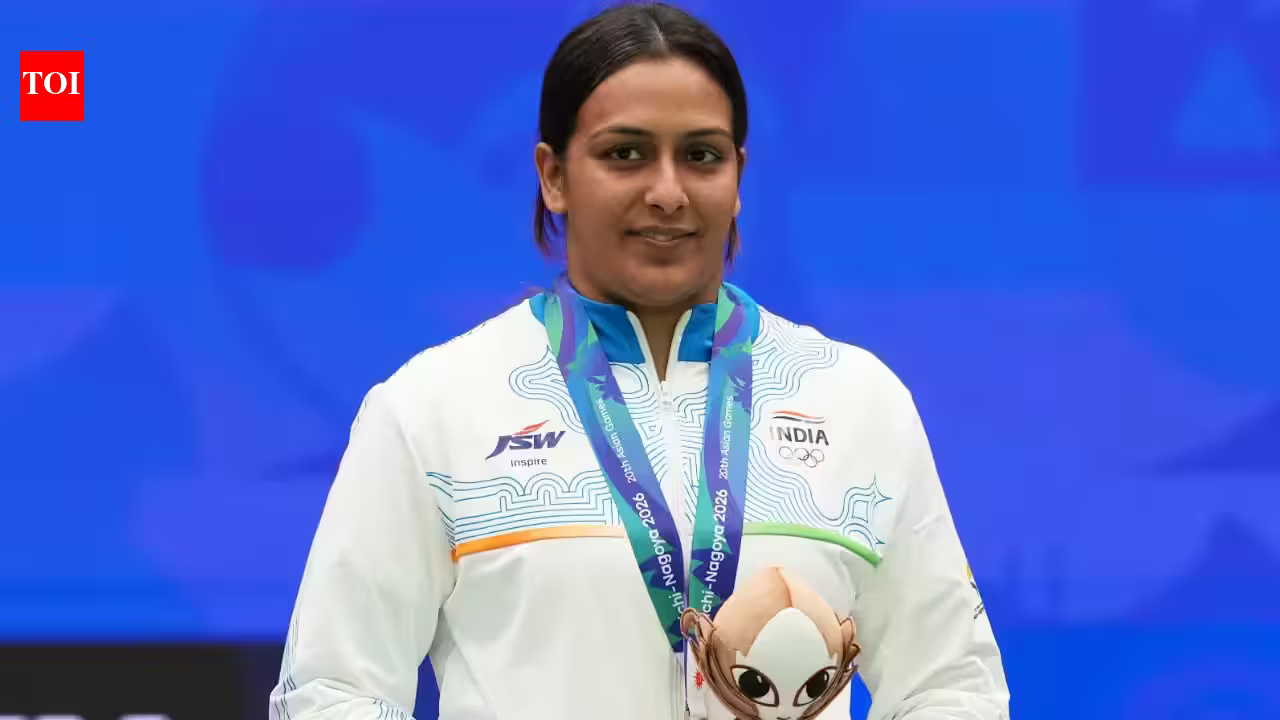
As she stepped onto the podium in Aichi-Nagoya, Balhara carried the pride of a nation and the memory of a father who knew she was destined for greatness long before the rest of the world caught on. With two Asian Games medals now in her collection, she has not only solidified her position as India’s premier Kurash athlete but also as a testament to the power of the human spirit.
While the 2026 Aichi-Nagoya Games will go down in the record books as another success for the Indian contingent, for Pincky Balhara, this bronze serves as a reminder that victory is not just about the metal around the neck—it is about the courage it took to stay in the fight long enough to earn it.
Disclaimer: This content is auto-generated for informational purposes only.
Source: Read Original News