









Government Defends 7.8% GDP Growth Rate Amidst Criticism from Economists
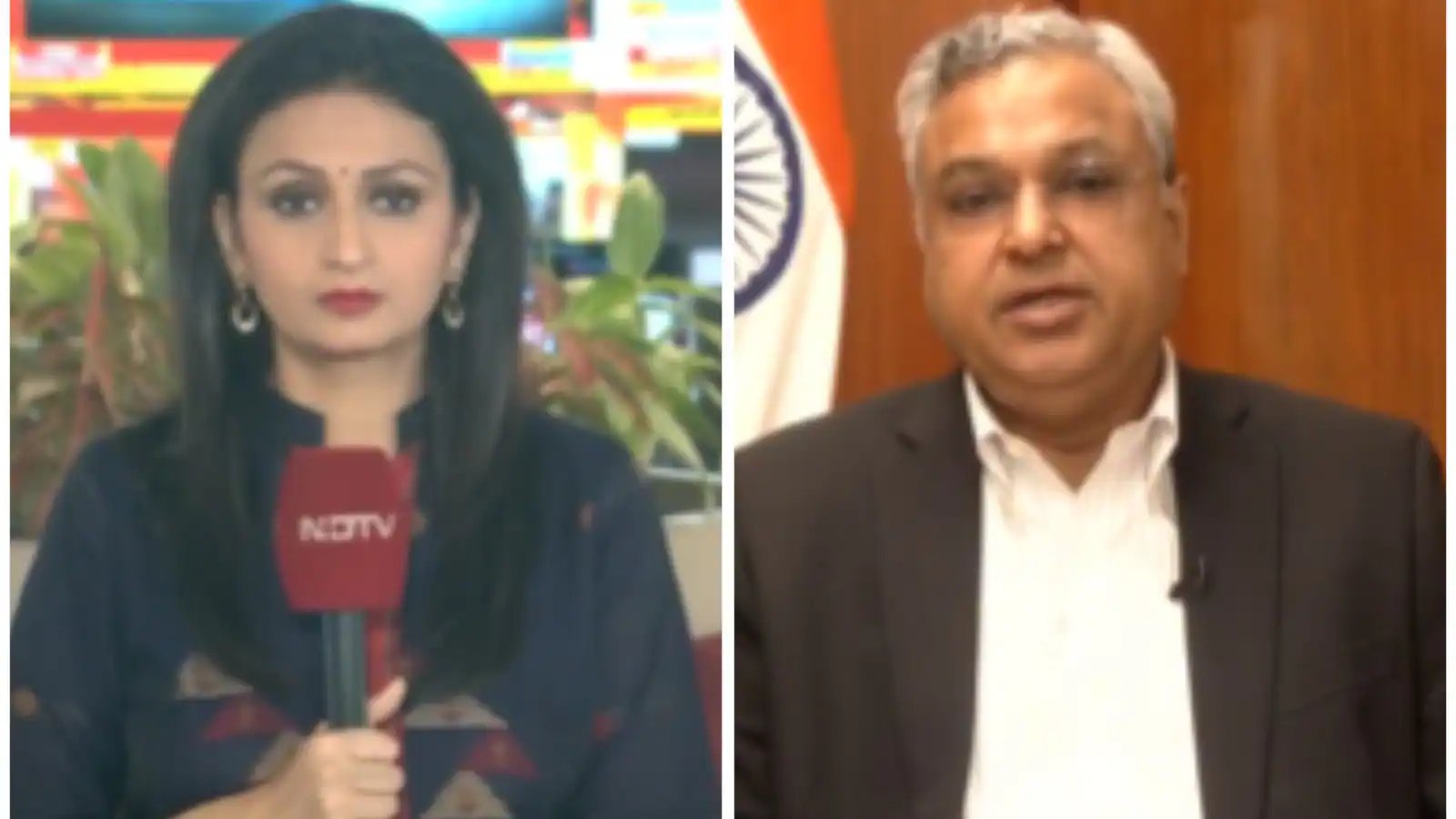
New Delhi: Amidst a growing chorus of skepticism from prominent economists and political figures regarding the state of the Indian economy, a top government official has firmly defended the latest growth figures. Dr. Saurabh Garg, Secretary of the Ministry of Statistics and Programme Implementation, stated that the reported GDP growth rate of 7.8 per cent is based on robust data sources and adheres strictly to international calculation methodologies.
In an exclusive interview, Dr. Garg addressed doubts raised by figures such as former Reserve Bank of India (RBI) Governor Raghuram Rajan and former Finance Secretary Subhash Chandra Garg, labeling such criticisms as “totally baseless.”
Transparency and Data Integrity
“We have been very transparent with the data sources we are utilizing,” Dr. Garg said. He emphasized that these sources are available for public scrutiny and are corroborated by independent indicators, including private sector reports, actual GST revenue collections, and production data across key industrial sectors like steel, cement, and electricity.
The controversy largely centers on the recent rebasing of GDP calculations. Dr. Garg explained that updating the base year every five to seven years is standard international practice, mandated by the United Nations and other global agencies, to ensure that the statistics accurately reflect the shifting structure of the economy.
“Ten years ago, in 2011-12, there were a large number of products that didn’t exist, whether it’s electronic goods or other categories that have since been phased out,” he noted. The base year was recently moved to 2022-23 to account for these structural changes.
Clearing the “Apples to Apples” Confusion
Addressing allegations that the government is manipulating figures, Dr. Garg clarified the math behind the recent revisions. He pointed out that the revision of the previous year’s GDP downward—from 86 lakh crore to 80 lakh crore—occurred six months ago to reflect improved methodology.
“That had been revised downward to 80 lakh crore six months back, not today,” he said. He argued that critics comparing the raw figures without accounting for these methodological shifts are failing to compare “apples to apples.” Union Commerce and Industry Minister Piyush Goyal has similarly accused critics of “misguiding people” by ignoring these technical adjustments.
The Critics’ Perspective
Despite the government’s defense, high-profile critics remain unconvinced. Former Finance Secretary Subhash Chandra Garg questioned the reality behind the growth numbers, arguing that if the previous year’s GDP had not been revised downward, the growth in current prices would have appeared significantly lower—at just 2.6 per cent.
Echoing these concerns, former RBI Governor Raghuram Rajan has expressed worries over discrepancies in the data. “If we’re growing so fast, why aren’t we creating more jobs, more good jobs? And why is investment not taking place?” Rajan asked in a recent statement.
As the debate continues, the government maintains that its statistical framework is both objective and internationally aligned, asserting that the figures accurately capture the trajectory of an evolving Indian economy.