









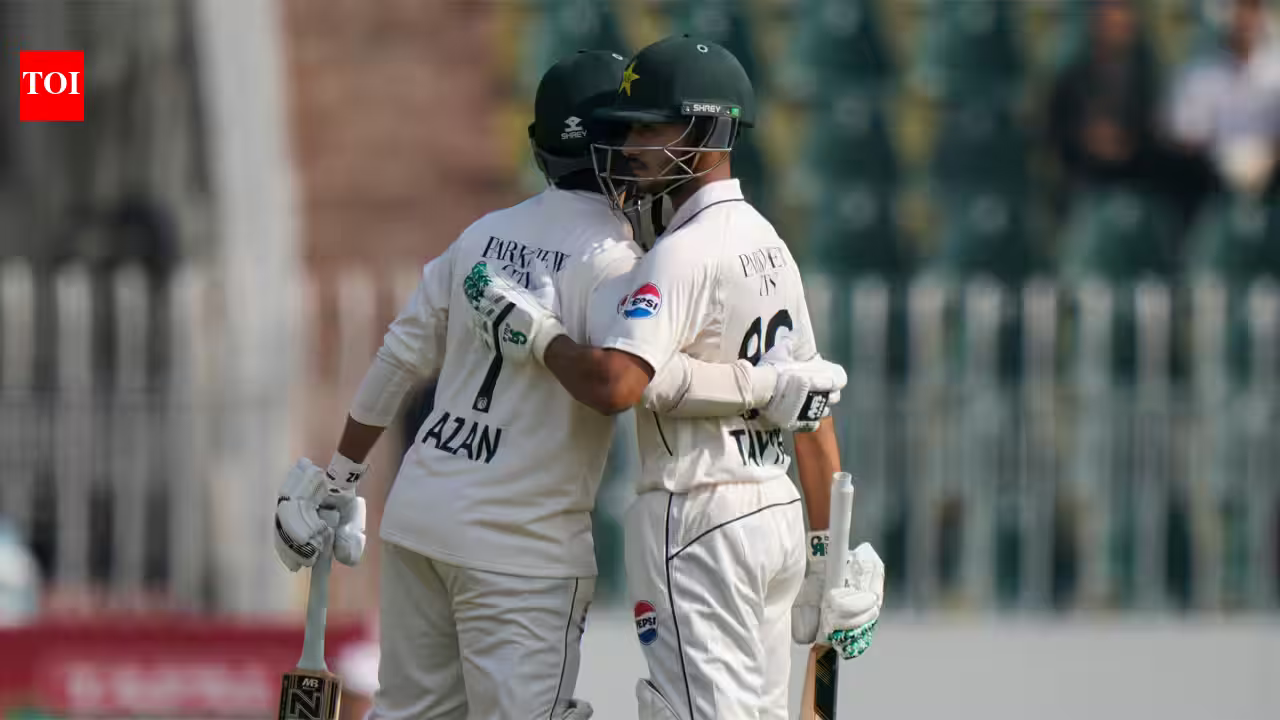
RAWALPINDI – In a masterclass of squad renewal and tactical bravery, Pakistan’s new-look Test side has etched its name into the history books. On a sun-drenched second day at the Rawalpindi Cricket Stadium, three debutants simultaneously reached half-centuries, a feat so rare it has not been witnessed in the 149-year history of Test cricket since the turn of the decade—and only once in the history of the sport.
The aggressive display by Tayyab Arif, Mohammad Taha, and Arafat Minhas provided the backbone for a dominant Pakistan first-innings total of 434/9, a statement of intent from a team clearly looking to move past the ghosts of recent inconsistencies. This remarkable trio joined the elite company of Zimbabwe’s 1992 legends—Andy Flower, Grant Flower, and Dave Houghton—who famously accomplished the same feat against India during their nation’s maiden Test match in Harare.
A Historic Surge from the New Guard
The atmosphere in Rawalpindi was electric as the youngsters took to the crease with a fearless approach that belied their lack of experience. Tayyab Arif set the tone early, bludgeoning the Sri Lankan bowling attack to reach his 57 off just 51 deliveries, keeping the scoreboard ticking with fluid strokeplay.
Not to be outdone, Arafat Minhas provided the middle-order fireworks, accumulating a sharp 52 from 72 balls. His innings was particularly aggressive, featuring nine boundaries and a towering six that sent ripples through the visiting fielding side. Mohammad Taha offered the perfect counterpoint, displaying a more patient, technical maturity, soaking up 105 balls to compile a vital 51.
The collective impact of the debutants was the primary narrative, but the innings was anchored by the seasoned professionalism of Saud Shakeel. While Shakeel ultimately fell just short of a century—dismissed for 93 in the first over following the lunch break—his partnership-building skills provided the necessary platform for the debutants to play their natural, expansive games. The wicket was a historic milestone in its own right, as Asitha Fernando claimed his 100th Test victim, though it mattered little in the broader context of a Pakistan lineup that had successfully demoralized the opposition attack.
Dominance with the Ball
If the batting performance announced the arrival of a new generation, the opening spells of the second innings signaled that this team possesses the depth to defend a total. Saqib Khan, the fourth debutant to earn his cap this week, proved that his inclusion was not merely about batting depth.
Tasked with the new ball, Khan immediately dismantled the Sri Lankan top order. Working in tandem with the crafty Mohammad Abbas, the duo reduced the tourists to a precarious 12/2 in the opening exchanges. Abbas, a master of line and length, accounted for Pasindu Sooriyabandara for a duck, while Khan claimed the prized scalp of veteran Dinesh Chandimal, finding the edge with a delivery that nipped away from the right-hander.
Khan’s aggressive bowling style continued to pay off when he removed the dangerous Lahiru Udara. Udara had threatened to wrestle back some momentum, striking 42 off just 47 balls, but his ambition got the better of him. An attempted drive outside the off-stump resulted in a thick edge to wicketkeeper Ghazi Ghori, silencing the visitor’s hopes of a quick recovery.
The Road Ahead
As bad light forced an early conclusion to the second day’s play, Sri Lanka found themselves reeling at 114/3. While Kusal Mendis and Dhananjaya de Silva have managed to forge an unbeaten 49-run partnership, the damage to the run rate and the psychological edge remains firmly with the hosts.
For Pakistan captain Babar Azam, the declaration at 434/9 late in the second session was a calculated gamble that is already yielding returns. By forcing the Sri Lankan batsmen to endure a grueling evening session against a rejuvenated pace attack, Pakistan has seized total control of the Test.
The significance of this performance cannot be overstated. By blooding four debutants and seeing all of them leave an indelible mark—three with the bat and one with a sharp opening bowling spell—Pakistan has showcased a remarkable talent pipeline. The Rawalpindi crowd, witnesses to a piece of history that echoes back to the game’s roots in 1992, saw more than just a victory in the making; they saw the birth of a new era.
With three days left to play, the conditions in Rawalpindi remain conducive to the bowlers, and with the visitors still trailing by a substantial margin, all signs point to a clinical Pakistan victory. Should they push forward with this same intensity, this match will be remembered not just for the statistical anomaly of three debutant fifties, but as the moment Pakistan’s Test cricket found a new, ferocious identity.
Disclaimer: This content is auto-generated for informational purposes only.
Source: Read Original News