






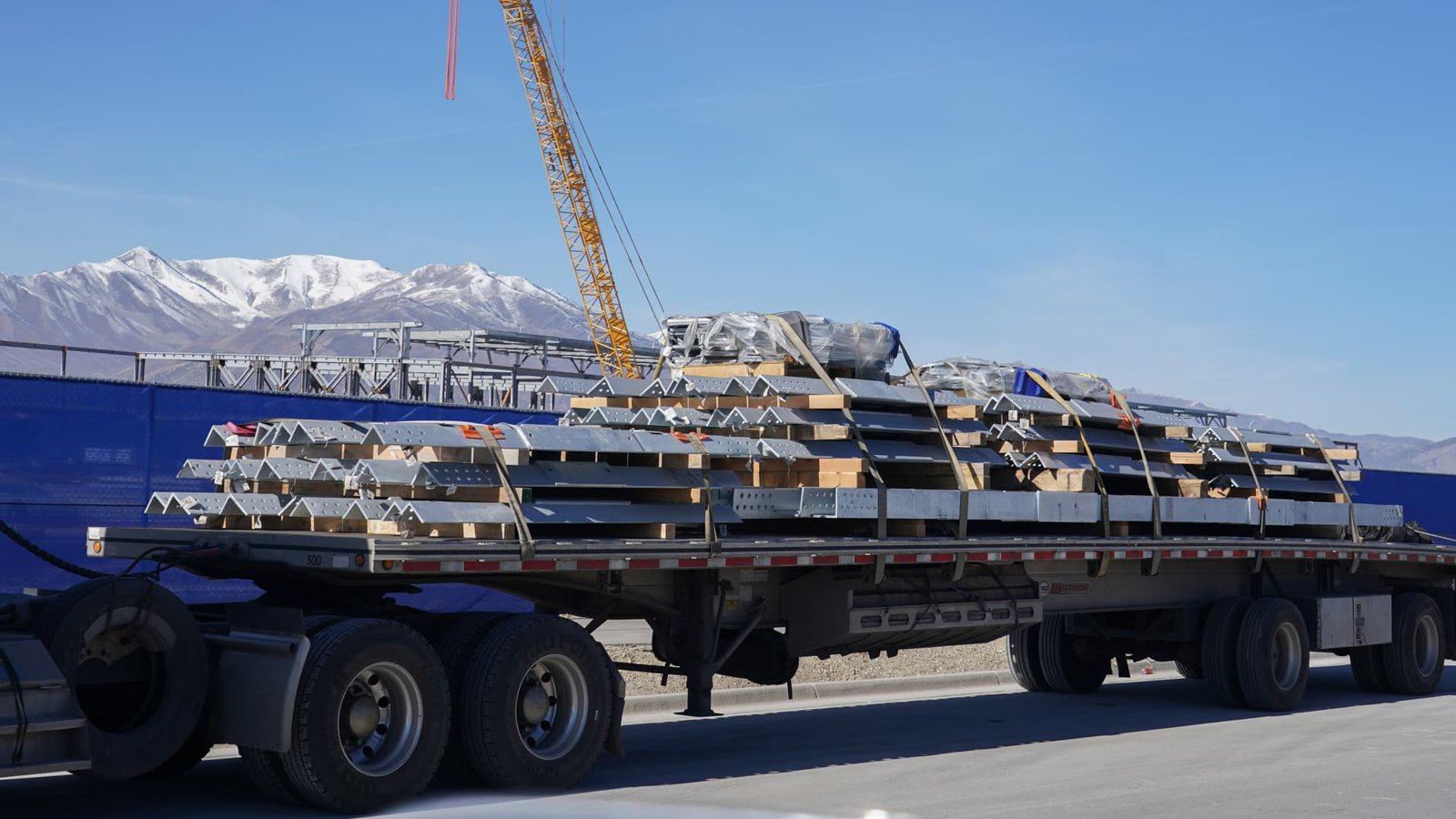
The rapid expansion of artificial intelligence infrastructure is delivering an unexpected lifeline to the American trucking industry. As the nation grapples with the energy and land-use implications of massive AI data centers, the logistical heartbeat of these projects—the freight sector—is experiencing a significant, if uneven, surge in demand.
While the trucking industry has struggled recently under the weight of historic diesel fuel prices—which hit an all-time high of $5.85 per gallon this week—and persistent trade-related headwinds, the construction of AI facilities is providing a strategic offset. Data centers require a massive influx of specialized hardware, including semiconductors, industrial HVAC systems, and heavy power infrastructure, all of which rely on heavy-haul and flatbed transport to reach their destinations.
A Shift in Freight Lanes and Demand
The construction boom is not only increasing the volume of freight but is actively redrawing the map of American logistics. Because site selection for AI data centers is dictated by power capacity and land availability rather than traditional shipping hubs, freight traffic is being diverted into rural areas that previously saw little large-scale activity.
Industry experts note that this “AI-led” freight demand is creating a bottleneck in specific sectors. Flatbed and heavy-haul carriers are seeing multi-year highs in spot rates, as these specialized vehicles are essential for moving the massive transformers, generators, and cooling units required by modern AI facilities. The ripple effect extends beyond the drivers; there is a heightened demand for diesel technicians, fleet managers, and logistical support personnel to handle the complex requirements of these large-scale deployments.
Challenges for Small-Scale Carriers
While large, established logistics fleets are scaling up to meet the needs of Big Tech, smaller carriers are also finding opportunities—though they come with distinct risks. Financing firms note that while smaller operators are gaining access to consistent, high-value work, the nature of these projects requires significant upfront capital.
Managing the cash flow to cover fuel, specialized equipment maintenance, and labor costs before a payment arrives has become a growing pain for smaller businesses. For many, the growth potential is balanced against the necessity of securing more working capital, creating a complex financial landscape for independent truckers eager to capture a piece of the AI buildout.
The “Construction Cliff” and Long-Term Viability
Despite the current excitement, some analysts are warning of a potential “construction cliff.” Once these multi-billion-dollar facilities are completed, the demand for heavy-haul trucking drops off almost immediately. Unlike a retail distribution center, which requires a constant flow of inventory, an operational data center requires minimal ongoing logistics support.
Financial and real estate analysts are advising local governments to be cautious about over-investing in permanent infrastructure meant to handle this temporary surge in heavy traffic. However, for the time being, the sheer scale of the AI buildout across states like Georgia and Texas is keeping the sector busy. As one project concludes, fleets are effectively rotating to the next, sustaining an ecosystem of high-demand logistics that, while likely temporary, is providing a vital buffer for the freight industry during a period of otherwise stagnant growth.
As the tech industry continues its aggressive push for localized AI power, the trucking sector remains the primary engine driving that reality—transforming vast, empty fields into the digital backbone of the future, one haul at a time.
Disclaimer: This content is auto-generated for informational purposes only.
Source: Read Original News