







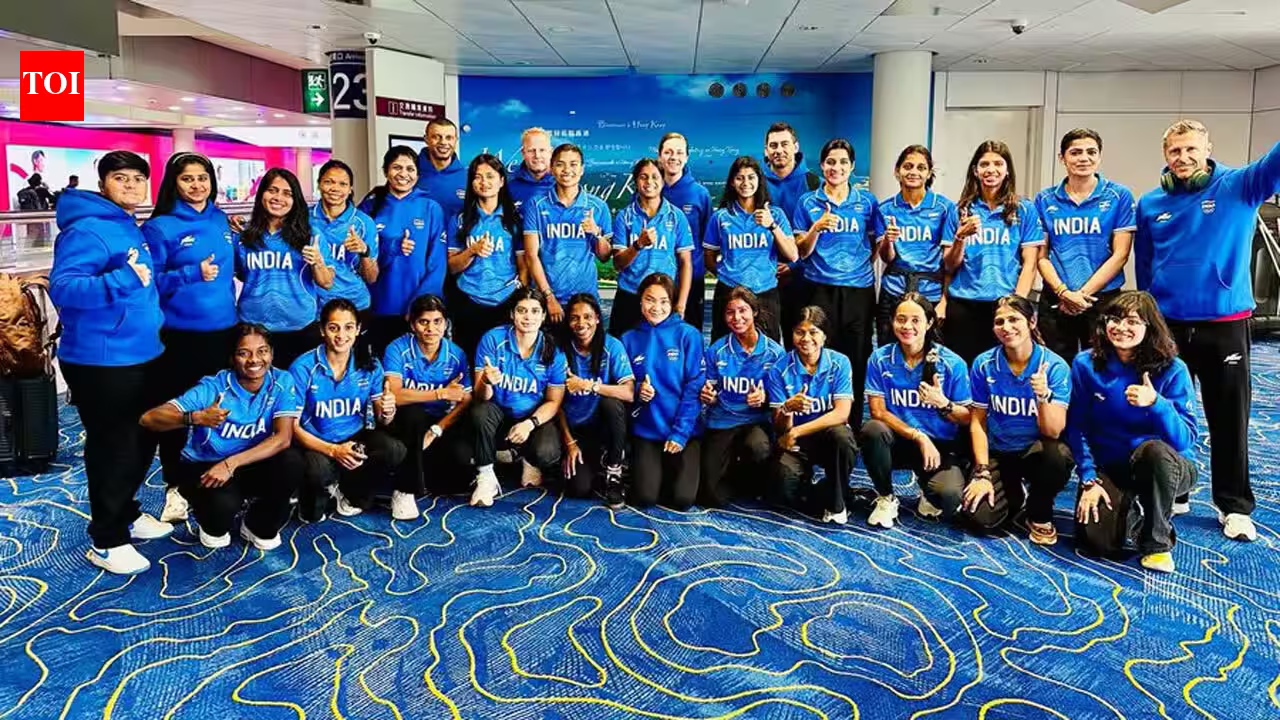
TRADITION HAS reclaimed its place in Indian hockey. In a significant administrative reversal that follows weeks of intense public scrutiny and internal friction, Hockey India has officially confirmed that the national teams will return to their iconic blue jerseys for the upcoming Asian Games in Japan.
The decision marks a strategic pivot away from the saffron kits that defined the team’s recent outing at the FIH Hockey World Cup in the Netherlands and Belgium. While the federation had previously championed the vibrant orange hue as a modern solution to technical visibility concerns, the move had become a lightning rod for criticism, alienating legends of the sport and raising questions about the federation’s internal decision-making processes.
### A Return to the ‘Blue’ Identity
The confirmation came directly from Hockey India treasurer Shekar Manoharan, who noted that the federation had formally communicated its kit preference to the Indian Olympic Association (IOA).
“Indian Olympic Association (IOA) asked us our preferred choice of kit and HI has given the first preference as blue, with the secondary colour being saffron,” Manoharan stated on Tuesday.
For the legions of Indian hockey fans, the return to blue is more than just a cosmetic change; it is a return to an aesthetic that has been synonymous with the nation’s modern successes on the field. Since the turn of the millennium, the blue jersey has served as the visual shorthand for India’s resurgence in world hockey, and many within the fraternity felt that abandoning the colour during the World Cup was a step too far from the team’s established heritage.
### The Anatomy of the Saffron Controversy
The decision to adopt saffron, announced on July 27, was initially framed by Hockey India as a pragmatic adjustment. Officials cited feedback from players and coaches who suggested that blue jerseys often blended into the blue-toned synthetic turfs used in international competition, creating a visual disadvantage for teammates attempting to spot one another in high-speed transitions.
However, the logic failed to satisfy the hockey community. Almost immediately, the move drew sharp rebukes from legendary former captains. The likes of Pargat Singh, Dhanraj Pillay, Ajit Pal Singh, and Viren Rasquinha publicly expressed their discomfort, questioning why such a drastic departure from the national team’s visual identity was deemed necessary.
The controversy quickly transcended sports. The debate intensified when Hockey India president Dilip Tirkey—a legendary defender and one of the most respected voices in the sport—revealed that he had not been consulted regarding the design change. Tirkey’s public dissent highlighted a deeper issue of governance, suggesting that the decision had been pushed through without the requisite oversight from the federation’s elected leadership and the Executive Board.
The situation was further compounded by political interference, as former Odisha chief minister Naveen Patnaik criticized the move, claiming that the shift was politically motivated rather than purely performance-driven. Caught in a storm of public relations and internal dissent, the saffron experiment struggled to find support even as the teams hit the pitch.
### Performance Under Pressure
During the World Cup, the focus on the kit often threatened to overshadow the actual performances on the turf. The men’s team, tasked with defending their reputation as global contenders, finished a middling eighth, managing only two victories in six matches. The women’s team, however, provided a silver lining, securing a commendable fifth-place finish—their best-ever performance at the tournament.
Yet, with the Asian Games looming on the horizon, the federation appears to have decided that stability and tradition are the best tools to move forward. The “back to blue” policy is clearly intended to put the distractions of the World Cup in the rearview mirror and foster a sense of unity as the teams turn their attention toward the ultimate goal: the 2028 Los Angeles Olympics.
### The Road to Los Angeles
The significance of the Asian Games cannot be overstated. With direct qualification for the 2028 Olympic Games serving as the primary carrot, the margin for error is razor-thin. Recently, Union Sports Minister Mansukh Mandaviya conducted a high-stakes review meeting with team coaches, captains, and Hockey India officials, emphasizing the need for absolute focus and tactical discipline.
The stakes are highest for the men’s side. Led by the talismanic Harmanpreet Singh, the team travels to Japan as the defending champions, carrying the weight of history as they chase an unprecedented fifth Asian Games gold medal. Their success would provide a direct ticket to the Olympic stage, validating the intense pressure currently surrounding the program.
The women’s team is equally motivated. After securing a bronze medal in the 2022 edition, they are looking to break a 44-year gold medal drought. By restoring the traditional blue kit, Hockey India is betting that a return to familiar imagery will help settle the squad’s nerves and provide a sense of continuity in a high-pressure environment.
As the teams depart for Japan, the “saffron debate” has been effectively retired. In its place is a singular, unified objective: securing the continental crown and reasserting India’s dominance on the world stage. Whether the blue jersey acts as a psychological talisman or merely a comfortable uniform, the mandate from the top is clear—it is time for the players to let their hockey, not their apparel, do the talking.
Disclaimer: This content is auto-generated for informational purposes only.
Source: Read Original News