




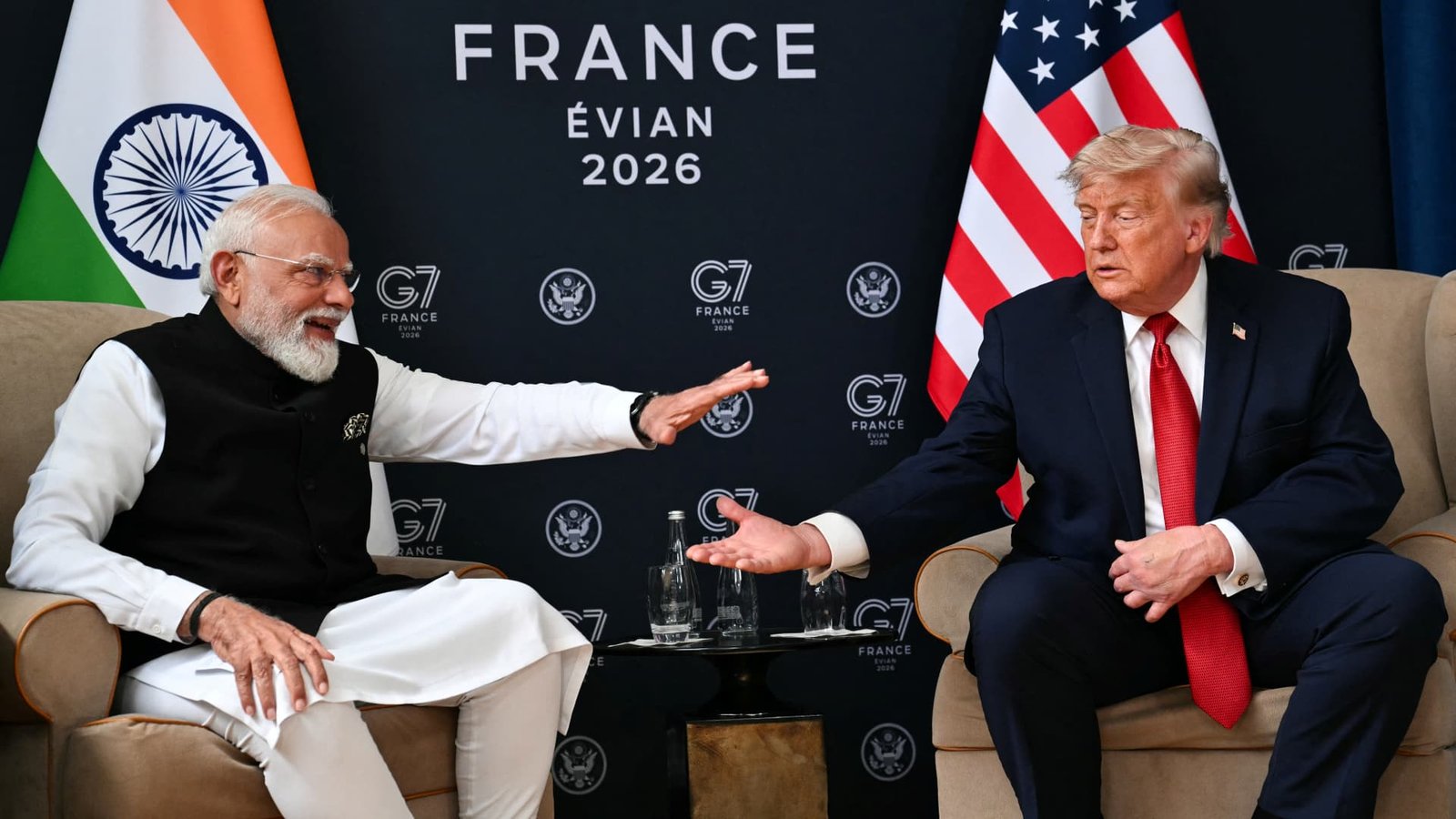
US President Donald Trump (R) prepares to shake hands with India’s Prime Minister Narendra Modi during a bilateral meeting as part of the G7 summit, in Evian, eastern France, on June 17, 2026.
Mandel Ngan | Afp | Getty Images
The Trump-Modi bromance appears to be back on.
U.S. President Donald Trump on Wednesday said he was committed to defending India, if it’s attacked — but only if Prime Minister Narendra Modi is at the helm, underscoring the personal equation between the two leaders.
“If anybody attacks that man, we’re going to be there now,” Trump said, referring to Modi. “I think India plays a big role in everything. As long as he’s the leader,” Trump said, answering another question from the press on whether New Delhi could play a bigger role in the Middle East.
But even as the relationship between the two leaders remains warm, there is growing dissonance in the strategic and economic ties between the two countries as the U.S. takes tougher stands on trade and immigration, and is resetting ties with China.
Recent events have called it into question even further. On Tuesday, the Department of War removed the word “Indo” from the U.S. Indo-Pacific Command, which indicated that India was being seen as less strategically important.
For more than two decades, consecutive U.S. administrations had deepened ties with India as a measure to counterbalance China’s influence in the Indo-Pacific.
Reversing the “Indo-Pacific Command” name withdraws the idea that India “sat at the center of American strategy in Asia,” explained Ronak D. Desai, visiting fellow at Stanford’s Hoover Institution. “The chemistry is real, and Trump genuinely likes Modi, but that isn’t addressing the real frictions or the eroding trust beneath them,” said Desai.
Even during his meeting at the G7 with Modi, Trump referred to improving ties with China and recalled its partnership with Beijing as G2, a term seen as marginalizing middle-powers like India.
“To some extent, this suggests that India remains important but not indispensable in America’s dealings with China,” said Arpit Chaturvedi, South Asia advisor at Teneo. The recent approach of the U.S. suggests that “it is confident it can deal with many China-related issues bilaterally, or at least without India playing a decisive role in that equation.”
‘Strong Protest’
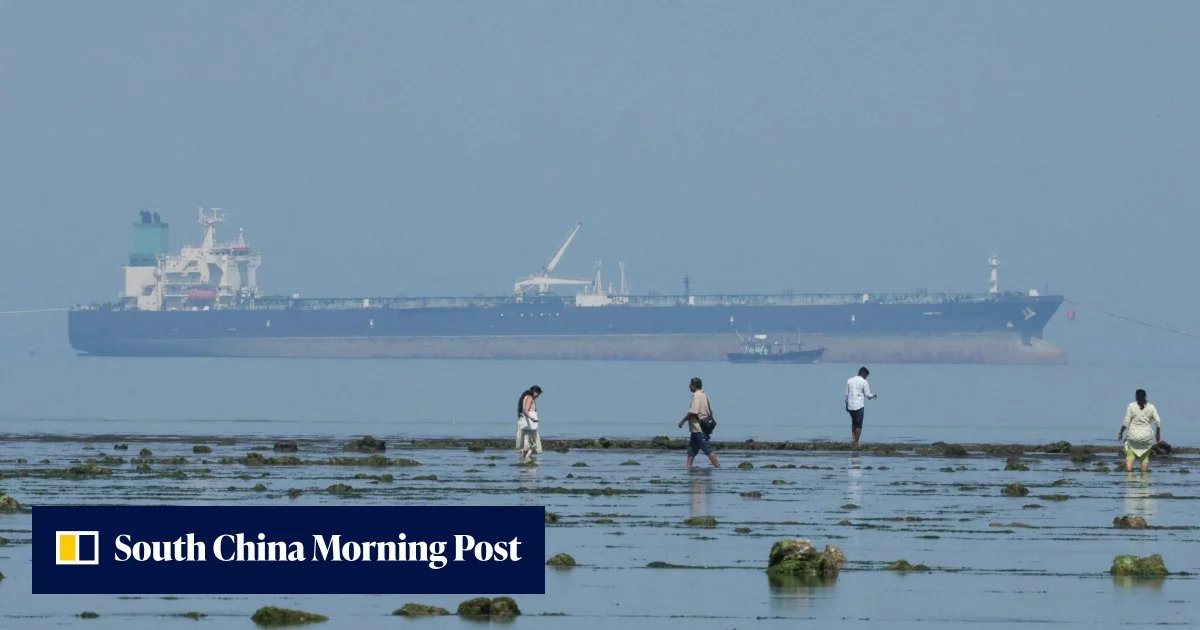
Last week, India summoned U.S. Chargé d’Affaires Jason Meeks to lodge a “strong protest” about the Gulf of Oman attacks. Modi also raised the issue of the safety of Indian seafarers during his meeting with Trump, asking the president to place the “highest priority” on it during the implementation of peace in the Middle East.
When Trump was asked for words of condolence for the families of the dead Indian sailors, his response was evasive. “I heard about that. It’s a rough profession,” Trump said, adding that “this has been happening throughout time, but we work together.”
The leader of the opposition in India, Rahul Gandhi, has frequently questioned Modi’s soft stance with the U.S. on matters of trade and the seafarer deaths, saying the Indian prime minister is “compromised.”
But Modi continues to enjoy strong support from Indian voters. His government has been seeking preferential access to the U.S. market, leading to Trump calling Modi a “tough negotiator” during their meeting on the sidelines of the G7.
India and the U.S. are in the process of negotiating a trade deal, the finalization of which has been pending since February, when the U.S. scaled back its tariffs on goods from New Delhi to 18% from 50%.
But even as trade talks with India continue in the background, the Office of the U.S. Trade Representative has proposed additional tariffs of up to 12.5% on imports from 60 economies that include New Delhi.
The U.S. has also been tightening regulations around immigration, appealing a federal judge’s ruling striking down President Donald Trump’s $100,000 fee on H-1B visa applications in its effort to hike the fee by tens of thousands of dollars. The changes disproportionately affect Indians, who accounted for 71% of H-1B visa holders in the U.S.
At the G7 meeting with Modi, when asked whether highly skilled Indians will continue to get opportunities, Trump said that the U.S. has always had a “tremendous relationship in terms of employment with India,” adding that they were “very talented people.”