






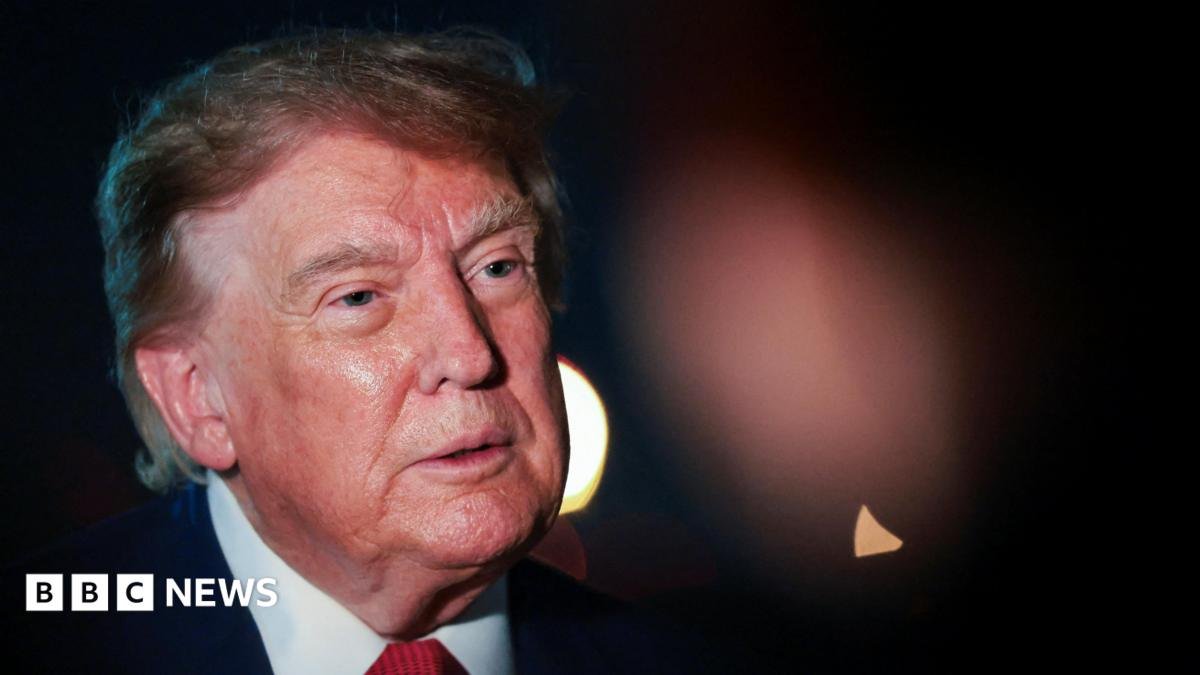
Former President Donald Trump has declared that the United States intends to significantly curtail its joint military exercises with South Korea. This announcement, made on Truth Social, cited his “very good relationship” with North Korean leader Kim Jong Un as a primary motivator. Trump articulated that these exercises are not only financially burdensome, with a substantial portion of the costs borne by the United States, but also transmit an “inappropriate and hostile” signal.
Adding another layer to his reasoning, Trump highlighted South Korea’s recent refusal to collaborate with the US on the denuclearization of Iran. This revelation came after Pyongyang conducted ballistic missile tests earlier in the month, actions explicitly prohibited by the United Nations. Trump’s social media post also indicated that the decision to reduce exercises came too late to cancel the annual drills scheduled to commence shortly after his statement. He humorously (?) remarked that he had inquired with the South Korean president about joining efforts to denuclearize the Islamic Republic of Iran, only to be met with a polite refusal.
Despite Trump’s recent pronouncements, US and South Korean military officials had recently held a joint press conference to unveil “Ulchi Freedom Shield.” This 11-day event was projected to be of a similar scale to previous years, involving approximately 18,000 South Korean soldiers. During this news conference, military leaders also addressed the concerning deployment of North Korean troops to support Russia’s ongoing conflict in Ukraine. US military spokesperson Ryan Donald affirmed that their training protocols “account for that threat,” specifically referring to the potential return of these combat-experienced North Korean soldiers.
North Korea’s foreign ministry had previously voiced its strong disapproval of the joint drills, asserting its right to self-defense against any perceived threat or challenge. These joint exercises, despite the current political discourse, occurred mere days after South Korea, the US, and Japan collectively detected the second North Korean missile test within a short timeframe. Pyongyang has demonstrably intensified its efforts to expand both its nuclear and missile programs, particularly since the breakdown in 2019 of the high-profile diplomatic engagements between Kim and Trump during the latter’s initial presidential term. It is worth remembering that Trump holds the distinction of being the first sitting US president to ever step foot in North Korea, a historic visit that occurred seven years prior. The intricacies of these international relations often unfold with sudden shifts and surprising developments, frequently making breaking news. The ongoing dialogue surrounding these critical security matters continues to be a focal point on the global stage, profoundly impacting regional stability and international diplomacy, with the implications of these decisions on global security often the subject of intense scrutiny and analysis, especially when considering the significant costs associated with such military endeavors. The decision to “substantially reduce” these joint military exercises marks a notable pivot in US foreign policy regarding the Korean peninsula.