









Trump Issues "Economic D-Day" Warning to Iran’s Trading Partners, India’s Trade in Focus
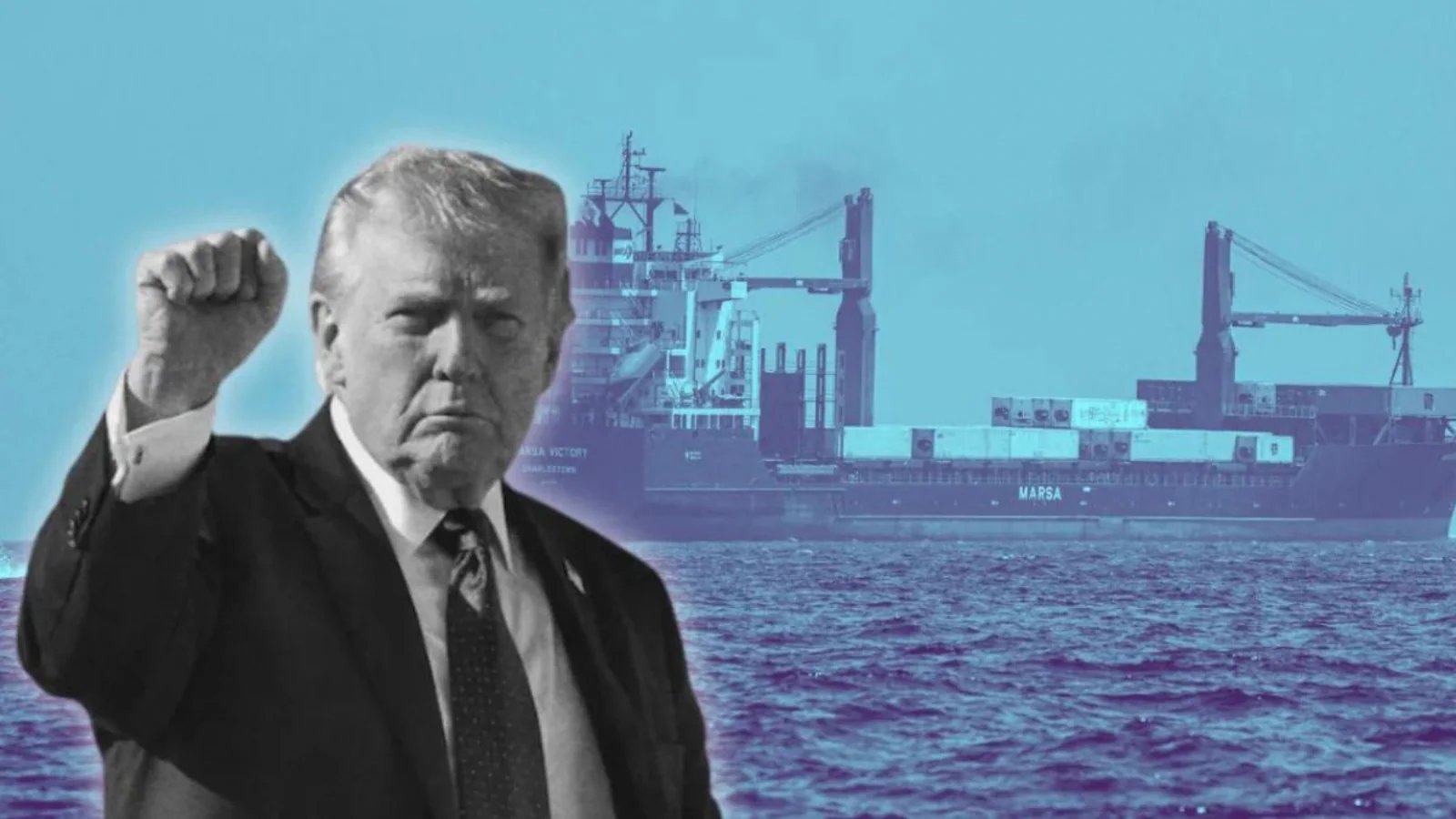
New Delhi: In a stark escalation of pressure against Tehran, US President Donald Trump has issued a formidable warning to nations, financial institutions, and businesses maintaining ties with Iran, declaring that any entity providing an "economic lifeline" to the Islamic Republic faces "TREMENDOUS" economic consequences. This pronouncement marks a significant ramping up of US economic sanctions, with Trump proclaiming what he termed "the most crushing economic operation" against Iran, an "economic D-Day" demanding global solidarity to "isolate, and defeat, the Iran threat."
While this aggressive stance reverberates across the international stage, it holds particular significance for India, a nation with a complex and evolving trade relationship with Iran. For New Delhi, Trump’s ultimatum is more than mere rhetoric; it poses tangible implications for its ongoing commercial activities.
Trump’s Uncompromising Stance
President Trump’s directive outlines a broad spectrum of activities that could trigger US retribution. These include, but are not limited to, oil smuggling, cash transfers, currency swap lines, exchange houses, ship registries, and the use of front companies to facilitate trade with Iran. He unequivocally stated that any country allowing its financial institutions, businesses, airports, or governmental entities to support Iran would face severe economic repercussions.
India-Iran Trade: A Shrinking but Significant Relationship
Despite the increasingly fraught geopolitical landscape, India has historically maintained an important trading partnership with Iran, even enjoying a trade surplus. However, this relationship has witnessed a dramatic contraction in recent years due to escalating tensions in the Middle East and the looming threat of US sanctions.
Official data from the Indian Embassy in Tehran indicates that in 2025-26, India’s exports to Iran stood at $1.25 billion, while imports from Iran were significantly lower at $370 million, resulting in an approximate trade surplus of $880 million for India.
This current figure, however, pales in comparison to previous years. In 2018-19, total bilateral trade between India and Iran was valued at $17.03 billion, with India importing $13.53 billion worth of goods and exporting $3.51 billion. By 2024-25, this figure had plummeted to $1.68 billion. While the overall quantum of trade has diminished, presenting a relatively smaller "Iran exposure" for an economy of India’s scale, the potential for disruption remains a concern for specific sectors.
Beyond Energy: What India Exports to Iran
India’s commercial engagement with Iran extends beyond the traditional energy sector. Indian companies export a diverse range of products to the Iranian market, including:
- Basmati rice
- Tea
- Sugar
- Fresh fruits
- Drugs and pharmaceuticals
- Other shipments such as spices, cereals, and food-related products.
Conversely, Iran supplies India with products like pistachios, dates, apples, and kiwis. Consequently, any significant disruption to this trade flow could impact Indian exporters, particularly those in the agricultural, food, and pharmaceutical industries.
The immediate concern, according to experts, isn’t necessarily a complete cessation of trade but rather the increased difficulty in facilitating payments, shipping, and logistics. The strategic Strait of Hormuz, a vital chokepoint, remains a significant pressure point, leading to rerouted vessels, elevated freight rates, and tighter container availability.
India’s Diversification Strategy Offers Resilience
Encouragingly, India’s latest export figures offer a degree of reassurance amidst these geopolitical challenges. Despite the US-Iran conflict and rising shipping costs, India’s merchandise exports reached a record $44.24 billion in July, marking a substantial 19.6% increase year-on-year. Engineering goods exports rose by 17.7% to $12.24 billion, and electronics exports surged by 57.4% to approximately $5.9 billion. Notably, exports to the Middle East also saw an 8.6% increase, reaching $5.7 billion.
This robust performance underscores India’s successful diversification strategy. The nation is increasingly expanding its market reach to regions such as ASEAN, Africa, South Asia, and North-East Asia. In July, exports to China soared by 64.57% year-on-year to $2.2 billion, while shipments to Singapore jumped 83.7% to $1.6 billion. Exports to the US also witnessed a healthy 12.85% increase, reaching $9.02 billion. This broadening of export destinations provides Indian businesses with crucial alternatives, enabling them to pivot away from markets that become economically challenging.
Potential Impact on India: A Manageable Dent
While President Trump’s warning certainly carries weight, the overall impact on the Indian economy is expected to be manageable. Indian exporters with direct business ties to Iran may experience increased shipping costs, payment complications, and potentially weaker demand if the US intensifies its pressure on Tehran.
However, given the substantial decline in India-Iran trade over recent years, the overall economic impact on India is unlikely to be a major shock. Experts suggest that India is now better positioned to absorb such disruptions than it would have been several years ago, thanks to its diversified export markets and reduced reliance on the Iranian market. While certain sectors will undoubtedly feel a "dent," the Indian economy as a whole appears to possess the resilience to navigate this latest geopolitical challenge.