








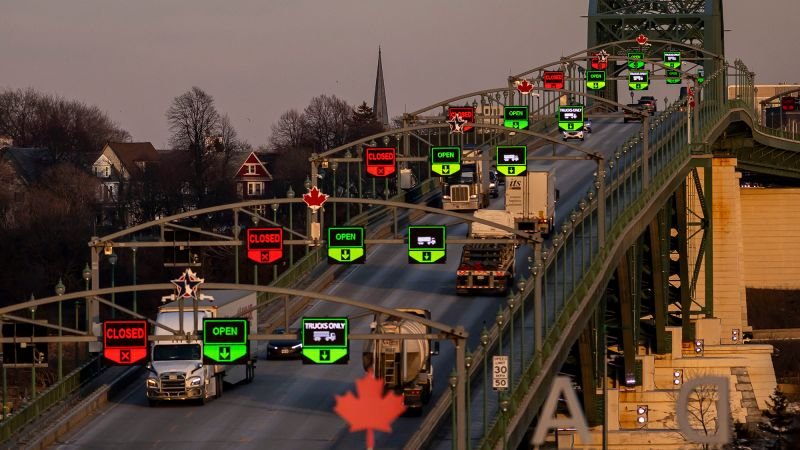
President Donald Trump on Monday announced sweeping tariffs against Canada, threatening to reignite a trade battle with one of America’s closest allies and top economic partners.
The 50% tariffs on certain Canadian goods, including electrical equipment and machinery, are among the steepest tariffs his administration has levied against any country.
Although the president has recently threatened tariffs against America’s neighbor in retaliation for wildfire smoke that poured into the northern part of the United States, administration officials said that the latest tariffs are unrelated.
The levies take effect in 30 days, covering about $20 billion of Canadian goods, the White House said.
“Canada has maintained pervasive, non-reciprocal trade practices that have disadvantaged American farmers, manufacturers, and workers,” the office of the US Trade Representative said in a social media post about the new import taxes.
Ontario Premier Doug Ford immediately encouraged Canada to retaliate.
“If these tariffs proceed, Canada should respond tariff for tariff, dollar for dollar,” Ford said in a post on X.
Trump cited Section 338 of the Tariff Act of 1930, a law that allows a president to set tariffs up to 50% when another country descriminates against American goods. However, the law has never been applied this way.
Excluded from the latest round of tariffs are several key Canadian imports, including energy products, critical minerals, fish and other goods that are subject to industry-specific duties, such as cars and metals.
However, unlike other levies Trump has enacted against Canada, there will be no carve-outs for goods covered by the trade pact known as the United-States-Mexico-Canada Agreement, which is currently under negotiation.
This story has been updated.
CNN’s David Goldman contributed reporting.