







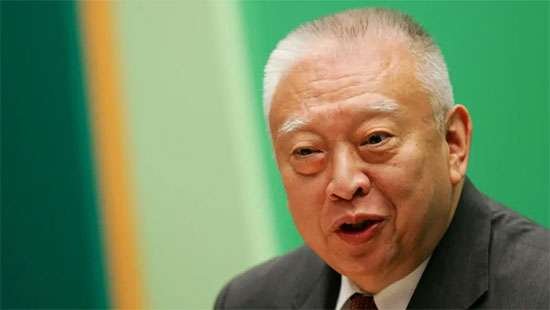
Tung Chee-hwa, the first Chief Executive of Hong Kong following the 1997 handover from British colonial rule to Chinese sovereignty, has died at the age of 89. His passing marks the end of a pivotal chapter in the territory’s history, closing the book on the life of a leader who stood at the center of Hong Kong’s transition into a Special Administrative Region of China.
A shipping magnate by trade, Tung was handpicked by Beijing to lead the city as it transitioned away from 156 years of British administration. His tenure, which lasted from 1997 to 2005, was defined by immense geopolitical challenges, economic turmoil, and significant social upheaval. He assumed office amidst the uncertainty of the Asian Financial Crisis and was subsequently tasked with navigating the city through the devastating SARS outbreak of 2003.
Tung’s administration was frequently marked by controversy, most notably his attempts to introduce Article 23, a set of national security laws. The proposal triggered unprecedented mass protests in July 2003, with hundreds of thousands of citizens taking to the streets to voice concerns over the erosion of civil liberties. The backlash forced the government to shelve the legislation, a moment that remains etched in the collective memory of the city’s political history.
Born in Shanghai in 1937, Tung’s family moved to Hong Kong in 1949. Before his appointment as Chief Executive, he served as a member of the Executive Council under the British administration, positioning him as a bridge between the colonial era and the new reality of “One Country, Two Systems.” Following his resignation from the top post in 2005—citing health reasons—he remained a prominent political figure, serving as a vice-chairman of the Chinese People’s Political Consultative Conference, China’s top advisory body.
Throughout his later years, Tung continued to exert influence as a staunch defender of Beijing’s policies toward Hong Kong. He remained a central figure in political circles, often seen as a reliable representative of the mainland’s interests in the city. His supporters lauded him as a dutiful patriarch who navigated a period of extreme complexity, while critics often pointed to his struggle to balance the demands of Beijing with the democratic aspirations and free-market expectations of the Hong Kong public.
News of his passing has prompted an outpouring of tributes from political leaders across the region. Flags are expected to fly at half-mast as the city reflects on a figure whose leadership style and policies helped shape the current geopolitical framework of modern Hong Kong. As the city bids farewell to its inaugural post-colonial leader, the legacy of Tung Chee-hwa—a man who bore the heavy mantle of history during a time of profound transformation—remains a subject of intense historical debate and contemplation.
Disclaimer: This content is auto-generated for informational purposes only.
Source: Read Original News