







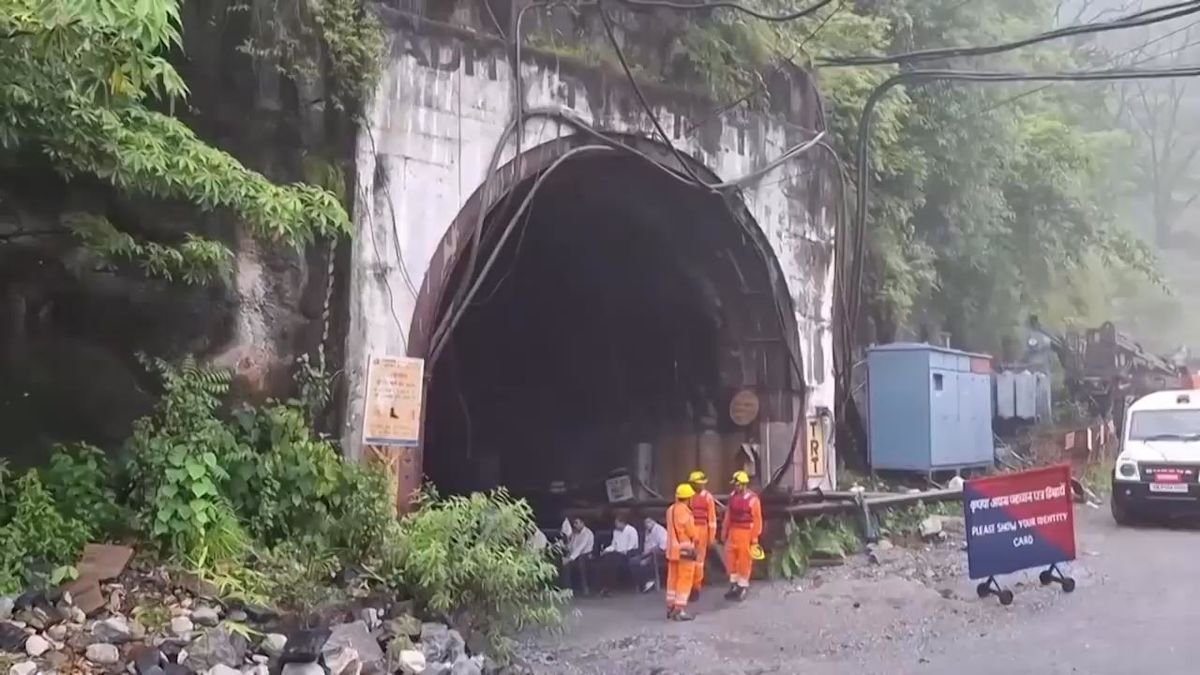
A recent incident has cast a shadow over the ambitious Kiratpur-Nerchowk four-lane highway project in Himachal Pradesh, India, with the collapse of a tunnel. This unfortunate event, occurring near the village of Tihra in Sundernagar, Mandi district, highlights ongoing safety concerns in large-scale infrastructure development. The tunnel, still under construction, experienced a structural failure on Sunday, prompting immediate fears for workers within.
Local authorities, including the Deputy Commissioner Arindam Chaudhary and the Superintendent of Police Shalini Agnihotri, swiftly arrived at the scene to assess the situation and oversee rescue operations. Fortunately, it was confirmed that no laborers were trapped inside the collapsed section at the time of the incident, averting a potential tragedy. The collapse was attributed to pressure from a major landslide originating from the mountain above, underscoring the geological challenges inherent in constructing such infrastructure in mountainous regions.
This incident is not an isolated one in the broader context of infrastructure development in India. The nation has seen its share of construction mishaps, often raising questions about adherence to safety protocols and the robustness of engineering designs, especially in complex environments. Just a few months prior, another alarming event unfolded in the Himalayan state of Uttarakhand, where a tunnel collapse trapped 41 workers for over two weeks. This earlier incident, occurring during the construction of the ambitious Char Dham highway project, captivated national attention and sparked a massive, multi-agency rescue effort. The successful extraction of all workers, though a testament to human resilience and coordinated rescue operations, served as a stark reminder of the inherent risks faced by those working on such projects.
These incidents collectively underscore the critical need for enhanced safety measures, rigorous geological assessments, and robust emergency response plans in India’s rapidly expanding infrastructure sector. As the country continues to invest heavily in projects like highways, tunnels, and dams, ensuring the well-being of its workforce and the structural integrity of these developments remains paramount. The ongoing analysis of these collapses will hopefully contribute to improved engineering practices and a safer future for India’s infrastructure development.