








Supreme Court Slams Rajasthan HC for Unfair Strictures Against Trial Judge Over Typo Errors
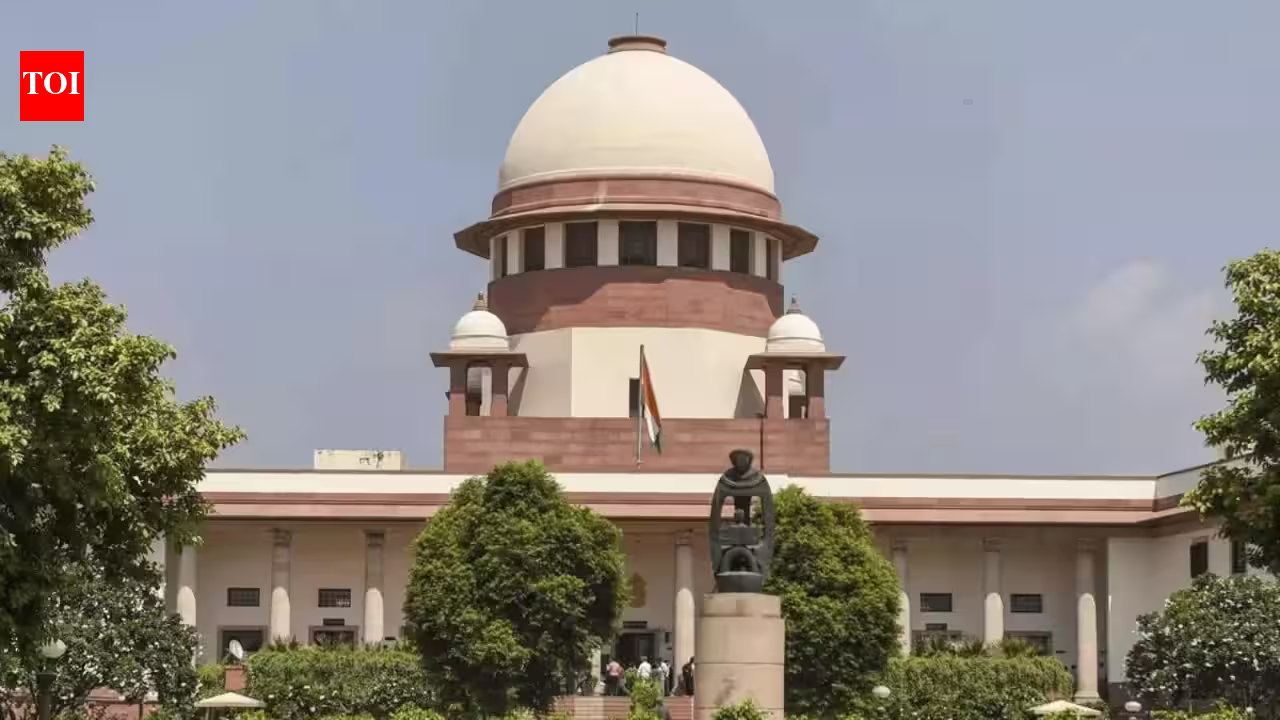
NEW DELHI: The Supreme Court has intervened to protect the professional integrity of a trial court judge, overturning a decision by the Rajasthan High Court that had castigated the officer for minor clerical inaccuracies in a judgment. The top court ruled that the High Court’s harsh remarks were not only unnecessary but also procedurally flawed.
The dispute stemmed from two separate judgments delivered by the trial judge involving the same criminal case, as one of the accused was a minor. While the judge correctly appreciated the evidence and convicted both the adult and juvenile accused—sentencing them each to 20 years of rigorous imprisonment—some factual inconsistencies surfaced in the written documents. The High Court had attributed these errors to a “cut, copy and paste” practice, alleging that the judge had signed off on the documents without properly reviewing the work of her stenographer. Consequently, the High Court had ordered the judge to undergo remedial training at a judicial academy.
SC: Principles of Natural Justice Violated
A Supreme Court bench, comprising Justices Sandeep Mehta and Devendra Kumar Upadhyaya, expressed strong disapproval of the High Court’s conduct. The bench noted that the adverse observations were made without granting the judicial officer an opportunity to explain the circumstances or address the allegations.
“Ex facie, we feel that the adverse observations and the strictures recorded by the High Court against the judicial officer were uncalled for and avoidable,” the Supreme Court stated in its order. The bench highlighted that the criticisms amounted to a breach of the principles of natural justice, as the officer was condemned without being allowed to present her side of the story.
Inadvertent Errors Do Not Deny Justice
The Supreme Court clarified that the inaccuracies—which appeared to be the result of overlapping details from two parallel trials—were purely typographical and did not alter the fundamental outcome or the justice delivered in the case.
The High Court had earlier suggested that the judge’s failure to remove irrelevant paragraphs relating to the adult accused in the juvenile’s judgment indicated negligence. However, the Supreme Court maintained that a distinction must be made between judicial incompetence and minor administrative slips. By striking off the strictures and the order for mandatory training, the apex court has reinforced the need for higher courts to avoid disparaging remarks that could irreparably damage the reputation of subordinate judicial officers.
Legal experts see this move as a significant check on the exercise of judicial scrutiny, ensuring that trial judges are not intimidated or humiliated for honest, non-substantive mistakes while discharging their duties. The Supreme Court’s intervention serves as a reminder that the administrative burden on lower courts necessitates a balanced approach, where oversight is constructive rather than purely punitive.
Disclaimer: This content is auto-generated for informational purposes only.
Source: Read Original News