









Beyond the Averages: India’s Monsoon Season Defined by Extreme Volatility
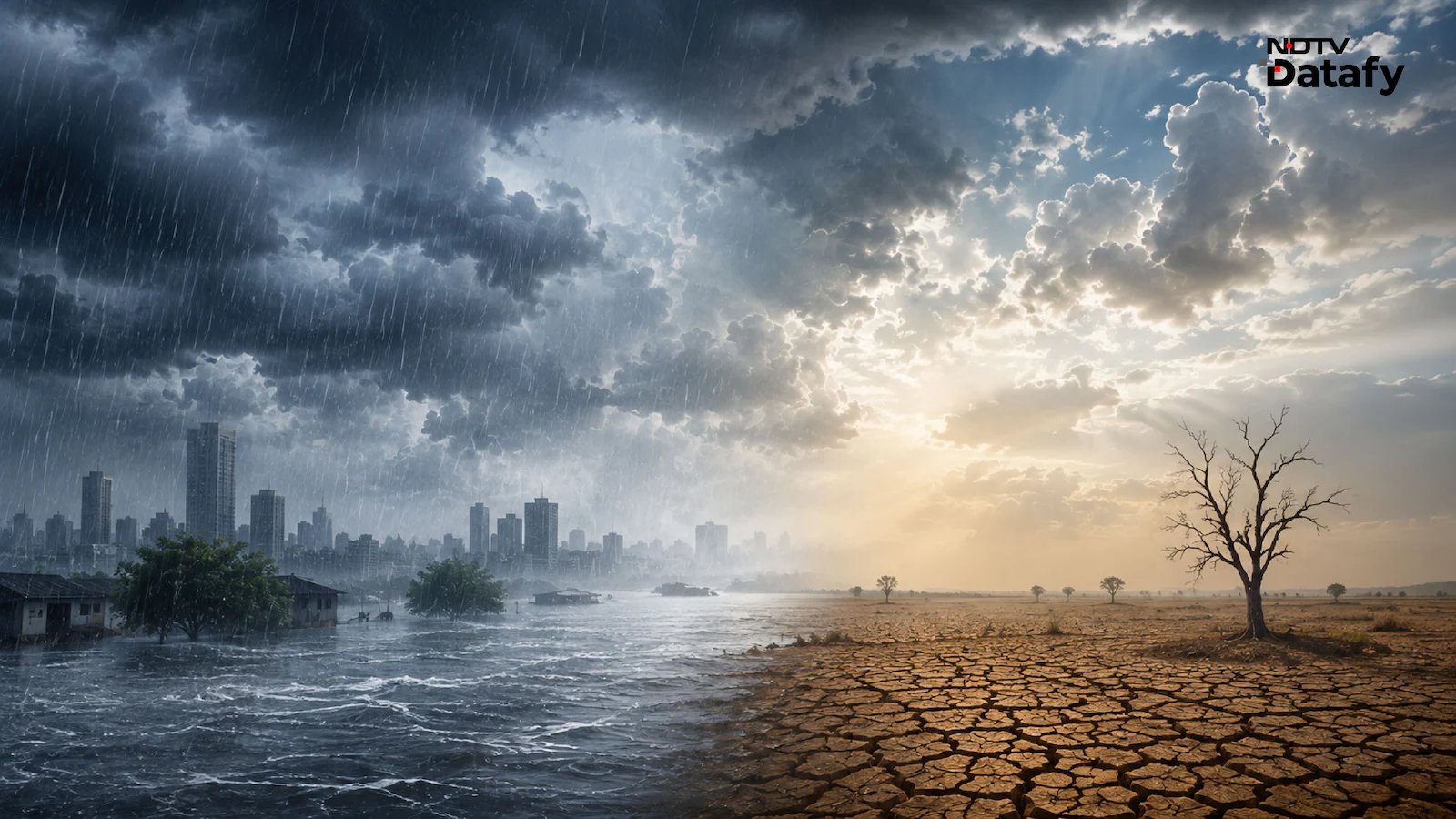
While the monsoon season remains ongoing, a concerning trend has emerged across India: seasonal rainfall statistics are failing to capture the volatile reality on the ground. Despite the India Meteorological Department (IMD) forecasting a below-normal season, the true story of the 2026 monsoon lies not in the cumulative totals, but in its erratic and uneven distribution.
The Illusion of “Normal”
In many regions, including the national capital, the classification of “normal” rainfall is masking significant disruption. Delhi, for instance, recorded a 14 percent departure from the norm between June and August—a figure that falls squarely within the IMD’s definition of “normal.” However, a deeper dive into daily precipitation data paints a vastly different picture.
The capital’s season has been defined by long periods of stifling dryness punctuated by intense, high-impact downpours. Delhi received approximately 32.9 mm of rain in June, 261.5 mm in July, and 354.1 mm in August. Within these months, the pattern was stark: July 9 saw a single-day deluge of 72.6 mm, while August 8 and August 25 recorded 98.7 mm and 99.1 mm, respectively. On most other days, the city experienced negligible rain or none at all.
This “all-or-nothing” weather pattern has wreaked havoc in urban centers like Delhi-NCR and Gurugram, where sudden, heavy bursts of rain consistently overwhelm drainage systems, leading to severe waterlogging and flash flooding that cripples daily life.
A Fragmented National Landscape
The challenges seen in the capital are reflected on a national scale. Data from the IMD indicates that India has recorded a 13.8 percent deficit from June to August, receiving 603.7 mm of rainfall against the normal 700.7 mm.
The regional disparities are profound:
- Deficits: East and Northeast India are facing the most significant shortfalls. States like Bihar (-42%), Manipur (-43%), Arunachal Pradesh (-41%), and Andhra Pradesh (-42%) are struggling with substantial deficiencies.
- The Exceptions: Only a few pockets of the country have bucked the trend. Ladakh reported an excess of 195 percent, while Odisha and the union territory of Dadra and Nagar Haveli and Daman & Diu saw surpluses of 26 percent and 45 percent, respectively.
This uneven monsoon distribution suggests that climate variability is increasingly challenging traditional agricultural and urban planning models, as cumulative averages hide the acute water scarcity affecting parts of the country.
Outlook for September
As the monsoon moves into its final month, the IMD’s extended-range forecast for September 3 to 9 offers little reprieve for the deficit-hit regions. Most of India is expected to experience below-normal rainfall.
However, the pattern of localized extremes is predicted to persist. While much of the country remains dry, parts of the Northeast, West Bengal, Odisha, Jharkhand, and Bihar are braced for heavy to very heavy rainfall at isolated locations. For a nation already grappling with the complexities of this year’s seasonal weather, the coming weeks will likely continue to test infrastructure and climate resilience.