








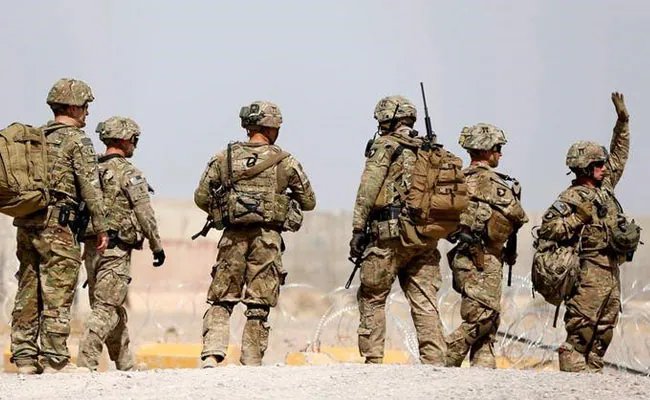
The Iranian military has controversially announced a substantial bounty for its citizens who capture or kill American soldiers. According to Amir Hatami, the chief of the Iranian Army, a reward equivalent to $30,000, or 5 billion tomans, will be given to individuals who successfully incapacitate or eliminate an invading American military personnel and hand them over to Iranian authorities. This declaration, reported by IRNA state news agency and quoted by AFP, was made in response to what Hatami described as a “large number of requests” from the public eager to participate. Notably, the reward is doubled to $60,000 for “courageous Iranian women” who carry out such actions, emphasizing a particular incentive for female participation.
Hatami’s announcement did not specify the exact circumstances under which these actions should take place, leaving the details open to interpretation. This provocative offer comes amidst ongoing tensions and a fragile ceasefire between the US and Iran. Since the onset of the US-Iran war in the Middle East, there have been no publicly acknowledged deployments of American ground forces within Iran, apart from an incident involving a downed airman. The broader conflict has seen sporadic exchanges of fire, primarily concentrated in southern Iran and around the critical Strait of Hormuz.
Further expanding on the incentives, a report by The Jerusalem Post indicated that the bounty extends beyond monetary compensation. Hatami reportedly stated that the weapon used in the act would be purchased at double its value, with the individual receiving a new weapon in return. Additionally, the acquired weapon would be preserved and displayed in a planned museum, elevating the act to a form of national heroism.
Hatami seized the opportunity to critique the United States’ military might, asserting that its claims of power had been debunked during the conflict with Iran. He reiterated Iran’s demand for the US to withdraw from the Middle East, declaring that American forces “no longer have permission to enter the Persian Gulf, the Gulf of Oman or the Strait of Hormuz.” This aggressive rhetoric underscores the deeply entrenched animosity and lack of trust between the two nations.
This declaration arrives as a 60-day deadline, established under the US-Iran Islamabad Memorandum of Understanding signed on June 17, approaches. This agreement initially aimed for a temporary ceasefire and ongoing talks towards a permanent resolution, following 40 days of fighting that began on February 28. However, the truce has remained precarious, with negotiations failing to advance. The intermittent clashes have continued, highlighting the persistent instability in the region.
To date, the conflict has resulted in the deaths of US military personnel killed since the start of the US-Iran war totaling 17. All these casualties have occurred outside of Iran’s borders, in countries such as Iraq and Jordan. The Iranian military’s move to offer bounties on American soldiers marks a significant escalation in tensions and raises serious concerns about the potential for further destabilization in the region. The international community is closely watching these developments, particularly the implications for regional security and the ongoing efforts to find a diplomatic resolution to the protracted US-Iran standoff. The situation also raises questions about international law and the ethical boundaries of state-sponsored incentives for violence against military personnel.