





India Hits Back: Government Slams JD Vance’s ‘Indentured Servant’ Remark as Deeply Offensive
NEW DELHI: In a rare and sharp escalation of diplomatic friction, the Indian government has launched a scathing critique of United States Vice President JD Vance following his derogatory characterization of foreign tech professionals and H-1B visa holders. The diplomatic standoff was triggered by the U.S. administration’s recent decision to suspend various tech companies—including several prominent Indian firms—from the PERM Green Card program.
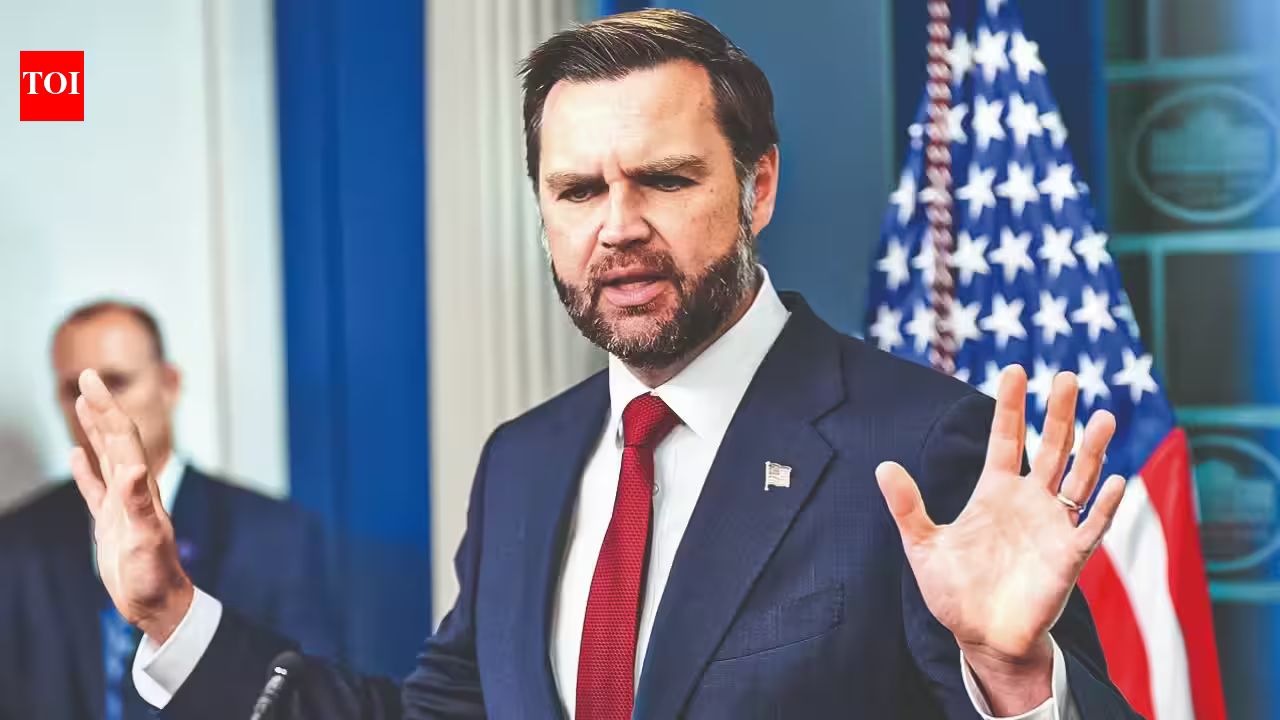
The backlash from New Delhi follows Vice President Vance’s assertion that American workers must be protected from being replaced by what he termed “foreign indentured servants.” Vance further insisted that the U.S. should restrict the entry of foreign personnel exclusively to “top-tier, elite” talent not available within the domestic labor market.
A Rejection of Colonial Rhetoric
The Ministry of External Affairs (MEA) issued a forceful statement condemning the language used by the Vice President. New Delhi noted that describing skilled, highly educated professionals as “indentured servants” is not only factually inaccurate but deeply offensive due to its historical and colonial undertones.
“Resorting to terminology that carries painful historical and colonial legacy connotations is deeply offensive,” the MEA stated. The Ministry highlighted that the U.S. innovation ecosystem and economic prosperity have been consistently bolstered by generations of immigrants whose enterprise and labor have been fundamental to American success. The government further emphasized that these disparaging remarks ignore the massive contributions Indian professionals have made to U.S. research, competitiveness, and productivity.
Strained Bilateral Relations
This unusually blunt response from India signals that the government’s patience is wearing thin amid a series of growing bilateral irritants. Beyond the immigration and talent mobility disputes, the two nations have recently locked horns over trade tariffs, India’s strategic partnership with Russia, and Washington’s renewed outreach to Pakistan. External Affairs Minister S. Jaishankar has previously cautioned that the U.S.’s burgeoning security ties with Islamabad could have a detrimental impact on the broader India-U.S. strategic partnership.
Regarding the suspension of the PERM program, the Indian government acknowledged that while the status of existing H-1B visa holders and their dependents remains secure, the policy change poses a significant hurdle for those pursuing permanent residency. The MEA cautioned that such protectionist measures ultimately work against the shared ambitions of both nations.
The Path Forward
The timing of the U.S. announcement has raised eyebrows in New Delhi, particularly as it precedes Prime Minister Narendra Modi’s upcoming visit to the United States for the G20 summit in December. Furthermore, the development creates a difficult backdrop for the impending visit of U.S. Secretary of State Marco Rubio to India, where the topic is expected to be a primary agenda item.
While observers suggest that the “America First” rhetoric is likely tailored to appeal to domestic voters ahead of the midterm polls, the Indian government maintains that talent mobility is a cornerstone of mutual benefit. New Delhi has expressed a clear expectation that all U.S. stakeholders recognize the value these partnerships provide, warning that such divisive political rhetoric undermines the innovation and shareholder wealth that these bilateral ties have fostered for decades.
Disclaimer: This content is auto-generated for informational purposes only.
Source: Read Original News