







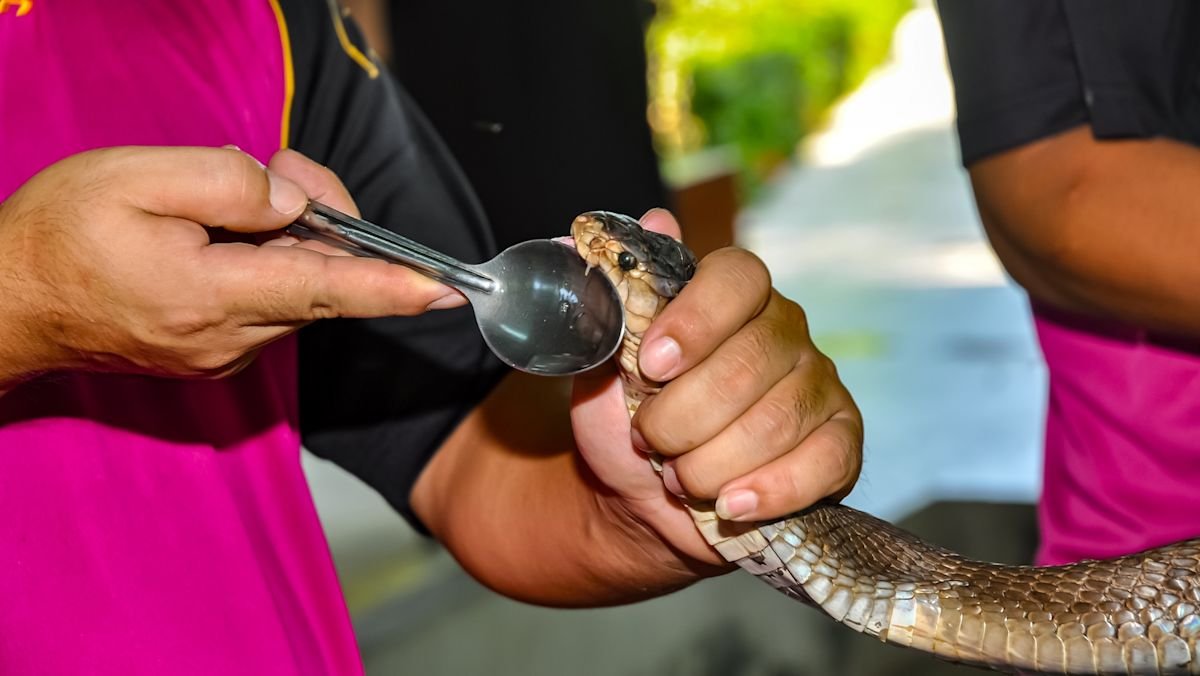
Breakthrough Nanobody Antivenom Promises New Hope for India’s Snakebite Crisis
In a landmark development for public health, researchers have unveiled a next-generation antivenom that could revolutionize the treatment of snakebites across India. A collaborative effort between the Indian Institute of Science (IISc), the Centre for Ecological Sciences (CES), and the Technical University of Denmark (DTU) has resulted in a novel therapy using “nanobodies”—tiny, highly effective antibody fragments—capable of neutralizing the lethal toxins of several Indian snake species.
The study, recently published in the journal Science Translational Medicine, addresses a critical medical challenge in a nation that records the highest number of snakebite fatalities in the world. With nearly 50,000 lives lost annually to these encounters, the breakthrough arrives at a pivotal time, as climate change threatens to shift snake populations into new, previously unaffected territories.
A More Potent Approach to Treatment
Traditional antivenoms have remained largely unchanged for over a century, relying on a cumbersome and outdated process. Currently, venom is harvested from snakes and injected into large animals like horses; the animals’ immune systems produce antibodies, which are then collected and purified. This method is not only expensive and slow, but it also carries significant limitations: the resulting antivenom can vary in quality between batches, often triggers severe allergic reactions in patients, and is frequently limited to protecting against only one or two specific species.
The new research introduces a synthetic alternative. By developing a five-component mixture of nanobodies, scientists have created a “cocktail” that acts as a broad-spectrum shield. In preclinical trials, mice exposed to the venoms of the monocled cobra, the spectacled cobra, and two species of Indian king cobras were successfully treated with this nanobody blend.
Remarkably, the treatment proved effective even when administered 30 minutes after the venom had already taken hold. According to Kartik Sunagar, an associate professor at CES, the results were transformative. “Even mice that were paralysed or had typical neurotoxic symptoms would revert to a completely asymptomatic state,” he noted.
The Future of Snakebite Management
The shift from animal-derived treatments to laboratory-engineered nanobodies could mark a historic turning point. Unlike conventional methods that require the repeated immunization of animals, these nanobodies can be mass-produced using microbial and humanized expression systems. This approach promises a more reliable, consistent, and safer product that could significantly lower production costs and increase availability in rural areas where the burden of snakebites is highest.
While the preliminary results in animal models are highly encouraging, researchers caution that further investigation is essential. The next phase will focus on determining whether this therapeutic cocktail can replicate its life-saving efficacy in humans.
“Antivenom treatment has virtually not changed for over 100 years,” Professor Sunagar stated. “This is the only next-generation antivenom we have now, which could tackle India’s snakebite problem.” By modernizing how we approach this neglected tropical disease, scientists are laying the groundwork for a future where a snakebite is no longer a potential death sentence, but a manageable medical emergency.
Disclaimer: This content is auto-generated for informational purposes only.
Source: Read Original News