









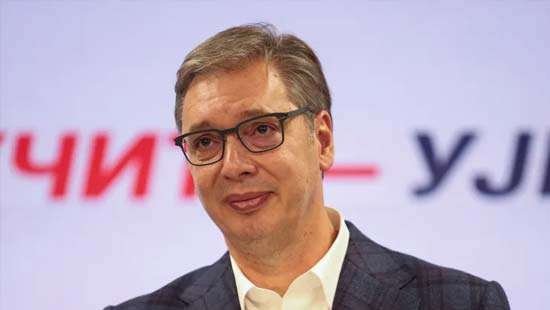
BELGRADE — In a stunning political earthquake that has reverberated across the Balkans, Serbian President Aleksandar Vučić announced his concession of defeat late last night, effectively ceding power to a surging, student-led grassroots movement. The admission marks the most significant political shift in Serbia in over a decade, signaling a potential end to the dominance of the Serbian Progressive Party (SNS).
The announcement came after a prolonged period of national unrest, characterized by weeks of protests that saw thousands of university students and young citizens taking to the streets of Belgrade. The demonstrators, mobilized largely through social media and grassroots organizing, demanded greater transparency, an end to institutional corruption, and a fundamental realignment of Serbia’s democratic processes.
Speaking from the presidential palace, a visibly somber Vučić addressed the nation, acknowledging that the voice of the electorate—and the undeniable pressure from the country’s youth—could no longer be ignored.
“I have listened to the people, and I have heard their call for a new direction,” Vučić said during a televised briefing. “The results of these elections, and the clear spirit of change present on our streets, demonstrate that the citizens of Serbia are ready for a new chapter. I respect the will of the voters and accept the outcome of this democratic process.”
The movement, which has gained international attention for its peaceful yet persistent nature, emerged from deep-seated frustrations regarding economic instability and democratic backsliding. What began as localized protests against specific policy measures rapidly evolved into a coordinated national campaign. By leveraging digital platforms to circumvent traditional media narratives, the student leaders managed to organize a multi-city coalition that effectively challenged the government’s grip on public opinion.
Analysts are describing the result as a “triumph of the digital generation.” Unlike traditional opposition parties, which have struggled for years to unite against the SNS, this movement focused on clear, tangible demands for reform, specifically targeting the judiciary and electoral oversight.
“This is not just a defeat for a political party; it is a fundamental shift in the country’s political culture,” said Dr. Elena Jovanović, a regional political analyst. “For years, the status quo felt permanent. The students proved that mobilization, when combined with a clear message and moral clarity, can dismantle even the most established political machinery.”
As news of the concession broke, thousands gathered in Belgrade’s Republic Square, with spontaneous celebrations erupting into the early hours of the morning. While the logistics of a power transition remain unclear, opposition leaders and representatives of the student movement are already calling for an immediate dialogue to ensure a peaceful handover.
For Serbia, the path forward remains complex. International observers and EU officials are closely monitoring the situation, hopeful that the transition will bolster democratic stability in the region. For now, however, the streets of Belgrade belong to a new generation that has successfully rewritten the political future of their nation.
Disclaimer: This content is auto-generated for informational purposes only.
Source: Read Original News