
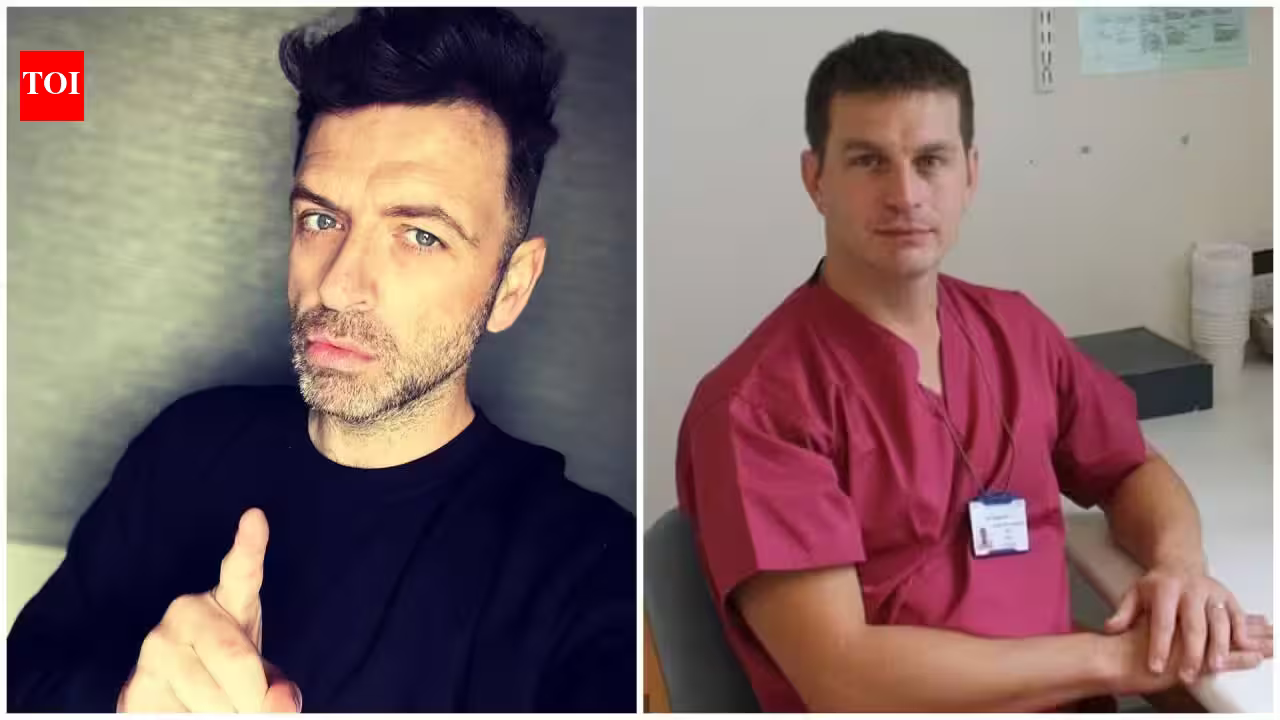







The glittering lights of a sold-out stadium are a far cry from the stark, sterile reality of a surgical ward, but for Westlife star Mark Feehily, the two worlds have collided in a harrowing legal battle. The beloved singer, known for his soaring vocals and presence on stage, has taken a bariatric surgeon to the High Court, seeking over £200,000 in damages following a series of health complications that have irrevocably altered his life and career.
At the heart of the case is a 2020 laparoscopic sleeve gastrectomy performed by surgeon Nick Carter at the private Spire Portsmouth Hospital. What was intended to be a routine procedure has, according to legal documents, spiraled into a multi-year medical nightmare, culminating in the complete removal of Feehily’s stomach.
The Spiral of Health Complications
The narrative Feehily presents in his court claim is one of sudden, sharp decline. He alleges that within days of his August 2020 surgery, his condition plummeted. Instead of a standard recovery, the star was rushed back to the hospital, grappling with what would become a recurring, life-threatening bout of sepsis and severe abdominal infections.
For anyone who has followed the Westlife timeline, the timing is particularly tragic. Much of the early period of his recovery coincided with the isolation and logistical nightmare of the global pandemic. Feehily spent grueling months in intensive care, fighting for his life while the world stood still. Even as he emerged from that initial trauma, the fallout continued. By 2021, a severe chest infection and pneumonia sidelined him from Westlife’s Wild Dreams tour, a bitter blow for a performer who thrives on the stage.
The legal filings detail a staggering path of trauma: at least four major surgeries performed since that initial 2020 date, and a debilitating incisional hernia—a physical byproduct of the repeated abdominal trauma he has endured.
The Legal Tug-of-War Over Surgical Standards
The courtroom will now become the stage for a forensic examination of medical accountability. Feehily’s legal team contends that surgeon Nick Carter left behind stomach tissue that became the source of a dangerous leak, leading directly to the systemic infections that plagued the singer for years.
However, the defence presented by Carter is firm. Through his legal representatives, Carter denies any negligence. The surgeon acknowledges that a portion of the stomach tissue remained and that a leak did occur at the staple line, but he frames these as “recognized complications” inherent to the nature of bariatric surgery. According to the defence, such leaks occur in approximately 1% of cases and are an accepted surgical risk rather than a failure of care.
There is also a complex procedural element to the defence: Carter’s team has argued that the contract for treatment was technically with Streamline Surgical—a private medical group—rather than a direct contractual arrangement between the surgeon and the patient. It is a classic legal defense strategy, one that seeks to shift the burden of liability away from the individual practitioner.
High Court Stakes and Legal Maneuvering
With the claim now lodged in the High Court, the stakes extend far beyond the reported £200,000 baseline. By bringing the case to this level, Feehily’s solicitors at Leigh Day are positioning the claim for potentially significant damages should the court find in his favor.
The legal process is set to unfold in stages, starting with a preliminary trial between May and July. This initial phase is crucial; it will not address the quantum of damages, but rather the fundamental question of negligence. Did Nick Carter fail in his duty of care? Did his actions serve as the direct cause of the catastrophic health decline that followed?
Expert witness reports, expected to be filed in November, will likely hold the key. These reports—spanning surgical precision to radiological evidence—will provide the court with the technical blueprint needed to decide whether the tragedy was an unavoidable medical misfortune or a avoidable professional error.
The Human Cost of a Public Exit
For fans of Westlife, the most visible evidence of Feehily’s struggle has been his prolonged absence from the band. In February 2024, the singer made the difficult decision to step down from touring entirely.
It wasn’t an exit made lightly. Feehily has been remarkably candid with his fanbase, using his platform to bridge the gap between his private agony and his public persona. In a poignant update shared in December 2025, he spoke of the “honest truth”—a realization that his body and mind were simply not ready for the rigors of a massive world tour. “My body and my mind need time,” he wrote, a sentiment that resonated with fans who have watched him navigate the transition from lead singer to someone struggling to perform the most basic tasks of his profession.
While he has found a different, quieter rhythm through his broadcast work, such as hosting Mark Feehily’s Musical Icons on RTE Radio 1, the absence of his voice on the band’s current world tour serves as a daily reminder of the price he has paid.
As the legal proceedings loom, the music industry watches on, not just for the sake of the litigation, but with genuine concern for a man who has had to trade the roar of a concert crowd for the cold, quiet halls of the High Court. For Feehily, this isn’t just about financial compensation; it is about seeking closure for a chapter of his life that stripped him of his health, his livelihood, and the stage he loved so dearly.
Disclaimer: This content is auto-generated for informational purposes only.
Source: Read Original News