





Uninvited House Guests to Rare Flora: Unpacking Ireland’s Diverse Wildlife Encounters
Ireland’s natural beauty continues to surprise and delight, with recent observations ranging from common household intruders to elusive aquatic plants and fascinating nocturnal hunters. This past month, members of the public have shared their intriguing encounters, shedding light on the rich biodiversity thriving across the island.
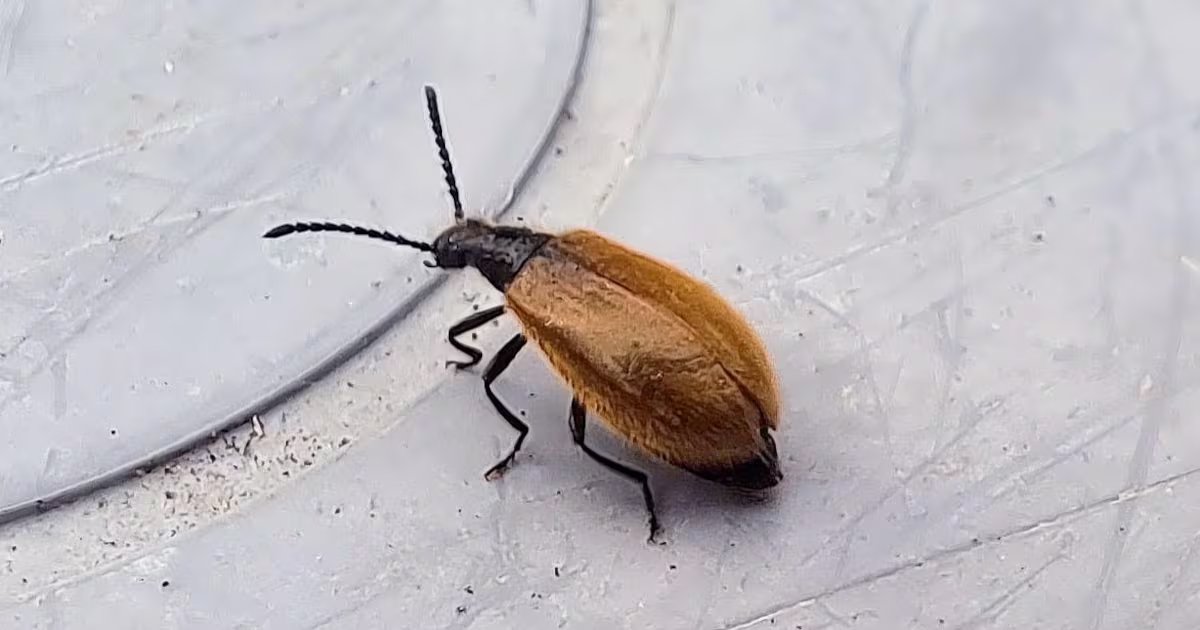
Many homeowners, like Mark Averill, have recently found themselves playing reluctant hosts to hairy-bodied insects. These, identified as ground beetles, specifically Lagria hirta, are generally harmless. Experts advise that these beetles are more inconvenienced by being indoors than homeowners should be worried about their presence. Attracted to lights, particularly in the evening, these winged insects are simply seeking their natural habitat – the garden. Keeping windows closed during illuminated hours is a simple yet effective deterrent for these nectar and pollen feeders.
Further afield, Ciaran Maloney of Pollbrock, Co Louth, captured a stunning photograph of a damselfly in his garden, despite the absence of a nearby pond or river. The vibrant creature was identified as a male banded demoiselle damselfly (Calopteryx splendens), easily recognized by its distinctive metallic blue-green body and blue-black banded wings. While females, with their translucent pale green wings, typically remain near water bodies for egg-laying in slow-moving streams and rivers, males often venture further afield in search of mates. Ciaran’s visitor, therefore, was likely on a romantic quest rather than a hydrological one.
Meanwhile, an aquatic mystery unfolded on Lough Derg, Co Clare, for Mike Cleary. During a paddling excursion, among a rich tapestry of water mint, lilies, mussels, and even otters, he discovered an unusual plant. This was confirmed to be the arrowhead (Sagittaria sagittifolia), a relatively rare species. Characterized by its distinctive arrow-shaped leaves that typically rise above the water on long stalks and flowers with only three petals, the arrowhead thrives in shallow, slow-moving waters. Lough Derg is recognized as one of its crucial habitats, predominantly found in the central and eastern regions of Ireland, highlighting the ecological significance of the lake.
From the insect world, Maryrose Bogan in Killorglin, Co Kerry, sought identification for a striking blue-green moth found clinging to her west-facing wall. While initially speculating it might be a large emerald moth, experts clarified it as a grass emerald (Chlorissa viridata), a smaller but equally captivating species. Ireland hosts five emerald moth species, with four being relatively common. The caterpillars of the grass emerald feed on broom and gorse, and the adults are typically observed flying in July.
Finally, Moira Anderson from Wicklow had a rare and early encounter with a native Irish species – a long-eared owl (Asio otus). Photographed in her garden at dusk, the owl’s appearance during daylight hours is unusual, as these birds are primarily nocturnal hunters. The owl’s name is derived from the prominent, ear-like feather tufts on its head, which are not, in fact, its ears. Long-eared owls possess remarkable auditory abilities, with specialized facial feather disks and asymmetrical ear openings that allow them to pinpoint the precise location of prey, primarily rodents, from the faintest sounds in the dark.
These fascinating observations underscore the constant natural activity occurring across Ireland, reminding us of the diverse ecosystems and incredible creatures that share our landscapes. Members of the public are encouraged to continue submitting their nature queries and observations, ideally with a photograph and location, to further contribute to our understanding of Ireland’s rich wildlife.