








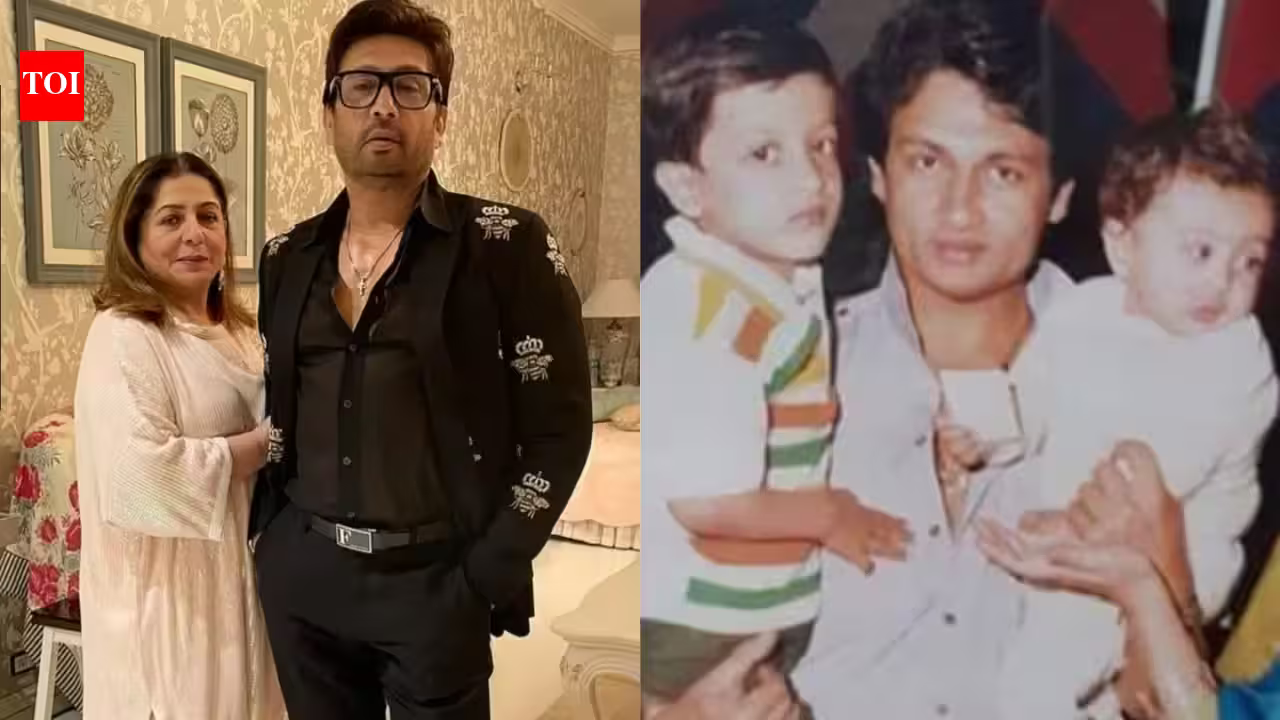
The glitz and glamour of the entertainment industry often act as a veil, hiding the profound human struggles that exist behind the camera lens. For veteran actor and television stalwart Shekhar Suman, the mask of the charismatic host and comedic powerhouse has long concealed a reservoir of unimaginable grief. In a recent, deeply vulnerable conversation with The Lallantop, Suman pulled back that veil, revisiting the most harrowing chapter of his life: the loss of his eldest son, Aayush, and the cruel irony of achieving professional success while his world was collapsing at home.
The Crushing Weight of Professional Ambition and Personal Tragedy
Long before he became a household name synonymous with Dekh Bhai Dekh or his sharp-witted political commentary, Suman was a man grappling with a professional crossroads. In the early 90s, he found himself in a precarious position: he was hungry for film roles, yet the industry remained stubbornly indifferent to his aspirations. It was during this period of career-stagnation that the universe dealt him a blow that rendered his professional anxieties insignificant.
“I discovered my son was terminally ill. Firstly, I had no work at that time. On top of that, we received such tragic news,” Suman shared. “I was completely ruined and destroyed. I thought I had nothing left in life.”
The logistics of grief are often overlooked in the narrative of stardom. As his son’s health plummeted, Suman found himself in the desperate, soul-crushing position of needing money for medical expenses while having no consistent income. He was forced to pivot toward a medium he had been hesitant to embrace: television. When director Anand Mahendroo approached him for Dekh Bhai Dekh, a project backed by the legendary Jaya Bachchan, Suman initially balked. He held onto the fading dream of being a film star, but the reality of his mounting debt and the necessity of providing for his child eventually forced his hand.
The High Cost of the Laugh Track
There is a particular kind of psychological torture in having to perform joy for an audience when you are internally mourning. While millions of Indians eventually fell in love with the light-hearted, effervescent charm of Dekh Bhai Dekh, they remained blissfully unaware of the silent heartbreak unfolding on the set.
Suman recounts that era with a haunting clarity. To keep abreast of his son’s condition, a telephone was placed on the set. Every time the phone rang, his heart would plummet into his stomach, the sound acting as a trigger for his deepest fears. “Whenever the phone rang, I picked it up with a pounding heart, hoping it wasn’t bad news. After attending the call, I had to go back and do the show, which was a light-hearted comedy. It was difficult,” he admitted. That he was able to deliver top-tier comic timing while living in a state of perpetual terror is a testament to his grit, but one that left deep, indelible scars.
An Angel’s Final Chapter
The most poignant moments of Suman’s recollection center on Aayush himself—an eleven-year-old who seemed to possess a wisdom that transcended his short life. As the end neared, the young boy’s behavior took on a mystical quality that left his family both awestruck and devastated.
Suman recalls how, in his final days, Aayush began reciting Sanskrit shlokas—a phenomenon that the actor still cannot fully explain. It wasn’t just the recitations; it was the ethereal peace his son seemed to radiate. He spoke of seeing a “golden light” and pleaded with his father to save him, a moment of raw, childlike vulnerability that remains etched in Suman’s memory. In a final display of grace, the young boy told his parents and even the family driver that he loved them. He was, as his father describes, “an angel.”
A Wound That Never Heals
Grief, in its truest form, does not move in a straight line toward closure. For Suman and his wife, Alka, the tragedy did not conclude with Aayush’s passing; it became the quiet rhythm of their daily lives. Suman reveals that decades later, the family still dedicates hours to talking about Aayush, keeping his memory present in their home.
The loss forced a radical re-evaluation of his values. Once his son was gone, the “success” he had fought so hard for—the fame, the money, the recognition—felt hollow. “Once he was gone, what use were money or fame to me?” Suman asked, a rhetorical question that cuts to the heart of the human experience. His continued work wasn’t driven by ambition, but by the stark necessity of caring for the rest of his family.
The Impossible Decision of a Mother
Perhaps the most heart-wrenching revelation from the interview is the perspective of Alka Suman, who was forced to confront the limit of her child’s suffering. As Aayush’s pain became unbearable, she reached a point of agonizing clarity that no parent should ever have to face: she begged the doctors to let him go.
“She was the ‘savvy mother who begged for her son’s death,'” Suman recalled, noting the initial conflict he felt. While he wanted to “fight until the end,” he ultimately understood that her plea wasn’t born of lack of love, but from the purest form of mercy. They were watching their child disintegrate, and the decision to stop treatment was perhaps the final, most sacrificial act of their parenting.
Shekhar Suman’s story is a sobering reminder that behind every public face lies a history of private wars. His journey through the loss of Aayush serves as a haunting, resonant tribute to the fragility of life and the immense, quiet bravery required to keep living when the person who defined your world is no longer there to hold your hand.
Disclaimer: This content is auto-generated for informational purposes only.
Source: Read Original News