



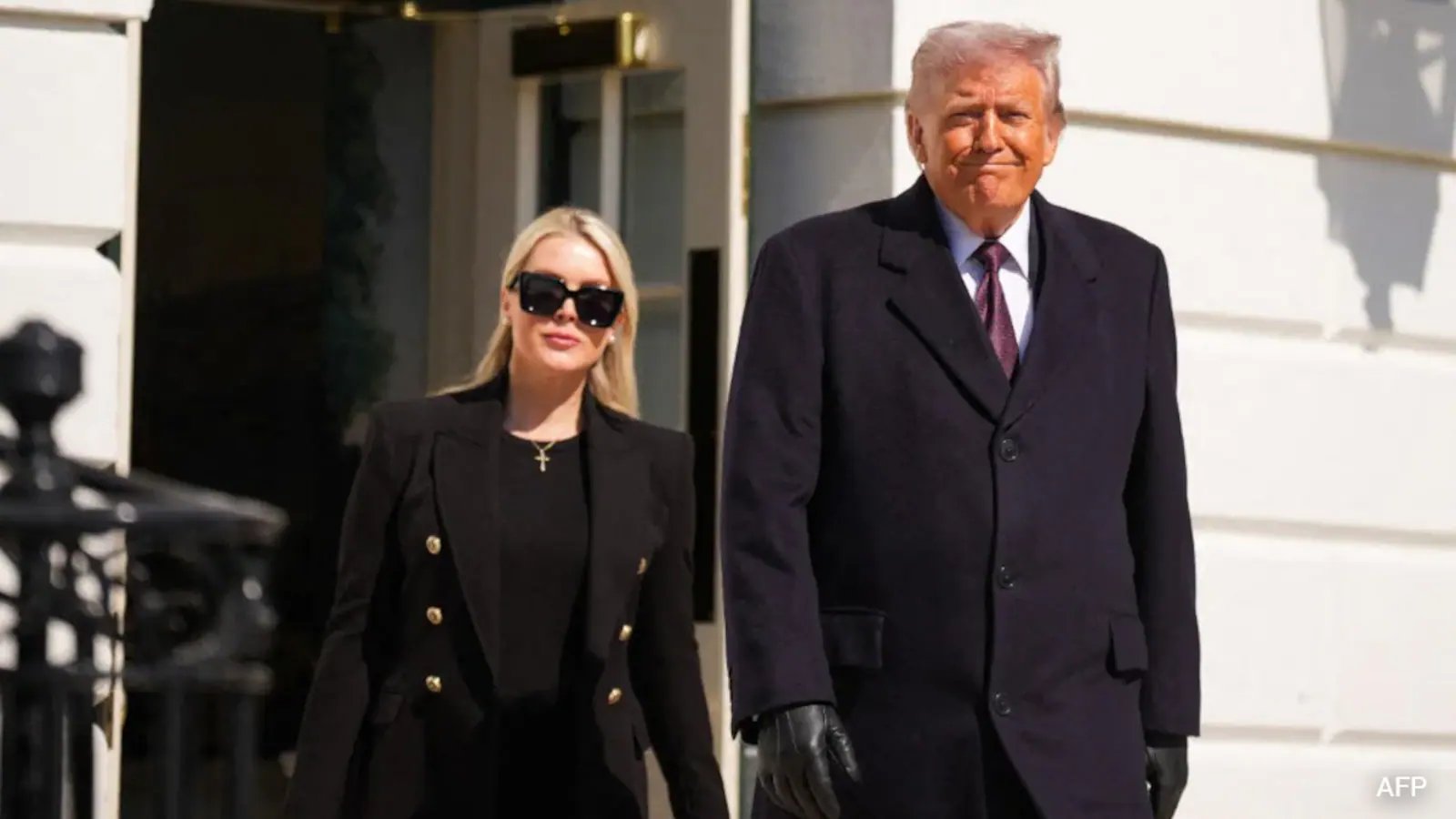
Karoline Leavitt, the youngest individual to ever serve as White House Press Secretary, is slated to depart the Donald Trump administration at the conclusion of this month. The 28-year-old, known for her sharp retorts aimed at journalists, will step down from her position to dedicate more time to her young family, as announced by President Donald Trump. He further confirmed that she would continue to serve as a senior advisor.
President Trump lauded Leavitt as a “real leader” and among his “most trusted aides,” emphasizing her continued influential role within the Republican Party, particularly with the looming midterm elections. He expressed his complete understanding and respect for her decision.
Leavitt welcomed her second child, a daughter named Viviana, in May. Her maternity leave was briefly postponed following an alleged assassination attempt on Trump during the White House correspondents’ dinner, where a gunman reportedly tried to breach the event. Her departure, mere weeks after resuming her duties, coincides with a period of declining poll numbers for Trump and the Republican Party facing potential setbacks in the November congressional midterm elections.
While not a policymaker, Leavitt, a veteran of Trump’s press office from his first term, became a prominent public spokesperson for the administration during his second term. She frequently addressed a wide array of topics, including those of significant interest to India and its diaspora. These issues encompassed tariffs, Russian oil, immigration policies, and the complex India-Pakistan conflict.
Regarding US Tariffs, in February 2026, after the Trump administration lowered its tariff on Indian goods from 25 percent to 18 percent as part of a new trade agreement, Leavitt praised the initiative. She stated that New Delhi had committed to discontinuing purchases of Russian oil, with Prime Minister Narendra Modi reportedly agreeing to investments totaling $500 billion across critical American sectors such as energy, transportation, and agriculture. She asserted that India would instead procure crude oil from the United States, and potentially from Venezuela, under this newly established trade deal. “The President struck another great trade deal with India. He spoke with Prime Minister Modi directly. They share a very good relationship. India is committed to not only no longer purchasing Russian oil, but buying oil from the United States, also perhaps from Venezuela too, which we know will now have a direct benefit on the United States and the American people,” she informed reporters at the time.
Leavitt also became a vocal proponent of the United States’ assertion that Trump brokered a peace deal between India and Pakistan during the May 2025 conflict. In July 2025, she suggested that Trump deserved the “Nobel Peace Prize” for his role in resolving various conflicts since assuming office, including the long-standing tensions between New Delhi and Islamabad. Since May 10, both Trump and his administration have repeatedly claimed that the U.S. President “helped settle” these tensions, informing the nuclear-armed South Asian neighbors that America would engage in substantial trade with them if they ceased hostilities. However, New Delhi has consistently maintained that it clearly communicated to Washington that Islamabad desired the ceasefire and unequivocally stated that no mediation would be tolerated, a stance that directly contradicts the US’s narrative on the ceasefire agreement between the two nations. For more details on this, see the India-US trade war with Pakistan report.