






Mumbai Braces for Leadership Transition at Tata Sons Amidst Intrigue and Policy Shifts
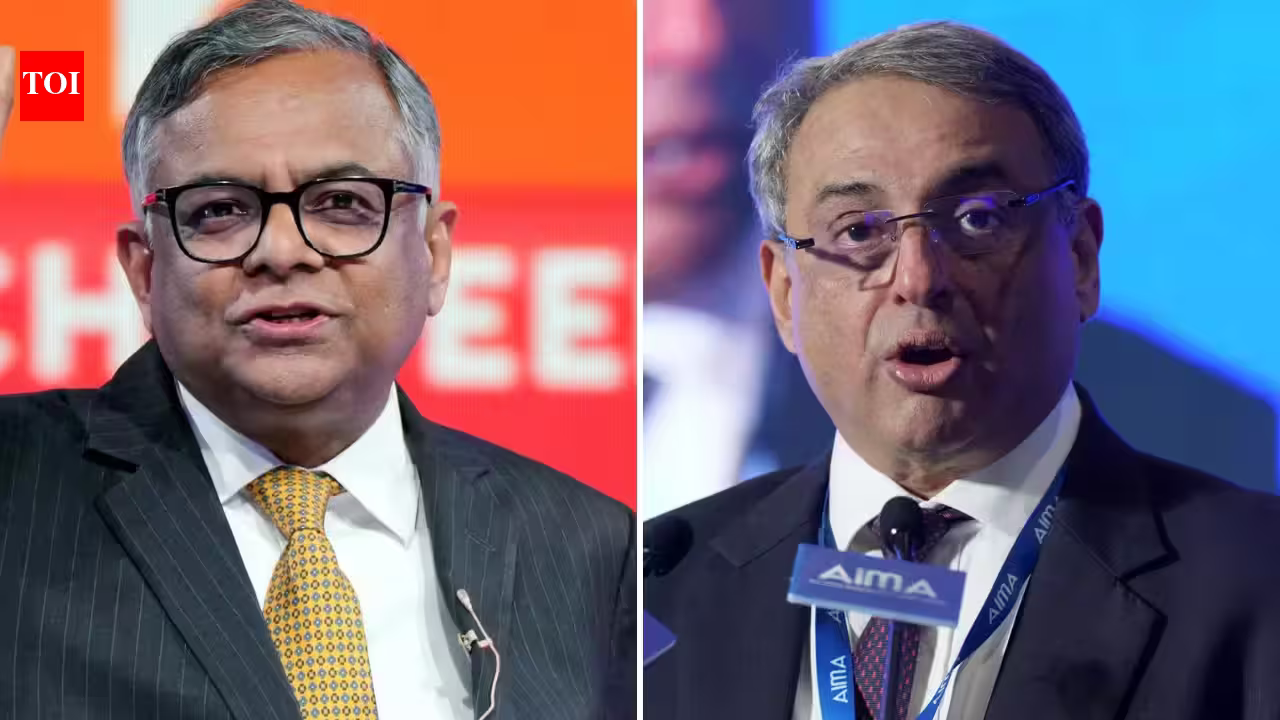
MUMBAI: Bombay House, the iconic headquarters of the Tata Group, is once again at the center of a leadership succession drama, a narrative that has historically unfolded with significant intrigue. The unexpected announcement by N. Chandrasekaran, chairman of Tata Sons, regarding his eventual departure, has ignited a fresh wave of speculation and uncertainty, echoing past boardroom battles within Tata Sons and Tata Trusts.
The paramount question now gripping corporate India is: who will be the next steward of this venerable conglomerate? While Tata Sons has a considerable window to orchestrate a smooth transition, with Chandrasekaran slated to remain chairman until February 2027, the path to his successor is fraught with complex procedural and internal challenges.
According to Tata Sons’ articles of association, the selection of the chairman is entrusted to a five-member committee. This committee comprises three members jointly nominated by the Sir Dorabji Tata Trust and the Sir Ratan Tata Trust (SRTT), one nominated by the Tata Sons board, and a fifth independent member chosen by the board. However, a significant complication has arisen: the SRTT is currently unable to participate in these crucial trustee meetings. This inability stems from a directive issued by the Maharashtra charity commissioner, introducing a new wrinkle into Tata Sons’ meticulously planned succession process.
The spotlight has also fallen on Noel Tata, a prominent figure within the Tata Group and a Tata Sons director. While he might have been a natural choice for an interim chairmanship in previous scenarios, this path appears to be blocked. Noel Tata is scheduled to retire from the boards of other Tata group companies in November, adhering to the group’s policy that mandates a retirement age of 70 for non-executive directors. Crucially, he will continue his tenure as a Tata Sons director as he is a Tata Trusts nominee, a position not subject to the same retirement age regulations.
The group’s recent history offers a poignant precedent. When Cyrus Mistry was controversially ousted as chairman in 2016, Ratan Tata, then 78 and four years post his own retirement from the chairmanship, stepped in as interim chairman, providing much-needed stability. The board subsequently appointed Chandrasekaran to assume the leadership mantle. However, Noel Tata’s situation differs significantly this time. A key amendment made to Tata Sons’ articles in 2022 explicitly bars the Tata Trusts chairman from simultaneously serving as the Tata Sons chairman. Ratan Tata was the last individual to hold both these influential positions.
Amidst this intricate backdrop, names for the coveted top job have begun to circulate. Prominently mentioned is TV Narendran, the 61-year-old managing director of Tata Steel. A true Tata veteran, Narendran’s journey with the group commenced in 1988, and he has dedicated his entire career to Tata Steel, successfully leading the company since 2013. His deep understanding of the group’s ethos and extensive operational experience make him a formidable contender.
Intriguingly, Noel Tata, in his capacity as Tata Sons director and Tata Trusts chairman, also holds the position of vice-chairman of Tata Steel. Furthermore, Narendran himself has publicly acknowledged the late Ratan Tata as a significant mentor, crediting him with guiding the steelmaker through a challenging period of transformation. These interwoven relationships add another layer of complexity and potential influence to the ongoing succession discussions.
As the corporate world watches intently, the coming months at Bombay House promise to be a period of intense deliberation and strategic maneuvering. The eventual choice will not only shape the future trajectory of the Tata Group but also send a powerful message about the conglomerate’s values, leadership philosophy, and resilience in the face of change.