





For decades, Bollywood’s biggest stars have been among India’s loudest cultural voices, weighing in on everything from social justice and women’s rights to religious tensions and national tragedies. But as one of the country’s largest student movements swept across India, many of those voices went quiet.
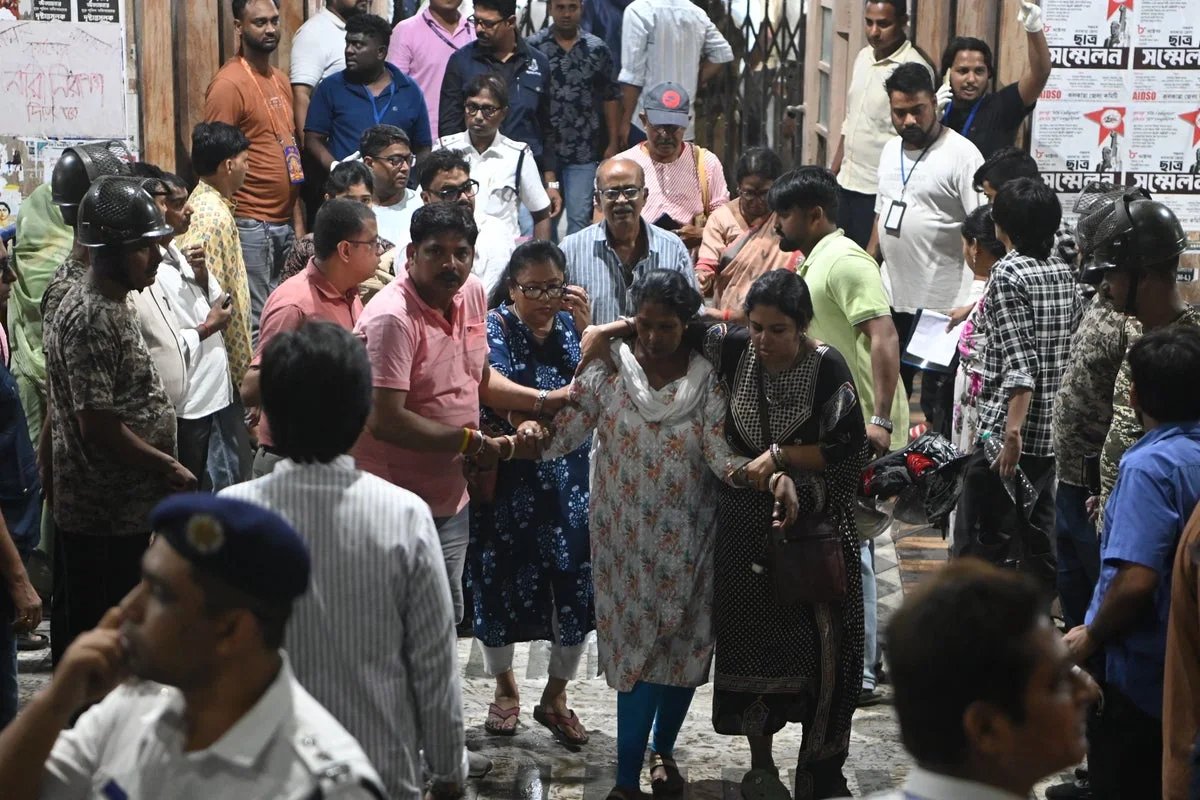
Last month, hundreds of thousands of Indians took to the streets as part of the youth-led Cockroach Janata Party movement, demanding accountability over examination paper leaks that had plunged the future of millions of students into uncertainty and led to suicides. As protests spread nationwide, demonstrators faced baton charges, tear gas and alleged pellet gun fire, while Bollywood’s biggest names largely stayed on the sidelines.
Some only addressed the issue more than a month later, after the movement had drawn wide international media attention and Prime Minister Narendra Modi had released a video assuring students that action would be taken.
“It is something of a culture in this country where the people we treat as heroes – actors, actresses, cricketers – essentially aren’t really that inspiring in public,” CJP spokesperson Ashutosh Ranka tells The National. “A lot of people we have looked up to in their respective careers haven’t spoken up, or spoke out far too late.”
Critics say the silence of the stars reflects a mix of fear of reprisals, online harassment and boycott campaigns, alongside the industry’s growing ideological closeness to Modi’s Bharatiya Janata Party government.
“Before 2014, actors were an active voice. That voice of dissent is now missing,” says Sanjay Singh, 29, one of the protesters. “The current status of democracy in India is authoritarian, which is why nobody wants to comment.
“I am not even surprised because, like us, actors and cricketers are also living under a right-wing regime and they know they’ll be suppressed. If they had come to the forefront, our issues would have got global attention, but these celebrities don’t have the guts.”
How the protests began
The CJP movement began online in June after Chief Justice of India Surya Kant sparked outrage by referring to unemployed youngsters as “cockroaches and parasites” during courtroom remarks.
The remark inspired a satirical party that eventually became one of India’s largest student-led movements, spearheaded by activist Abhijeet Dipke.
For more than 45 days, the Delhi protest site near Jantar Mantar, an 18th-century observatory, became the movement’s epicentre, drawing thousands of students, academics, activists and parents demanding the resignation of education minister Dharmendra Pradhan, a key minister in Modi’s cabinet.
Nearly 2.3 million students had sat the National Eligibility cum Entrance Test (Neet) in May, the highly competitive entrance examination for undergraduate medical and dental courses, competing for fewer than 130,000 medical college seats. Nine days later, the National Testing Agency, which oversees higher education entrance tests, declared the examination void following widespread allegations of paper leaks, forcing about two million students to resit the exam and leading some to taking their own lives.
Environmentalist and Ramon Magsaysay awardee Sonam Wangchuk joined the protests and undertook a 26-day hunger strike in support of the students. Together the protesters endured blistering summer heat, monsoon downpours and oppressive humidity, all the while peaceably chanting slogans and singing patriotic songs.
The movement reached a turning point on July 20, when demonstrators attempted to march from Jantar Mantar to Parliament on the opening day of the Monsoon Session. Police blocked them with multiple barricades before breaking out tear gas and baton charges. Several protesters were injured and at least two students were reportedly hit with pellet guns.
The police crackdown and the government’s response helped expand the movement beyond Delhi, with solidarity marches, candlelight vigils and demonstrations held across the country.
Deafening silence
Even then, voices from the Indian film industry were largely absent, with only a handful of celebrities, including Shabana Azmi and Prakash Raj, speaking out. Actor Salman Khan initially expressed support, but quickly backtracked and called for protesters to go home.
Superstar Amitabh Bachchan, who has criticised past government policies, was heavily trolled for remaining silent. Cricketer Virat Kohli and his wife, actor Anushka Sharma, were also criticised online for lacking a “spine”.
It was only after weeks of protests, when Modi released his first-ever selfie video reassuring students that action would be taken, that some Bollywood stars began speaking out. Soon afterwards, Kareena Kapoor Khan, Alia Bhatt and Ananya Panday described students as the country’s future while expressing faith in the government’s response.
Fear of boycott
The Hindi film industry, known as Bollywood, produces more than 1,000 movies each year and employs hundreds of thousands of people. For decades, it has made films that celebrate a pluralistic India and narrated pressing social issues such as women’s rights, social justice and India’s diversity.
While it has long been a target of politicians, attacks are becoming increasingly frequent from Hindu right-wing groups and supporters of the nationalist government since 2014 when the BJP came to power.
Several Bollywood A-listers, including leading actors and directors, have faced allegations of drug abuse. Superstar Shah Rukh Khan’s son was detained in a high-profile drug case, but was later cleared. Aamir Khan became a target in 2015 after his then-wife, director Kiran Rao, said she felt unsafe in India and wondered whether they should leave the country.
Right-wing groups burnt effigies of Deepika Padukone over a song sequence in Pathaan, in which she wore a saffron-coloured dress, a shade many Hindu nationalists consider sacred. Most recently, actor Rajkummar Rao admitted he was under “pressure” after facing criticism over appearing in a song dedicated to Modi.
Amid fears of boycott, Bollywood and sections of India’s regional film industries have seen a surge in hyper-nationalist films that reinforce the political messaging of the ruling government.
Dozens of films released in recent years have been accused of glorifying Modi’s Hindu nationalist government, celebrating its political narrative and amplifying an anti-Pakistan rhetoric.
Films such as Swatantrya Veer Savarkar, a biopic of a key figure in India’s Hindu nationalist movement, The Kashmir Files and The Kerala Story were endorsed by the party. The films allegedly presented disputed versions of historical events and inflamed religious tension.
The film Article 370 was endorsed by Modi himself. It is based on the government’s controversial 2019 decision to revoke the special constitutional status of Jammu and Kashmir, the country’s only Muslim-majority region.
Modi has long used film stars to project his rule favourably. He organises selfie events and interactive sessions with actors. Bachchan was a mascot for Gujarat, Modi’s home state that he ruled for 13 years, after the 2002 Hindu-Muslim riots.
Girish Johar, a producer and film business expert from Mumbai, believes Gen Z is paying close attention to which public figures stood with students and who chose to remain silent – and that it could ultimately affect a celebrity’s popularity and career.
“The silence is palpable. There is a chilling effect, in the sense that celebrities don’t want to speak openly because they fear their statements could be taken in the wrong way or invite backlash from the government,” Johar says.
“There are stalwarts in Bengali, Malayalam, Marathi, Punjabi, Tamil and Telugu cinema – globally recognised actors, filmmakers and technicians – and none of them came forward, either. The same goes for sport stars across disciplines. Gen Z and young fans are watching closely, and I don’t think this will work in celebrities’ favour.”