








India Eyes $1.2 Billion Incentive Scheme to Boost Domestic Construction Machinery Production
In a major push to achieve self-reliance in the critical infrastructure sector, India is poised to approve a $1.2-billion incentive scheme aimed at localizing the production of high-value construction and infrastructure equipment. According to government sources, the initiative is designed to reduce the nation’s strategic dependence on foreign suppliers—most notably China—for heavy machinery.
A Strategic Move for Industrial Sovereignty
The proposed program is expected to catalyze approximately $1.8 billion in fresh private investment over a seven-year period. By offering targeted fiscal incentives, the government hopes to make domestic manufacturing of complex machinery financially viable, effectively countering the reliance on fully imported goods.
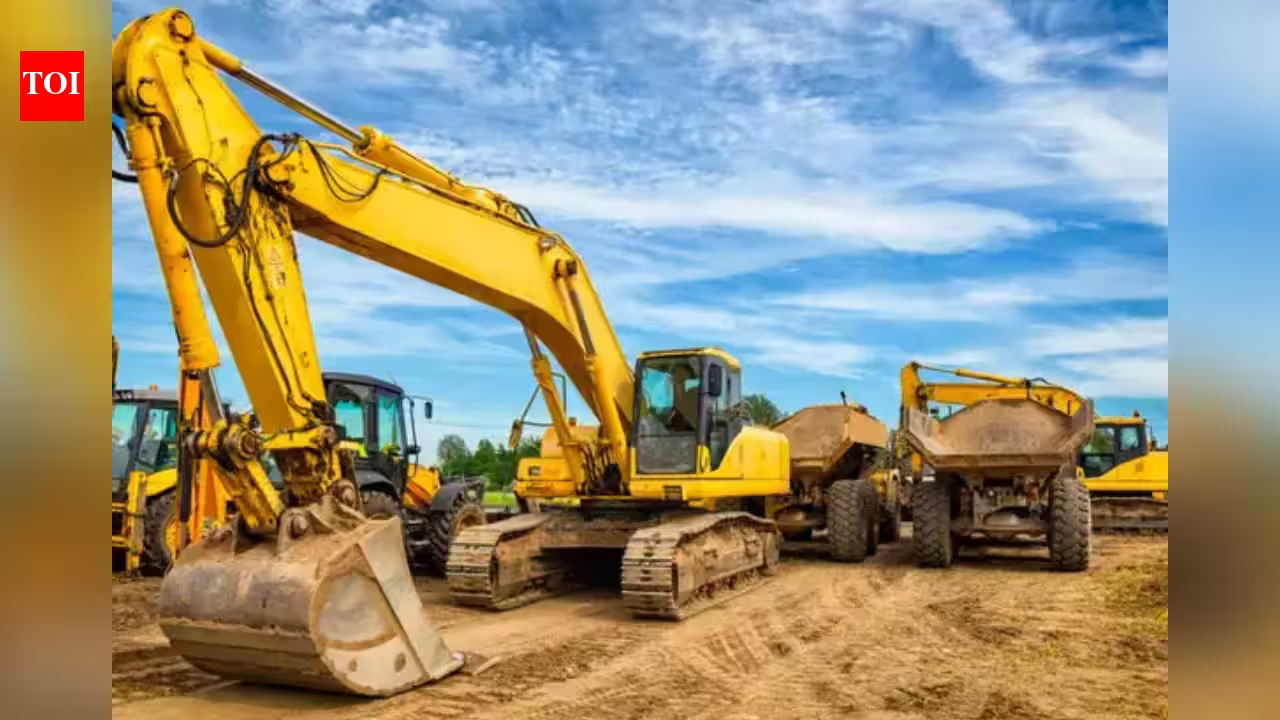
The scheme will prioritize equipment essential to India’s rapid urban and transport expansion, including elevators for high-rise buildings, advanced fire-fighting systems, and specialized tunnel boring machines (TBMs).
Finance Minister Nirmala Sitharaman, who initially announced the plan in the 2026-27 Union Budget, emphasized that the initiative covers a broad spectrum of equipment vital for developing modern metros and high-altitude road networks.
Breaking the China Dependence
For years, India has relied heavily on imported machinery, particularly from China, for its massive infrastructure projects. However, geopolitical tensions—sparked by the 2020 border clashes—prompted New Delhi to tighten regulations on Chinese public procurement and investment. This friction was further exacerbated when Beijing delayed customs clearances for TBM shipments to India in 2024.
Data indicates that India’s imports of Chinese tunnelling equipment have fluctuated significantly in response to these tensions, dropping from $18 million in 2022-23 to as low as $500,000 in 2024-25. While bilateral discussions have sought to ease some of these hurdles, the Indian government remains committed to ensuring that such critical technology is manufactured locally to insulate national projects from external supply chain disruptions.
Domestic Manufacturers Poised for Growth
The policy is expected to provide a significant tailwind to domestic industry leaders. State-run BEML has already signaled its intent to manufacture TBMs locally, while private sector giants like Larsen & Toubro and Johnson Lifts are viewed as prime beneficiaries of the incentives.
The initiative comes at a time when India’s construction and infrastructure equipment market, currently valued at roughly $10.5 billion, is seeing explosive growth. According to a report by the Boston Consulting Group and the Confederation of Indian Industry (CII), India’s share of the global mining and construction equipment market is projected to climb to 6.5% within the next five years, driven by massive investments in airports, ports, railways, and highways.
With inter-ministerial discussions concluded, the Union Cabinet is expected to grant final approval for the scheme shortly, marking a definitive step toward transforming India into a global hub for high-end construction technology.