









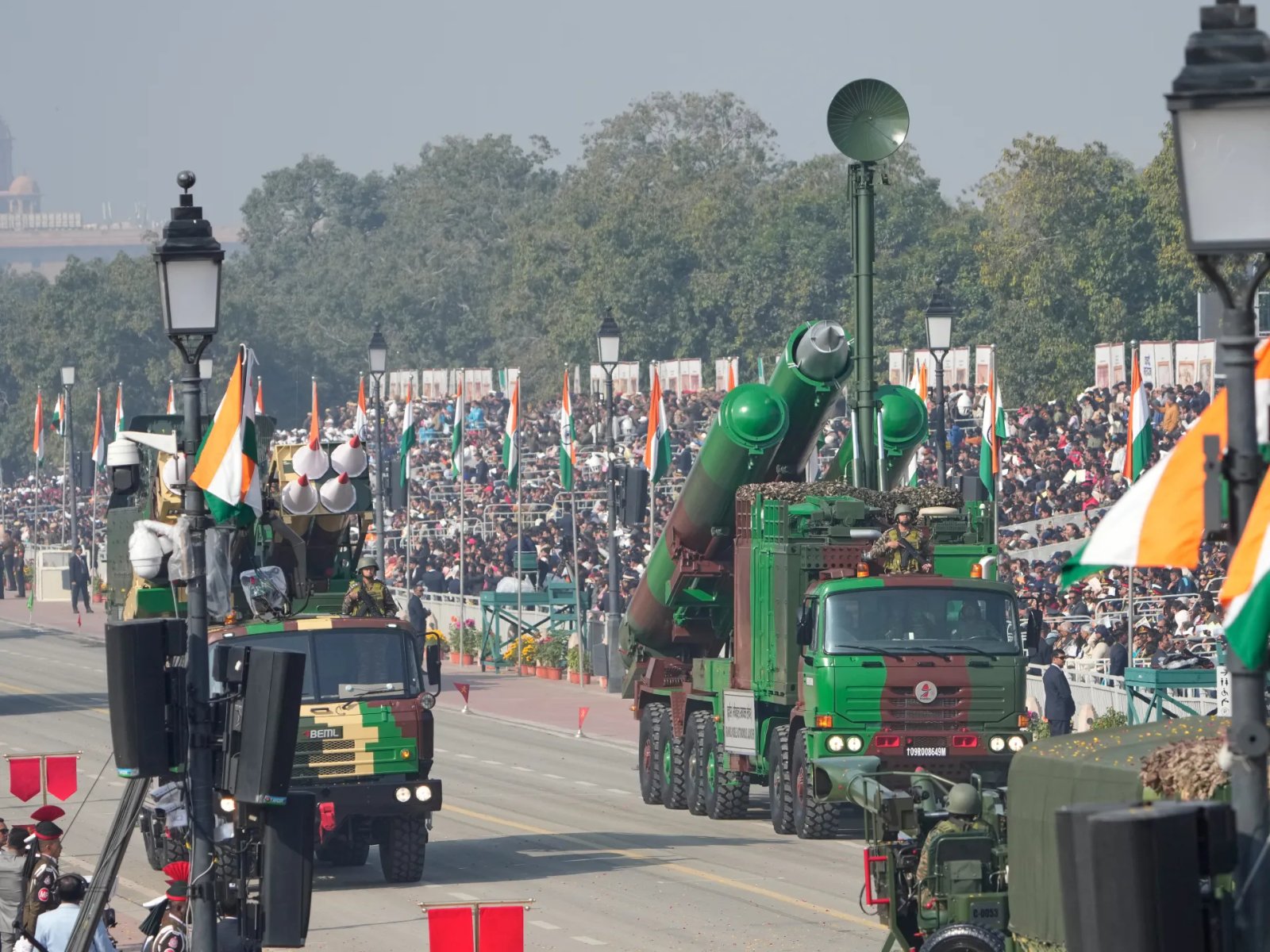
India Opens Strategic Missile Production to Private Sector in Landmark Defence Shift
In a decisive move to overhaul its military-industrial capabilities, India has announced a major policy shift that will allow private companies to access and produce sensitive missile technologies previously restricted to state-run entities.
Defence Minister Rajnath Singh confirmed on Tuesday that the government has authorized the transfer of technology developed by the Defence Research and Development Organisation (DRDO) for all conventional missile systems to private Indian firms. This policy change breaks the long-standing monopoly held by state-owned enterprises, most notably Bharat Dynamics, which has traditionally served as the primary manufacturer for the nation’s arsenal.
A Strategy for Self-Reliance
The Narendra Modi-led government describes the initiative as a cornerstone of its Atmanirbhar Bharat (self-reliant India) campaign. By opening the production of advanced surface-to-air, air-to-air, and cruise missiles to the private sector, New Delhi aims to accelerate mass production, bolster domestic manufacturing, and significantly reduce its heavy reliance on foreign imports.
“The objective is to enhance domestic manufacturing capabilities, strengthen the defence industrial base, and create opportunities for the participation of Indian MSMEs and other technology partners in the supply chain,” the Ministry of Defence stated.
Aditya Ramanathan, a research fellow at the Bengaluru-based Takshashila Institution, noted that the decision is a “big change” that allows private players to evolve from simple component suppliers into “prime integrators” of complex weapons systems.
Geopolitical Pressures and “Magazine Depth”
The urgency behind this transition is rooted in a shifting security landscape. Faced with lingering border tensions with neighbors China and Pakistan, India has aggressively increased its defence budget—which has more than doubled to $86 billion this financial year.
Observers point to recent global conflicts as a primary driver for the pivot. Analysis of wars in Ukraine and the Middle East has underscored the critical need for “magazine depth”—the ability to maintain large stockpiles of munitions for sustained, high-intensity operations.
“India believes that to deter China… it will need to demonstrate that it can both inflict and absorb really punishing attrition over weeks of gruelling warfare,” Ramanathan explained. He added that such capacity is unattainable without the active, large-scale involvement of private industry.
Can the Private Sector Deliver?
While the announcement has been met with enthusiasm, industry experts caution that the transition is not without challenges. Major conglomerates such as Adani Defence & Aerospace, Larsen & Toubro, and Tata Advanced Systems have already begun investing heavily in aerospace and ammunition facilities. However, scaling up to manufacture sophisticated missiles requires substantial capital expenditure in infrastructure and human capital.
“The success or failure of this move will depend on how the Indian government places orders,” Ramanathan said, noting that private firms will only commit to the necessary long-term infrastructure if government procurement is both consistent and profitable.
Security and Global Ambitions
While concerns regarding the security of sensitive technology have been raised—particularly given risks of data breaches or leaks—government officials remain confident in the rigorous regulatory frameworks governing the sector. India is keen to maintain its standing within international export-control regimes, such as the Missile Technology Control Regime (MTCR), while simultaneously growing its global footprint as an arms exporter.
India’s military export profile has surged, with exports reaching $4 billion in 2025-2016. With successful sales of the BrahMos cruise missile to the Philippines and growing interest from other nations, the government’s latest move is clearly designed to transform India from a traditional weapons importer into a regional powerhouse capable of sustaining a modern, indigenous military-industrial complex.