







The Screen-Free Paradox: Why Wearables Are Becoming the Antidote to the Tech They Enabled
For a decade, the wearable tech industry has been locked in an arms race to put more pixels, notifications, and interactivity on our wrists. But as our digital lives become increasingly suffocated by artificial intelligence and constant connectivity, the industry’s trajectory is taking a sharp turn. The new gold standard for health tracking isn’t the high-resolution smartwatch—it’s the screen-free band that demands nothing from you but your data.
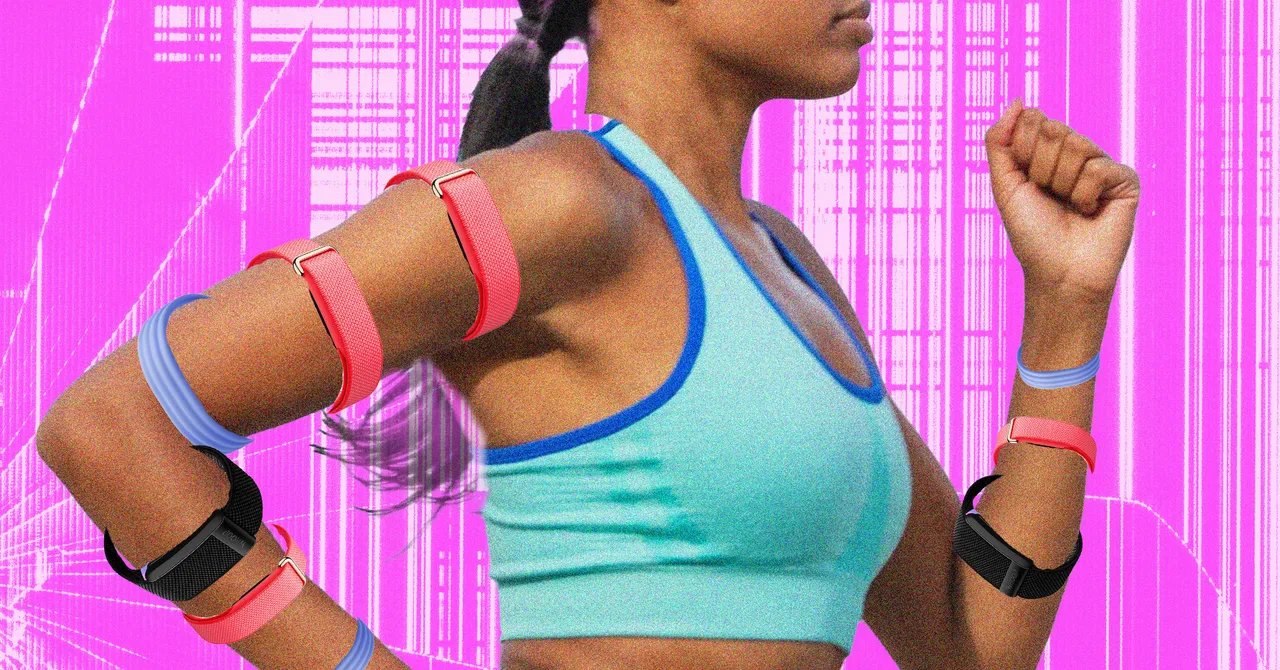
Leading this charge is Whoop, a company that has undergone a radical identity shift since its inception. In 2015, Whoop marketed itself as a “performance optimization system” exclusively for elite athletes and Olympians. Today, that exclusivity has dissolved into a $199-a-year subscription model aimed at anyone looking to improve how they sleep, train, and feel.
Whoop’s pivot reflects a wider industry realization: in an era of digital exhaustion, the most desirable feature is a lack of features. As tech giants like Google and Garmin lean into the concept of “training readiness,” the market is pivoting toward a low-distraction lifestyle.
The AI Double-Edged Sword
Ironically, the very companies selling us the cure to “technostress” are also driving the demand for it through the widespread integration of AI.
For wearable manufacturers, AI has become the ultimate monetization tool. While hardware can only be sold once, an AI-powered insights engine is a recurring revenue stream. Google’s Fitbit, for instance, offers a relatively bare-bones app for free users. However, for those who want “chatty” explanations of what their heart rate variability or VO2 Max trends actually mean, a $10-a-month “Google Health Premium” subscription is required.
This transformation of raw data into narrative is a double-edged sword. On one hand, it addresses a long-standing failure of wearables: the tendency for users to ignore complex physiological data they don’t understand. By using AI to translate graphs into plain-English health advice, companies are making wellness insights more accessible to the average person.
However, Peter Richardson, co-founder of Counterpoint Research, warns that this is only the beginning. “The use of AI in monitoring and guiding health and wellness is still at the early stage of development but will likely become significantly more advanced as AI matures,” he notes.
The Cost of a “Productive” Life
The rise of the screen-free wearable is essentially a response to the “technostress” of the modern workplace. As AI agents are increasingly forced into personal workflows by corporate management, employees are reporting higher levels of information overload, constant interruptions, and a complete breakdown of boundaries between work and home life.
For many, the appeal of a device like a Whoop—which sits silently on the wrist and hides its data inside a smartphone app—is a quiet rebellion against the “always-on” culture. It allows users to track their health metrics without being subjected to the buzzes, dings, and glow of a wrist-mounted screen.
Ultimately, the success of these devices suggests a shift in consumer priority. As our laptops and office environments become increasingly dominated by AI-driven demands, our wearable devices are finally being allowed to be exactly what they were always supposed to be: silent observers of our health, rather than another source of distraction.