








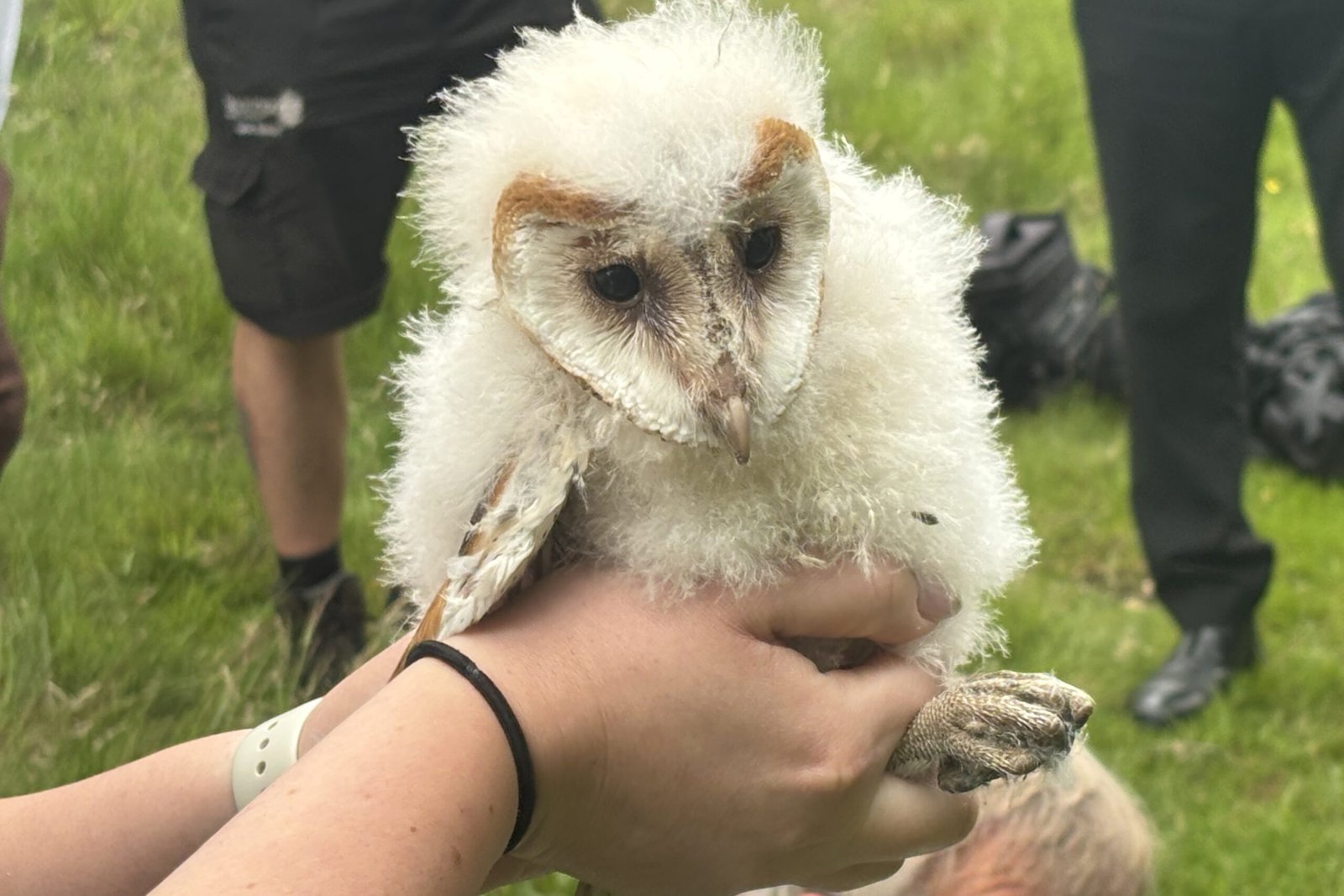
Three Barn Owl chicks were ringed as part of ongoing conservation efforts by Tendring District Council.
Carried out by a licensed expert, the chicks were weighed and measured – which gives an indication of their age – as well as having leg rings fitted, to support data collection for wildlife conservation.
The work was supported by Tendring District Council (TDC) Open Spaces staff at the location, who also monitor nest sites in advance to identify those with broods ready for ringing.
Adrian Smith, TDC Cabinet Member for Environment, said the authority was keen to support wildlife conservation.
“This is something Tendring District Council has been involved with for some time; we’re very keen for people to explore nature and what is going on with our environment,” Councillor Smith said.
“Getting out in nature is good for our wellbeing, helps to bolster our mood, and so anything we can do protect and monitor wildlife and our natural environment is something we want to support.”
The process of ringing the birds only takes about 15 minutes, to minimise disturbance to the wild animals.
Peter Newton, a licensed ringer from the British Trust of Ornithology, who led the operation, added: “Bird trends of their migration and habits change constantly, so it is important we monitor this by ringing birds and record how long they live, where they go and so on.
“Last year was a disastrous year for Barn Owls, but this year is a bumper year – we believe because the field vole population has been boosted, and they have food to supply the youngsters with.”
The location of the nest is not being revealed to protect the owls. It is one of a number of council-controlled locations around the district which have nesting birds.
Barn Owls are indigenous to the UK – as well as being found all over the world – and are often a familiar site as they ‘quarter’ or hunt over fields, often at dusk or dawn. Their silent flight and pure white undersides give them a ghostly appearance as they swoop on unsuspecting prey, identified through sound channelled to their ears by their disc-shaped faces.