






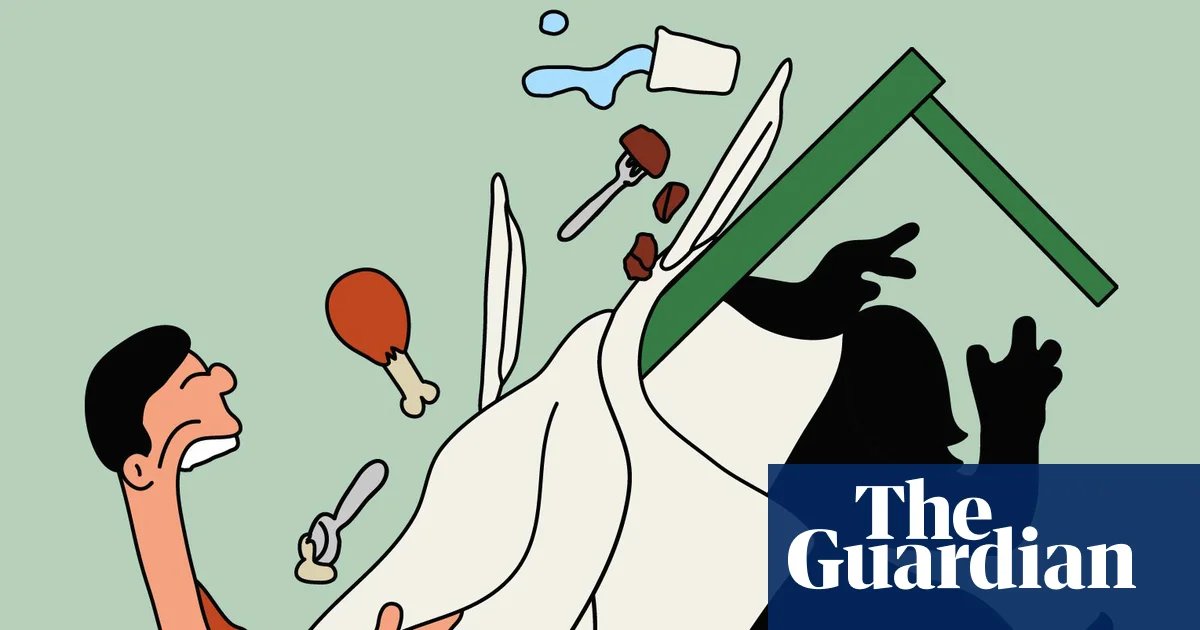
The Dinner Table Dilemma: Is Finishing Your Friend’s Leftovers a Noble Act or a Social Faux Pas?
For many, sustainability is a lifestyle choice that stops at the kitchen bin. But for Bill, a Lisbon-based environmentalist, the mission to eliminate food waste is a 24/7 commitment that has become a source of mounting tension in his relationship with his partner, Helen.
The debate centers on Bill’s habit of “pouncing” on food left behind on the plates of others—a practice he views as a principled stand against waste, but which Helen describes as “embarrassing, unhygienic, and rude.”
The Prosecution: A Question of Etiquette
Helen describes a recent dinner with friends in Lisbon, where the atmosphere was ruined when Bill reached across the table to claim a piece of leftover duck breast from their guests’ plates just as a busy waitress was attempting to clear the table.
“He didn’t even say: ‘Have you finished with your duck?’” Helen explains. “It felt inconsiderate to keep everyone waiting. I don’t throw food away without thinking, but there is a line. Once, I threw away a melon rind, and he took it out of the bin to eat the tiny bits of fruit left on it.”
While Helen acknowledges that Bill’s intentions are rooted in a genuine passion for the environment, she argues that his timing is off and his execution lacks basic social awareness. “I’m not asking him to waste food,” she says, “but I wish he’d do it earlier rather than waiting until the plate is being cleared.”
The Defence: A Stance Against Waste
Bill, who previously worked in the renewable energy sector, makes no apologies for his philosophy. He maintains that wasting food, particularly meat, is an ethical failure.
“I’m concerned about animal welfare and the fact that an animal has died,” Bill argues. “When I see this piece of beautiful pan-fried duck, I don’t think it should go in the bin. It’s about respect for the animal.”
Regarding the infamous melon rind, Bill insists the circumstances were sanitary: “The bin bag I picked it out of was brand new.” He contends that his behaviour is calculated; he avoids pouncing during business meetings or dinners with his boss, and claims he would never dream of eating off someone else’s plate if he knew they were ill. However, he admits he may get “carried away” when among close friends and family.
The Jury Weighs In
The couple’s domestic dispute has sparked a fierce debate among readers. The consensus appears to be that while Bill’s moral compass is pointing in the right direction, his navigation of social cues is faulty.
Some readers suggested that if animal welfare is truly his primary motivation, he might consider a vegetarian diet rather than scavenging leftovers. Others felt that the intimacy of friendship doesn’t excuse a lack of manners. One reader, Kitty, offered a more lenient perspective: “What is a bit of spit between friends?” she joked, noting that his heart is in the right place.
As the domestic dispute continues to play out in public discourse, the question remains: does the virtue of preventing food waste outweigh the social contract of the dinner table? For Helen, the answer is clear—it is time for Bill to change his habits before his plate-scavenging costs them their social standing.