








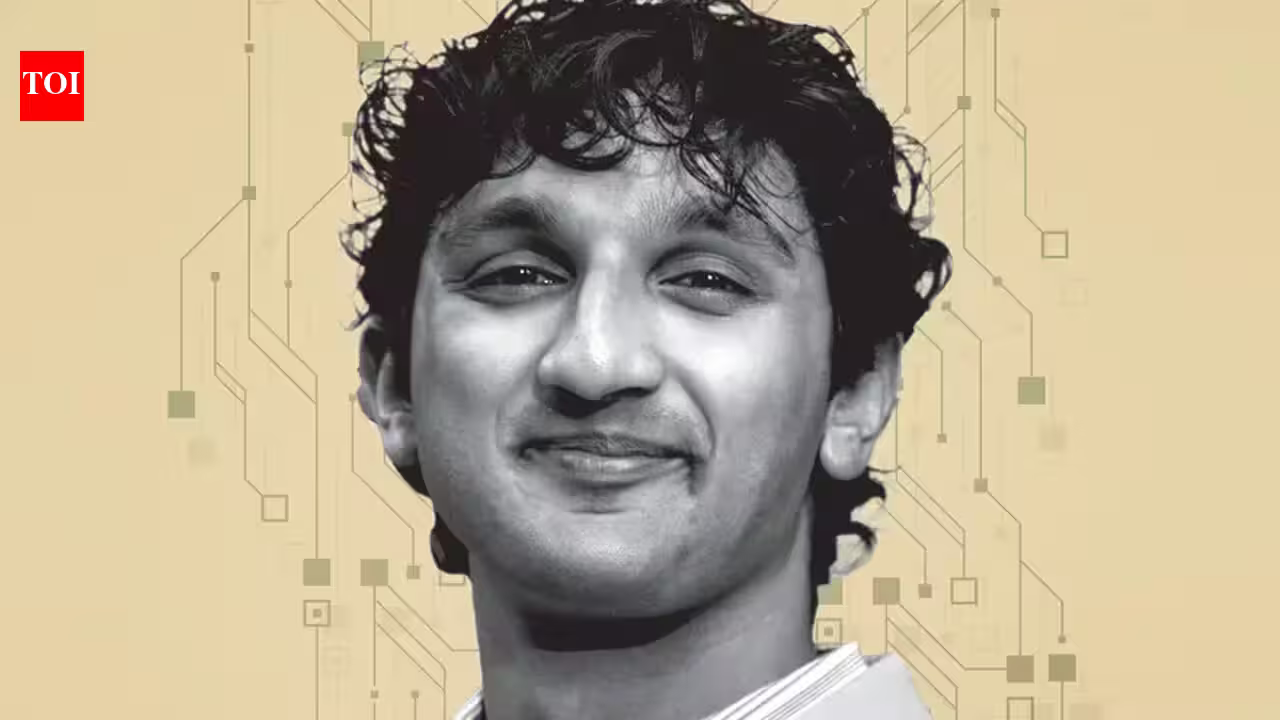
Beyond the Code: Why Sunny Gandhi’s Push for AI Safeguards is Reshaping the Tech Landscape
As artificial intelligence rapidly transitions from experimental software to the backbone of our hospitals, classrooms, and government institutions, a critical question looms: how do we ensure machines remain subject to human oversight?
Sunny Gandhi, the Indian-origin co-executive director of the advocacy organization Encode, is leading the charge to answer this question. His pioneering work in policy, safety, and legislative oversight has earned him a prestigious spot on the 2026 TIME100 AI list, signaling a shift in how the world perceives the future of technology.
AI Needs Rules, Not Just Innovation
While the tech industry is often characterized by a high-stakes race between engineers to build faster and more capable models, Gandhi’s work positions him on the essential “guardrail” side of the debate.
Encode, the organization he co-leads, focuses on building a regulatory framework that prioritizes human accountability. From supporting state-level legislation to advocating for mandatory transparency in high-stakes sectors, Gandhi argues that as AI capabilities grow, the mechanisms for human control must become more robust.
“Speed does not automatically mean reliability,” proponents of this movement argue. In fields like national security or public infrastructure, an error by an autonomous system can have catastrophic real-world consequences. By pushing for clear accountability, Gandhi’s advocacy ensures that humans remain firmly in the driver’s seat when it comes to consequential decision-making.
Redefining the “AI Career”
Gandhi’s inclusion in the TIME100 AI list serves as a wake-up call for students and professionals alike: the AI industry is no longer just for computer scientists.
As the technology integrates into the social fabric, it requires an interdisciplinary workforce. Today, a career in AI is as much about law, ethics, and economics as it is about neural networks and machine learning. Students interested in the field can now pursue diverse paths, including:
- AI Policy and Governance: Drafting the regulations that shape how AI is deployed.
- Technology Regulation: Ensuring companies adhere to global safety standards.
- Safety Research: Identifying risks before they manifest in production environments.
- Public-Interest Advocacy: Championing the rights of individuals affected by algorithmic bias.
The Bigger Picture
TIME’s 2026 list—divided into Leaders, Innovators, Shapers, and Thinkers—reflects a maturing ecosystem where the tech giants are only one part of the story. Gandhi, representing the “Shaper” archetype, is instrumental in posing the uncomfortable questions that engineers cannot answer in isolation: How much autonomy should machines have? At what point must a human intervene? And how transparent must companies be regarding their models’ limitations?
The recognition of Gandhi’s work is a testament to the fact that the future of AI will not be determined by code alone. It will be shaped by the interplay between technologists, lawmakers, and civil society. For the next generation of professionals, the message is clear: understanding the technology is vital, but understanding how to use it responsibly is the true mark of leadership in the digital age.
Disclaimer: This article is based on publicly available information and statements from the individuals and organisations cited. TOI Education has not independently verified all claims, advocacy positions or policy proposals mentioned in the article.