







[
Vande Mataram Elevated: New Law Grants National Song Equal Protection with National Anthem
President Droupadi Murmu has approved the 2026 amendment extending statutory protection under the Prevention of Insults to National Honour Act to Vande Mataram. The law now penalises deliberate disruption of the national song’s singing. The story explains the amended provisions, the Home Ministry’s protocols, the song’s historical significance and what students should know about the new rules.
NEW DELHI – In a landmark legislative development, President Droupadi Murmu has formally approved the Prevention of Insults to National Honour (Amendment) Bill, 2026. This significant assent elevates Vande Mataram, India’s cherished national song, to the same statutory protective status as the national anthem, Jana Gana Mana, under the Prevention of Insults to National Honour Act, 1971.
The Bill, which received parliamentary approval last month, has now become law, marking a crucial moment for national symbols. The implications of this amendment are particularly pertinent for educational institutions, where both the national song and national anthem are routinely recited, making it imperative for students and faculty to understand the updated legal framework.
What Has Changed Under the New Law?
Previously, the Prevention of Insults to National Honour Act primarily addressed offenses related to the national anthem. It specifically prohibited any deliberate obstruction of the singing of Jana Gana Mana or any disturbance caused during its rendition at an assembly.
The newly amended law significantly expands this protection to encompass Vande Mataram. This means that any intentional act to prevent the singing of the national song or to deliberately disrupt an assembly where it is being sung can now lead to legal repercussions. Such offenses are punishable by imprisonment for up to three years, a fine, or both.
Why Has Vande Mataram Been Included?
Vande Mataram, penned by the renowned Bankim Chandra Chatterjee, holds an indelible place in India’s pre-independence history. The song served as a powerful emblem of the nationalist movement, inspiring countless individuals during the struggle against British colonial rule.
The legislative decision finds its basis in a declaration made by Dr. Rajendra Prasad, then President of the Constituent Assembly, on January 24, 1950. Dr. Prasad had affirmed that Vande Mataram, owing to its profound historical contribution to the freedom struggle, would be accorded equal honor with the national anthem, Jana Gana Mana. The 2026 amendment aims to formalize this revered status by extending statutory protection to the national song.
What Was the Law Earlier?
Under the preceding law, deliberately preventing the singing of the national anthem or disrupting an assembly engaged in its singing carried a penalty of up to three years’ imprisonment, a fine, or both. Repeat offenses mandated a minimum imprisonment of one year. However, no specific provision existed to safeguard Vande Mataram in a similar manner. The amendment now rectifies this disparity, bringing the national song under the protective ambit of the law.
What Students Must Know About Vande Mataram
For students, it is crucial to recognize that while Jana Gana Mana is the national anthem, Vande Mataram holds the distinct designation of the national song. Both possess immense national significance, but their official roles differ. The new legislation does not alter this fundamental distinction; rather, it introduces legal safeguards against intentional obstruction or disturbance during the singing of Vande Mataram. Schools and students are therefore advised to familiarize themselves with the established protocols for the national song during official or institutional events.
Home Ministry Issues Protocol for Singing National Song
The Union Home Ministry had previously outlined a comprehensive protocol for the rendition of Vande Mataram at official functions. According to these guidelines, when both the national song and national anthem are performed, Vande Mataram precedes Jana Gana Mana. The Ministry has also stipulated that all attendees should stand at attention during the singing of the national song. This protocol applies to various official occasions, including presidential arrivals, national flag unfurlings, and addresses by Governors.
Six Stanzas to Be Sung at Official Functions
Further directives from the Home Ministry specify that all six stanzas of Vande Mataram are to be sung at designated official functions. The complete rendition has an approximate duration of three minutes and ten seconds. The government has also encouraged the integration of the national song into the daily routine of schools through community singing, underscoring the relevance of this legal change for the entire educational fraternity.
Vande Mataram to Be Sung at Red Fort on Independence Day
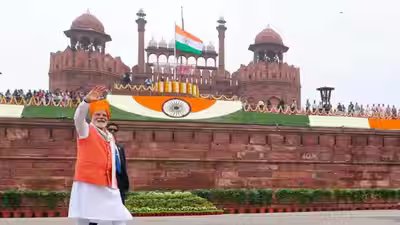
In a historic move, the Home Ministry has announced that Vande Mataram will be sung from the ramparts of the Red Fort during this year’s Independence Day celebrations. This marks the first time the national song will feature at this iconic venue, signaling the government’s renewed emphasis on its historical and national importance.
Here Is What Students Must Know:
- Jana Gana Mana is India’s national anthem.
- Vande Mataram is India’s national song.
- Vande Mataram was composed by Bankim Chandra Chatterjee.
- The song played an important role in India’s freedom struggle.
- The 2026 amendment extends statutory protection under the Prevention of Insults to National Honour Act to the national song.
- Intentionally preventing the singing of Vande Mataram or disturbing an assembly engaged in its singing can now attract punishment.
- The offense may lead to up to three years’ imprisonment, a fine, or both.
- When Vande Mataram and Jana Gana Mana are sung or played together under the prescribed protocol, Vande Mataram comes first.
- The Home Ministry has prescribed the singing of all six stanzas at specified official functions.
- Schools have also been directed to begin the day’s work with community singing of the national song under the prescribed order.
The amendment thus represents a significant evolution in India’s legal framework concerning its national symbols, while simultaneously reinforcing the profound place of Vande Mataram in both official and educational spheres across the nation.