







Institutional Crisis: The Growing Challenges in India’s Film Education Sector
Across India, several premier film and television institutes are currently facing a period of deep unrest. From the Satyajit Ray Film and Television Institute (SRFTI) in Kolkata to the newer FTII campus in Itanagar and state-run universities in Haryana, students are voicing collective concerns regarding administrative negligence, the erosion of creative freedom, and frequent security breaches. As these institutions grapple with evolving academic policies, the student community is finding its pedagogical experience increasingly stifled.
Academic Reform and the Erosion of Artistic Flexibility
A primary grievance among students is the introduction of rigid educational policies that seem to prioritize standardisation over the nuanced requirements of film education. Students at SRFTI and FTII Pune have noted that new guidelines—often aligned with broader University Grants Commission (UGC) mandates—have severely limited the creative autonomy previously enjoyed by faculty and students.
Appu Soman, an animation student at SRFTI, points out that the clubbing of core courses and the dilution of specialised curricula have compromised the depth of film education. Similarly, at FTII Pune, students report that the pressure to adhere to fixed timeframes under new UGC-aligned structures has stripped away the flexibility essential for complex artistic production. With electives removed and collaborative, experimental projects reduced, students fear that the quality of their professional training is being sacrificed to meet bureaucratic efficiency metrics.
Infrastructural Deficiencies and Administrative Negligence
The crisis is not limited to curriculum alone; it extends to the very infrastructure required for film production. At FTII Itanagar, which began operations in 2024, students report significant delays in course progress due to a lack of basic facilities, such as working preview theatres. In some instances, students have been forced to travel across the country to other institutes just to stage performances.
The administrative burden is perhaps most visible at the Dada Lakhmi Chand State University of Performing and Visual Arts (DLC SUPVA) in Haryana. Recent legal interventions have exposed severe mismanagement, with a civil court ordering compensation for students whose three-year degree programmes extended into six-year ordeals. These delays are frequently attributed to the absence of a defined syllabus and structural inconsistencies, highlighting a systemic failure to provide a stable learning environment.
Security and the Politicisation of Campus Spaces
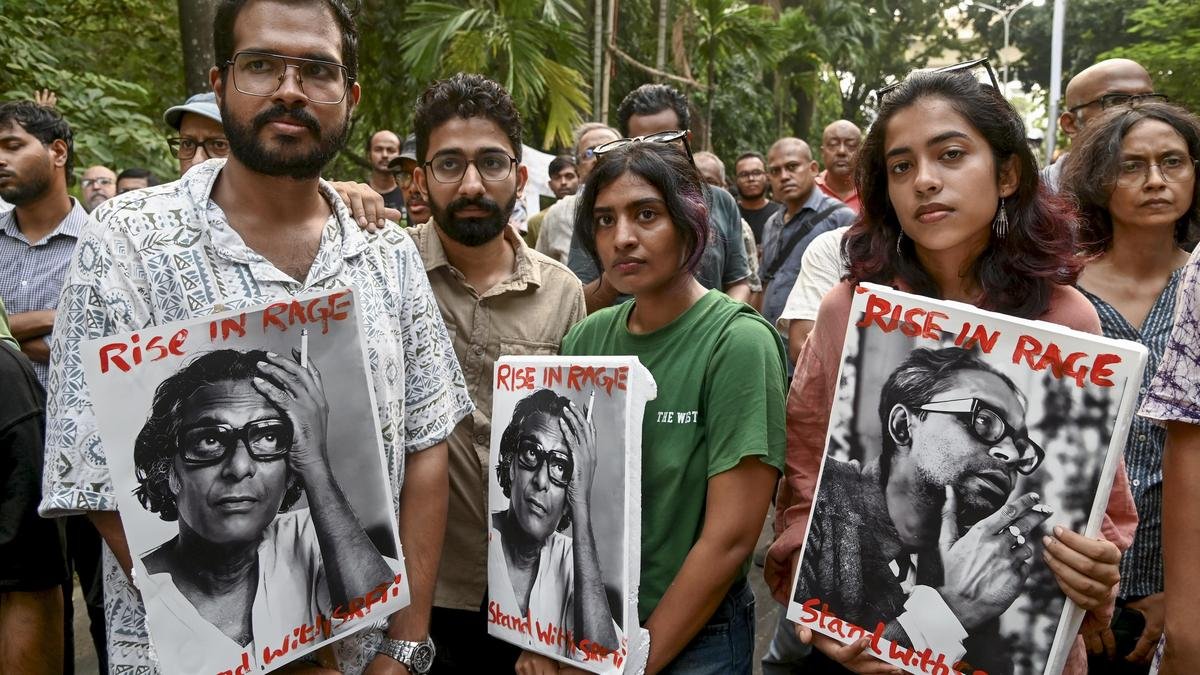
Perhaps the most alarming development across these institutions is the recurring reports of mob violence and the use of educational campuses for non-academic, political agendas. Students at both SRFTI and the Haryana-based institutions have raised strong objections to the administration renting out campus auditoriums to organisations with specific political affiliations, often without informing the student body.
These incidents have frequently acted as flashpoints for wider conflict. At SRFTI, the rental of the auditorium led to protests, which later escalated into violence where students and faculty members were injured. Similar patterns of intimidation have been reported at FTII Pune and the National Film Archive of India (NFAI), where screenings of films that challenge prevailing narratives have been disrupted by outside groups.
For the student community, these incidents signify more than just a lack of security; they represent an institutional failure to protect the sanctity of educational spaces. The consistent demand for improved safety, including the potential deployment of professional security personnel, remains a point of contention as institutes struggle to balance administrative decisions with the fundamental right of students to study in a safe, non-partisan, and creative environment. As classes remain suspended at several locations, the film education sector stands at a critical juncture, with students calling for immediate reform to preserve the integrity and independence of their academic institutions.
Disclaimer: This content is auto-generated for informational purposes only.
Source: Read Original News