




Unsung Heroes: Voting Open for 2026 Invertebrate of the Year
For the third consecutive year, the spotlight turns to the planet’s most numerous, yet often overlooked, inhabitants: invertebrates. The annual “Invertebrate of the Year” competition is officially open for public voting, celebrating the astonishing diversity and crucial ecological roles played by the more than 1.3 million known species lacking a spinal column.
From microscopic organisms to colossal cephalopods, invertebrates encompass an incredible array of life forms, including jellyfish, bumblebees, parasites, spiders, and worms. Despite their fundamental importance to global ecosystems – acting as pollinators, decomposers, and food sources – they frequently languish in the shadow of their vertebrate counterparts, such as pandas and whales, which traditionally command greater public attention.
Organizers of the initiative urge the public to “look down, or up, or under a stone or into a pond” to discover the “marvellous creatures you’ve never heard of” that may be just millimetres away. This year’s competition, following thousands of public nominations, has been whittled down to a captivating shortlist of ten extraordinary contenders, each boasting unique traits and ecological significance. The public is now invited to cast their vote for their favourite.
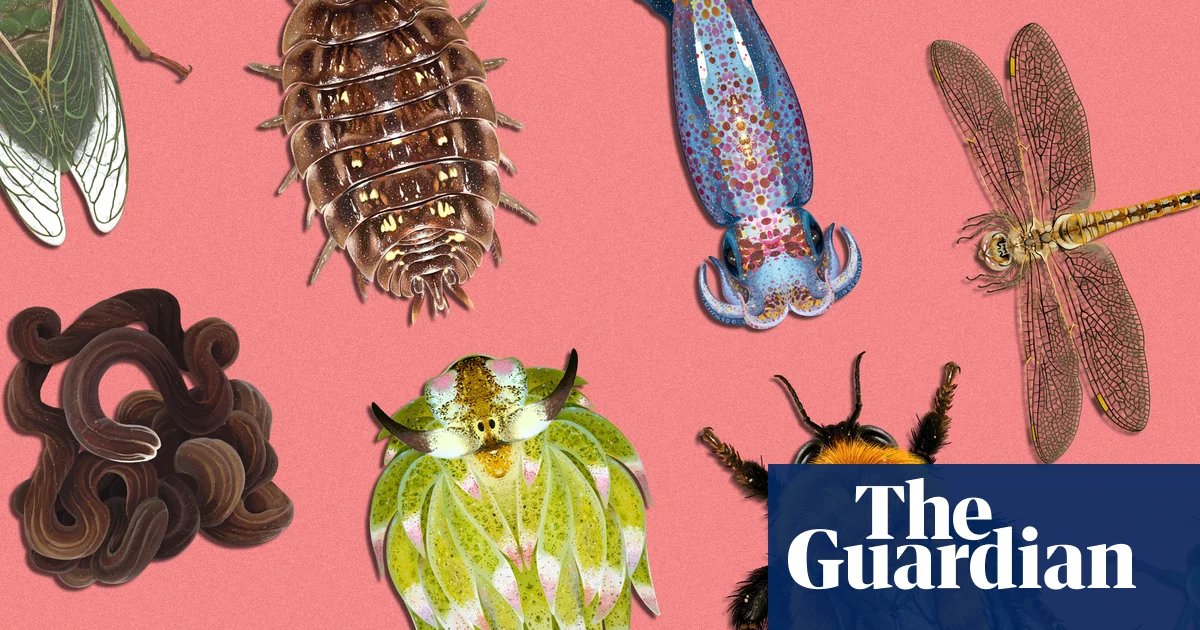
The ten nominees for the 2026 Invertebrate of the Year are:
- The common woodlouse – hailed as a detritivore with “unexpected superpowers,” this humble crustacean plays a vital role in decomposition.
- The immortal jellyfish – a biological marvel capable of reverting to its juvenile polyp stage after reaching maturity, effectively achieving biological immortality.
- The leaf sheep – an “irresistibly cute” solar-powered sea slug that incorporates chloroplasts from the algae it consumes, allowing it to perform photosynthesis.
- The greengrocer cicada – famous for its deafening song, which can reach volumes exceeding 120 decibels, approaching the human pain threshold.
- The Lord Howe Island stick insect – a remarkable “giant stick insect that proves it’s not over till we give up,” once thought extinct and dramatically rediscovered.
- The wandering glider – an astonishing dragonfly known for undertaking the longest migratory journey of any insect.
- The moscardón bumblebee – affectionately dubbed “the giant panda of the insect world,” highlighting its charismatic appearance and potential conservation needs.
- The bootlace worm – intriguing for its potential, as its unique mucus could form the basis for developing new insecticides.
- The horseshoe crab – a “blue-blood arthropod” that has remained largely unchanged for an astonishing 445 million years, making it a living fossil.
- The neon flying squid – a captivating deep-sea dweller known for its bioluminescence and remarkable ability to “fly” in formation above the ocean surface.
Each nominee represents the incredible diversity and often surprising adaptations found within the invertebrate kingdom. Their stories serve as a powerful reminder of the intricate web of life that sustains our planet.
Vote for your favourite
You can vote using this form.
To cast your vote and participate in this celebration of invertebrate life, please utilize the provided online form. Should you encounter any difficulties with the form, a direct link is available here. Readers are encouraged to review the terms of service and privacy policy before submitting their vote.
This annual competition aims not only to highlight individual species but to foster a broader appreciation for the immense and vital world of invertebrates, reminding us that some of the most “spectacular, fascinating and yet overlooked” inhabitants of our planet are often found right under our noses.