







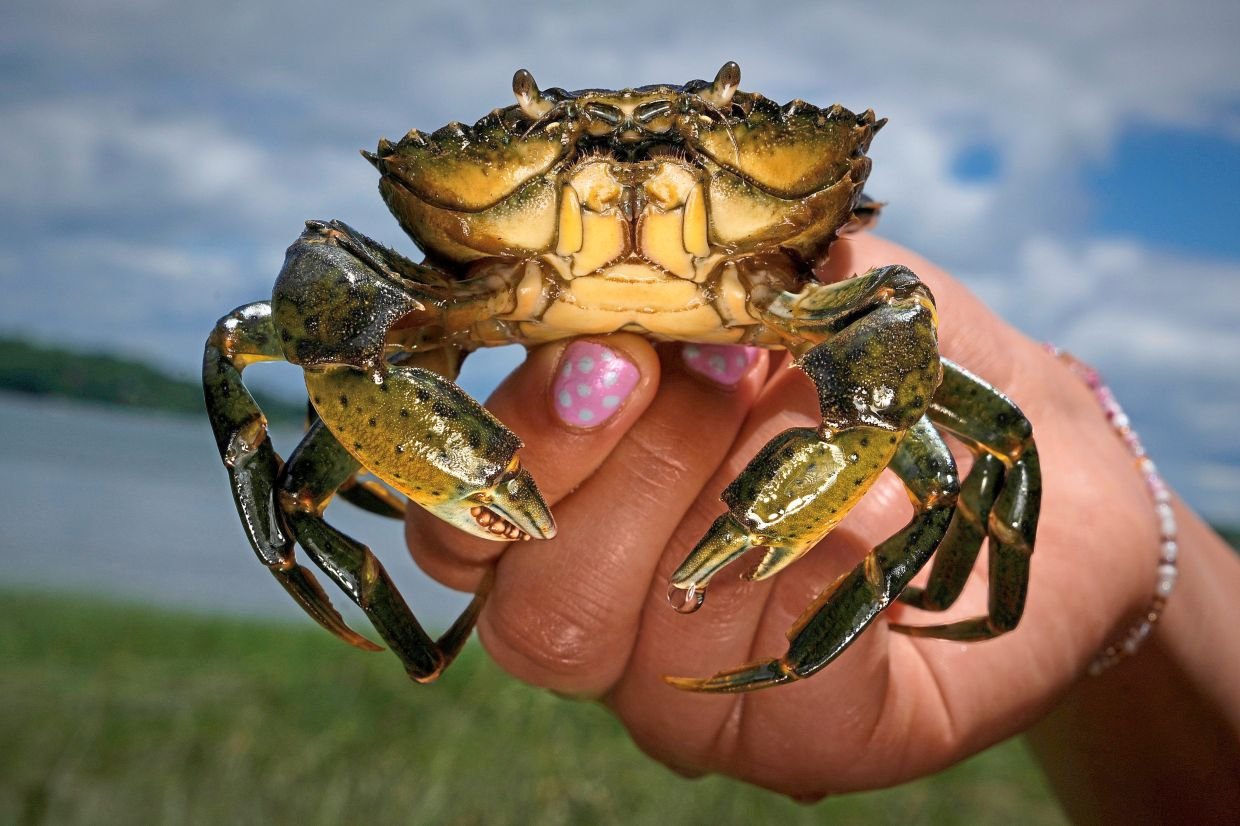
As the morning fog lifts over the York River in Maine, Mike Masi and his team of interns sift through mounds of tangled, aggressive crustaceans. To many, these creatures are a plague; to Masi, they are a potential culinary goldmine. He is hunting for the European green crab (Carcinus maenas), specifically those on the cusp of moulting—the brief window when they shed their hard shells to reveal a soft, leathery exterior that is highly prized by adventurous chefs.
The European green crab is an invasive species that has wreaked havoc on the US East Coast since arriving in ship ballast water centuries ago. Numbering in the tens of millions, these resilient predators have decimated local eelgrass beds and salt marsh banks. More critically, they have crippled the region’s shellfish industry by consuming vast quantities of mussels, oysters, and soft-shell clams. In Maine, the impact has been stark: soft-shell clam landings plummeted from over 3.6 million kilograms in 1978 to just 572,644kg in 2025.
Climate change has only accelerated the crisis. Warming ocean temperatures have allowed these hardy scavengers to survive harsh New England winters while they continue to multiply—a single female can release up to 185,000 eggs twice a year. Their success has made them one of the most invasive species globally, with established populations stretching from Japan to South Africa and Australia.
For Masi, founder of Shell+Claw, the mission is simple: “Just about everyone hates them, and we’re trying to turn them into a premium seafood product.” While a hard-shell green crab might fetch as little as eight cents at market, a soft-shell version can sell for US$3. This price differential is fueling a burgeoning movement across New England to build a market for the crabs, with products ranging from pet treats and fish sauce to artisanal green crab whiskey.
Despite this creative momentum, the industry faces significant structural hurdles. The current response remains largely grassroots, lacking the large-scale infrastructure required for consistent processing and distribution. Marissa McMahan, vice president of fisheries at Manomet Conservation Sciences, points out that while supply is virtually endless, the logistical “impediment”—getting the catch from the coast to major urban hubs like Boston or New York—remains a major barrier to viability.
Government support remains inconsistent. While Massachusetts offers a small financial incentive for fishermen, other states have been slower to act. In contrast, Washington state has declared an emergency, dedicating millions in public funds to eradicate the species, which threatens critical Pacific Northwest habitats.
Yet, in the dining room, the tide may be turning. Since 2021, the number of restaurants featuring green crab on their menus has increased tenfold. Chef Tracy Chang of the Cambridge, Massachusetts restaurant PAGU, incorporates them into elaborate dishes like green crab laksa and tempura-fried bao. “These crabs are way more potent in terms of flavour,” she notes. “They have a really rich, deep, luscious crab flavour.”
For pioneers like Masi, the goal is to emulate the centuries-old moeche fishery in Venice, Italy, where green crabs are a culturally celebrated delicacy. Masi’s current operation is labour-intensive, relying on hand-sorting and “crab condos” to time the moult correctly. While his annual revenue currently resembles that of a hobbyist, his ambition is industrial. “I am cautiously optimistic,” Masi said. “We are one breakthrough from making this a profitable business.”
Disclaimer: This content is auto-generated for informational purposes only.
Source: Read Original News