







A new exhibition opening this weekend at the Summerlee Museum of Scottish Industrial Life in Coatbridge, North Lanarkshire, is inviting the public to engage with the complex and often painful legacies of the British Empire. Titled “Traces of Empire,” the exhibition launches on Saturday, 3 October 2026, serving as a focal point for reflection on how colonial history continues to shape present-day inequities and social landscapes in Scotland.
The exhibition is the culmination of a long-term project commissioned by Historic Environment Scotland (HES). It serves as a direct response to a significant 2024 HES report, Surveying and Analysing Connections Between Properties in Care and the British Empire, c.1600-1997. That investigation revealed that 126 of the 336 historic sites under the stewardship of HES—spanning castles, abbeys, and industrial landmarks—possess documented connections to the British Empire.
Rather than presenting a static historical analysis, “Traces of Empire” shifts the perspective toward the lived experiences of those directly impacted by colonial histories. The exhibition was developed in partnership with 34 co-curators representing four grassroots communities across Scotland. These contributors, many of whom have personal or ancestral ties to countries shaped by colonial rule, led the creative process, transforming the museum space into an environment for dialogue, support, and mutual learning.
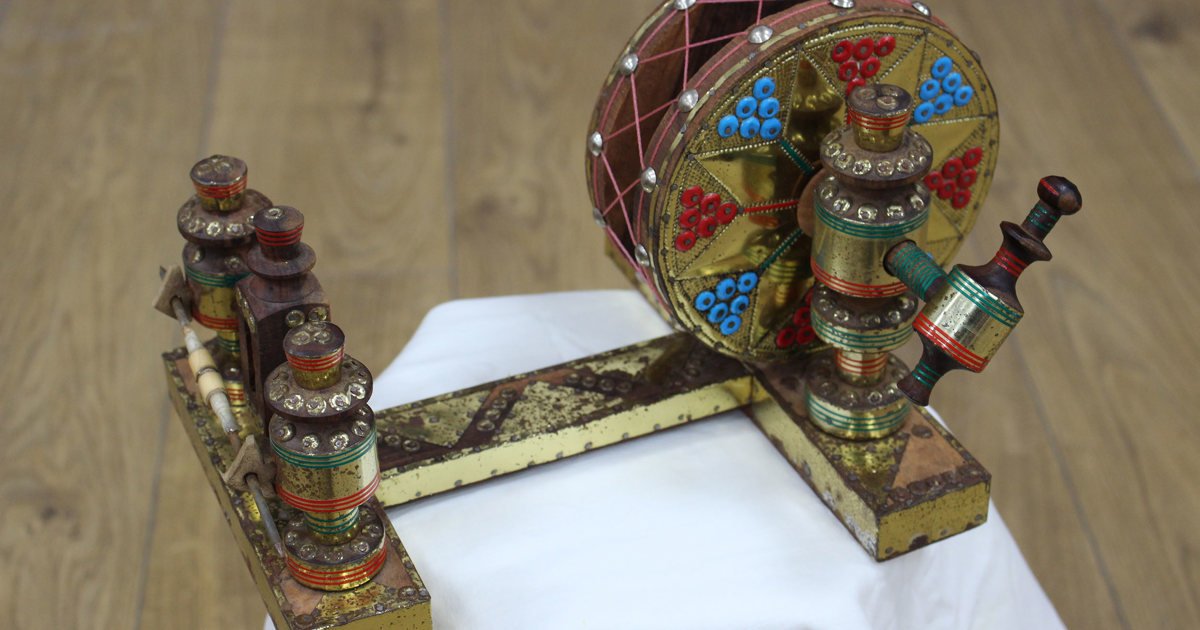
The resulting display features a diverse collection of artworks, poetry, and oral storytelling. These pieces move beyond traditional museum narratives, offering intimate insights into how the legacy of the Empire filters through generations, influencing contemporary identity, economic status, and social cohesion.
Bushra Iqbal, Chair of the North Lanarkshire Muslim Women and Family Alliance, one of the groups involved in the project, underscored the importance of individual agency in this historical reckoning. Quoting the poet and philosopher Allama Muhammad Iqbal, she noted, “The destiny of nations rests in the hands of individuals; every person is a star in the destiny of their community.”
Iqbal highlighted that for the women in her organization, the project provided a vital platform to address themes such as the historical significance of the cotton trade, the politics of education, and the enduring trauma of Partition. “By sharing these reflections, we are not simply looking back at history,” she said. “We are reclaiming our voices and encouraging a new generation to build a future founded on truth, dignity, understanding, and healing.”
For Historic Environment Scotland, the process of developing the exhibition required a departure from standard curatorial practices. Claire Whitbread, Exhibitions Manager at HES, acknowledged the difficulties inherent in tackling such a sensitive subject matter. “Creating an exhibition about the legacy of empire was challenging but important, and required mutual decision-making on how to meaningfully approach the work,” Whitbread stated. She expressed hope that the exhibition would facilitate “necessary disruption and collective healing” through honest, open communication.
The “Traces of Empire” exhibition is designed not only to educate but to foster a deeper understanding of how small-scale actions and raised awareness can contribute to peace in an increasingly fragmented global community. By highlighting previously marginalized voices, the project seeks to bridge the gap between historical fact and the lived reality of contemporary Scottish society.
“Traces of Empire” will be on display at the Summerlee Museum of Scottish Industrial Life from Saturday, 3 October 2026, until Sunday, 1 November 2026. The exhibition is free to the public, and no advance booking is required, encouraging widespread access to these important stories. Through this initiative, HES and its partners aim to ensure that the “traces” of the past are not merely buried, but actively engaged with to foster a more inclusive and equitable future.
Disclaimer: This content is auto-generated for informational purposes only.
Source: Read Original News