









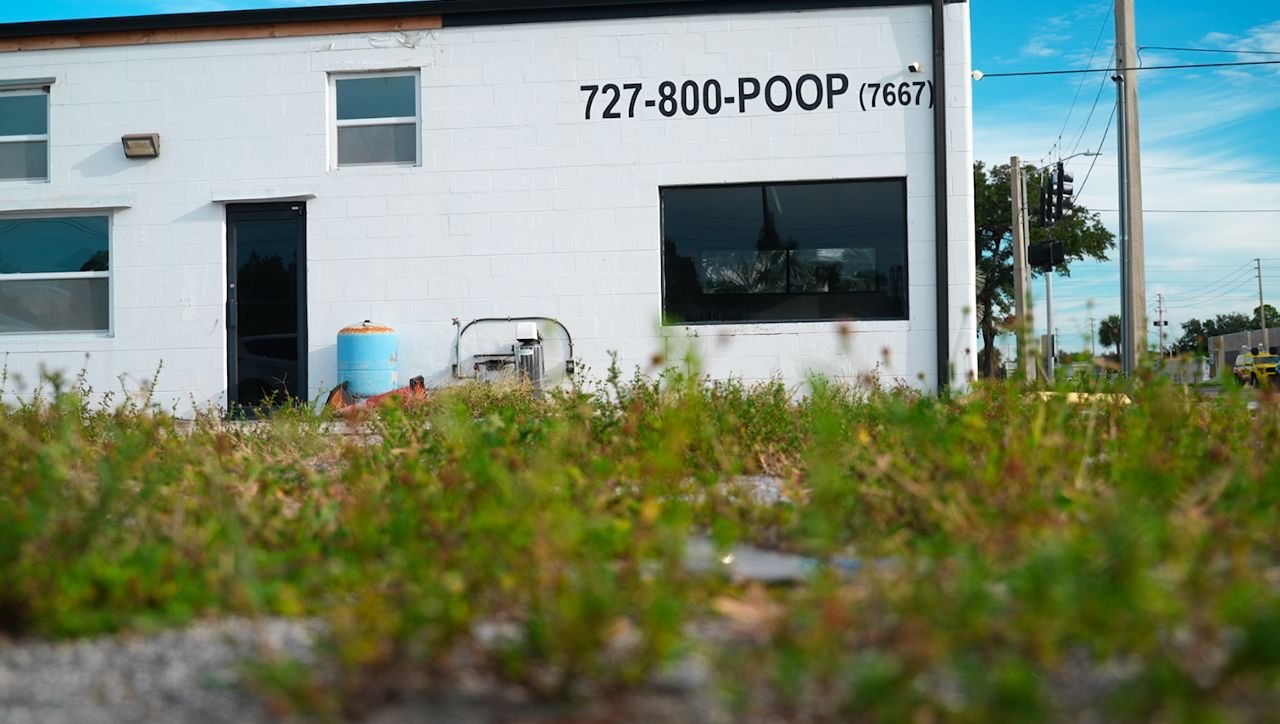
PINELLAS COUNTY, Fla. — For nearly six years, drivers passing the intersection of 49th Street and 62nd Avenue have been greeted by a peculiar sight: a pristine, white building emblazoned with a bold, memorable phone number: 727-800-POOP. While the signage promises professional plumbing services, the building has remained stubbornly vacant, leading locals to speculate whether the business is a reality or merely a phantom advertisement.
According to the owners, the reality is far more frustrating. Daniel Ritchie, his father Wayne Ritchie, and business partner Brian Higueros are caught in a bureaucratic nightmare, claiming that what should have been a straightforward renovation has turned into a $740,000 financial drain.
A Paper Trail of Broken Promises
The owners maintain that they performed exhaustive due diligence before purchasing the property. Six years ago, they contacted Pinellas County officials to confirm the site was suitable for a plumbing business. They claim they received the green light, only to face a barrage of regulatory hurdles the moment the deed was in their hands.
“We were told that we had no issues until after we bought the building,” Wayne Ritchie said. “Once we owned it, we were essentially up ‘poop’s creek’ without a paddle.”
The primary obstacles involve land-use technicalities. Despite receiving initial permits to install a septic system, the county later reversed course, citing a 1927 easement that invalidated their plans. This discovery of an old right-of-way effectively decimated their parking capacity and sewage solutions. Now, the owners are being asked to bring a structure that sat dormant for 25 years up to current, modern-day building codes—a financial request they describe as “not feasible.”
Navigating the Modern Bureaucratic Grid
The situation has become a poignant reminder of how small businesses can become “clogged” in the gears of local government. While the Ritchies struggle to reconcile historical property records with modern mandates, local developers and small business owners are increasingly looking toward digital tools—like AI-driven municipal planning platforms and cloud-based permit tracking—to help navigate these types of zoning gridlocks.
In an era where technology typically accelerates business operations, this property remains a stark outlier. While tech giants continue to push for “smart cities” and streamlined digital infrastructure, the Ritchies’ experience highlights the persistent friction between aging physical infrastructure and rigid, outdated administrative requirements.
In response to inquiries, Pinellas County officials declined an on-camera interview but noted in a brief statement: “Staff is working with the applicant’s engineer to address the outstanding site engineering issues to facilitate the issuance of a building permit and the ability to operate a business on this property.”
Holding Out Hope for a Resolution
Despite the mounting costs, the business owners are not ready to throw in the towel. They are currently weighing their options: either continue the fight to satisfy the county’s requirements or negotiate a sale of the property back to the local government.
For now, the site serves a unique dual purpose. It acts as an incredibly expensive, eye-catching billboard for their operational branch in Clearwater, which continues to provide plumbing, HVAC, and gas line services to the wider region.
“People do call the number,” partner Brian Higueros acknowledged.
While the phone lines stay busy with actual service requests, the physical office remains a symbol of an ongoing struggle. The Ritchies hope that, eventually, they can move past the permit backups and finally open the doors of the building that has become a familiar, if enigmatic, landmark in Pinellas County. Whether they achieve this through further investment or a government buyout remains a question currently trapped in the same limbo as the plumbing permits themselves.
Disclaimer: This content is auto-generated for informational purposes only.
Source: Read Original News