






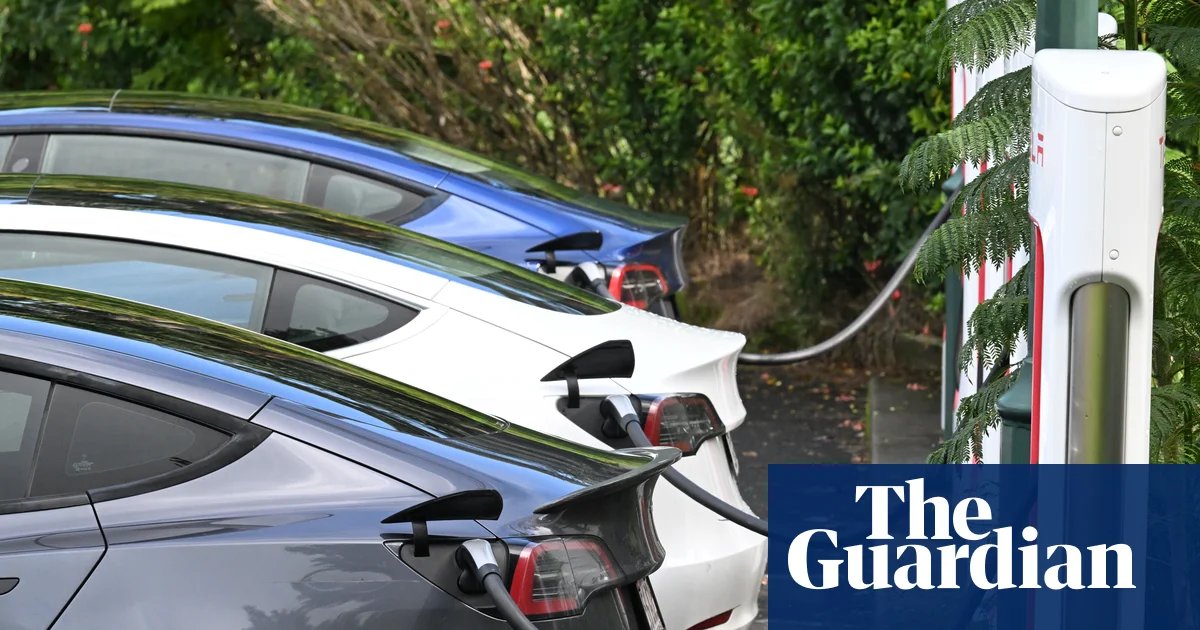
Australians are embracing electric vehicles (EVs) at an unprecedented rate, with sales more than doubling over the past year as households increasingly turn to zero-emission transport to mitigate the impact of the ongoing national fuel crisis.
A new report from the Electric Vehicle Council (EVC) reveals that 157,957 EVs were sold between January and June of this year—a staggering 117% increase compared to the same period in 2025. This surge translates to a new electric vehicle being sold in Australia every 100 seconds. While the electric market is accelerating, the transition away from traditional combustion engines is reflected in a 14% year-on-year decline in petrol and diesel vehicle sales.
EVs now account for one in four new vehicles sold across the country, a significant leap of 12.1 percentage points from the first half of 2025. The total national fleet has reached 612,000, putting the country on a clear trajectory to hit the milestone of 1 million EVs on the road by next year.
Julie Delvecchio, chief executive of the Electric Vehicle Council, noted that while the current fuel crisis—marked by surging diesel prices—has accelerated adoption, it was not the sole catalyst. “EVs are being taken up as a cost-of-living measure,” she said. “The fuel crisis exposed the value of the policy work that had already been done, making the lower running costs and energy security benefits of EVs much more immediate for Australian households.”
The uptake is being bolstered by the national vehicle efficiency standard, which mandates that carmakers supply new vehicles meeting specific per-kilometre emissions targets. According to EVC head of policy and advocacy, Aman Gaur, this policy has significantly widened consumer choice and improved price competitiveness. There are now nearly 200 EV models available to Australian buyers. Given this success, the council is urging the federal government to extend the efficiency standard beyond 2029 to ensure alignment with national 2035 emissions reduction targets.
Geographically, the Australian Capital Territory remains the nation’s EV leader, with 44% of new car registrations being electric. At the suburb level, Tarneit in Melbourne’s west has emerged as the national leader for uptake. Charging infrastructure has largely kept pace with this growth, with 4,268 public charging locations now operational across the country.
However, the report highlights a significant disparity between the adoption of passenger vehicles and the freight sector. While cars and buses are “roaring ahead,” the adoption of electric trucks and vans remains stagnant, accounting for less than 1% of their respective markets. “Every truck that is electric is an upgrade to Australia’s energy security,” Delvecchio said. “We’ve barely touched the sides on that transition.”
Furthermore, the report highlights a fractured political landscape regarding clean transport. While federal, ACT, and NSW government policies have been praised as “top of the class,” the EVC expressed deep concern over the direction taken by Queensland, South Australia, Tasmania, and the Northern Territory.
Gaur was particularly critical of the Queensland government’s recent decision to procure 630 diesel buses, characterizing it as a regressive move. “Queensland and the Northern Territory are moving back to fossil fuels rather than trying to electrify their transport systems,” Gaur said. “The diesel buses will be on Queensland roads until the end of the next decade, and they will certainly be polluting the air in Brisbane when the Olympics are held.”
Disclaimer: This content is auto-generated for informational purposes only.
Source: Read Original News