





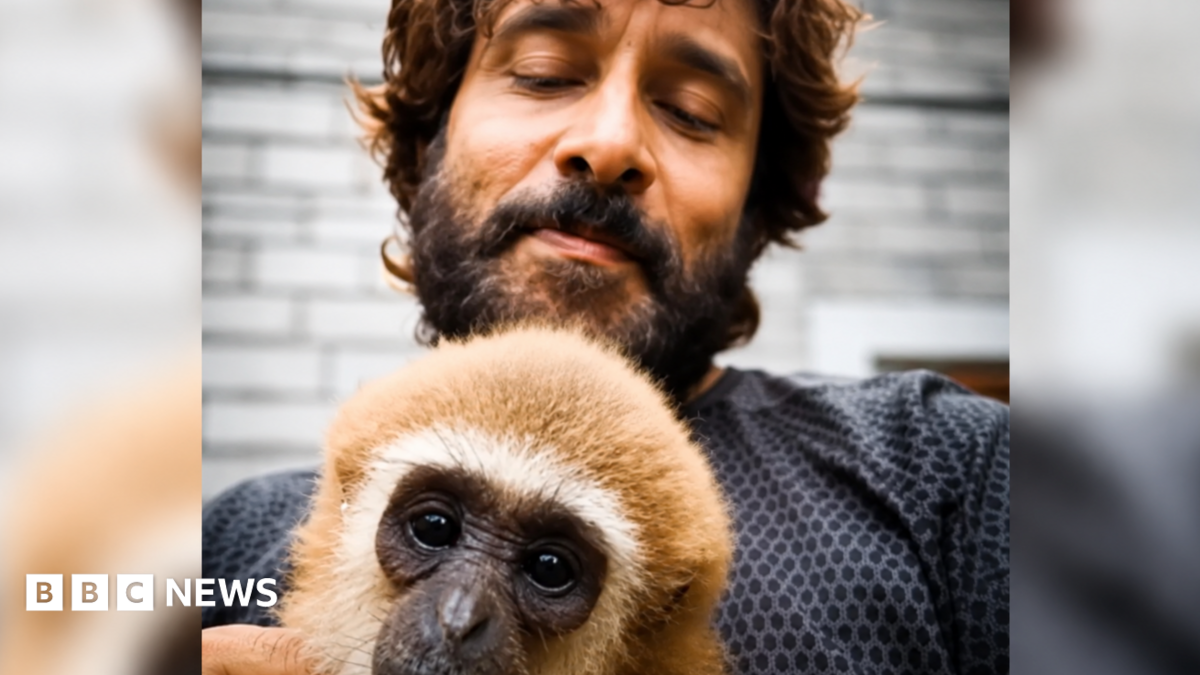
A recent investigation by the Tamil Nadu Forest Department has brought to light a questionable transfer of lar gibbons, raising serious concerns about the legality and ethics surrounding the movement of protected wildlife within India. Records indicate that on June 5th of this year, three lar gibbons – one male and two females – were moved from Manipur to an individual in Perundurai, situated in Tamil Nadu’s Erode district. The stated reason for this transfer was adoption, a claim that is now under intense scrutiny.
A key aspect of the ongoing probe is the absence of documented permission from Tamil Nadu’s Chief Wildlife Warden, which is a mandatory requirement for bringing such animals into the state. This critical missing piece of documentation has fueled suspicions regarding the legitimacy of the entire operation. Furthermore, the investigation revealed a subsequent transfer of two of these gibbons, one male and one female, from Perundurai to a relative of “Vikram” in Chennai on August 5th, merely two months after their initial arrival.
Investigators are now meticulously working to ascertain the precise origins of these gibbons, a crucial step in determining whether they were legally acquired and transported. The lack of proper documentation at various stages of their journey is a significant red flag. Wildlife activists have voiced profound concerns, questioning how these animals initially entered India. Given Manipur’s proximity to Myanmar, the north-eastern region of India has long been identified as a conduit for the illegal trade of exotic wildlife. While authorities have not definitively concluded that these specific gibbons were trafficked, the context certainly warrants a thorough examination.
The Tamil Nadu Forest Department is actively scrutinizing all available documentation, particularly focusing on compliance with rules governing the international movement and possession of CITES-listed animals. The Convention on International Trade in Endangered Species of Wild Fauna and Flora (CITES) classifies the lar gibbon as a protected species, necessitating stringent regulations for their handling and movement.
Adding another layer to this complex case, India’s Wildlife Crime Control Bureau (WCCB), a federal agency dedicated to combating organised wildlife crime, has become actively involved. Thenmozhi, the Southern Zone Deputy Director of the WCCB, informed BBC Tamil that the bureau has formally requested wildlife officials in Chennai to verify all pertinent documents and initiate appropriate action based on their findings. Thenmozhi emphasized that “The lar gibbon is classified as a protected species under this agreement. They should only be handled as protected animals,” underscoring the serious nature of any potential violations. The WCCB has stated that further action will be determined by the outcomes of the ongoing investigation.
This incident occurs amidst escalating concerns regarding the illicit trade of exotic animals into India. In recent years, customs officials have frequently intercepted passengers arriving from Southeast Asian countries with a shocking array of live reptiles, birds, and primates ingeniously concealed within their luggage. A stark example occurred in July 2025, when over 350 exotic animals trafficked from Bangkok were seized at Mumbai and Pune airports within a mere two-month period. Gibbons themselves have been among these confiscations; in November, customs officials in Bengaluru discovered a gibbon alongside other exotic animals being smuggled by passengers arriving from Bangkok. Chennai, in particular, has witnessed several such cases, including the seizure of 31 exotic animals, comprising tortoises, iguanas, and snakes, from a passenger arriving from Bangkok in February of this year. These recurring incidents highlight a persistent and alarming challenge in curbing the illegal wildlife trade.