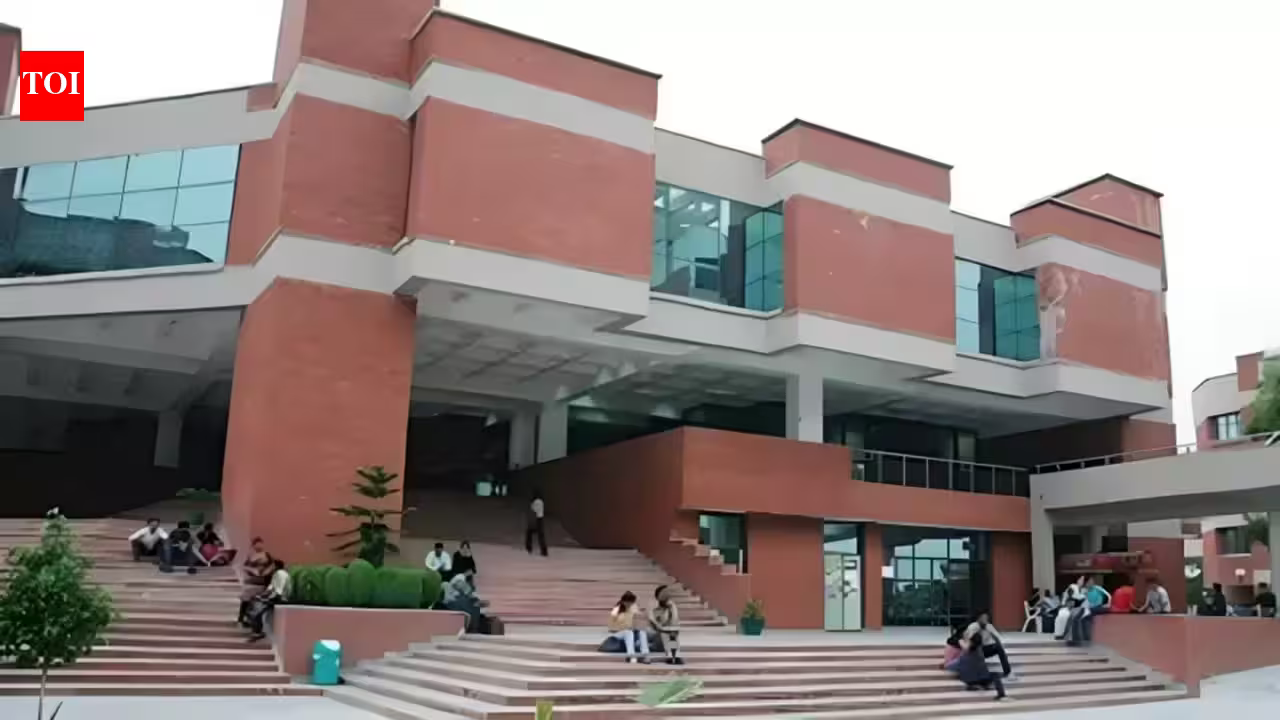








For decades, the global scientific community has grappled with a monumental challenge: transforming carbon dioxide (CO₂), a primary driver of climate change, from a detrimental atmospheric pollutant into a valuable resource. A groundbreaking five-year endeavor at the Hyderabad campus of BITS Pilani, involving a diverse team of professors, undergraduate, postgraduate, and PhD students, has yielded a potential answer that could have far-reaching implications beyond the confines of academic research.
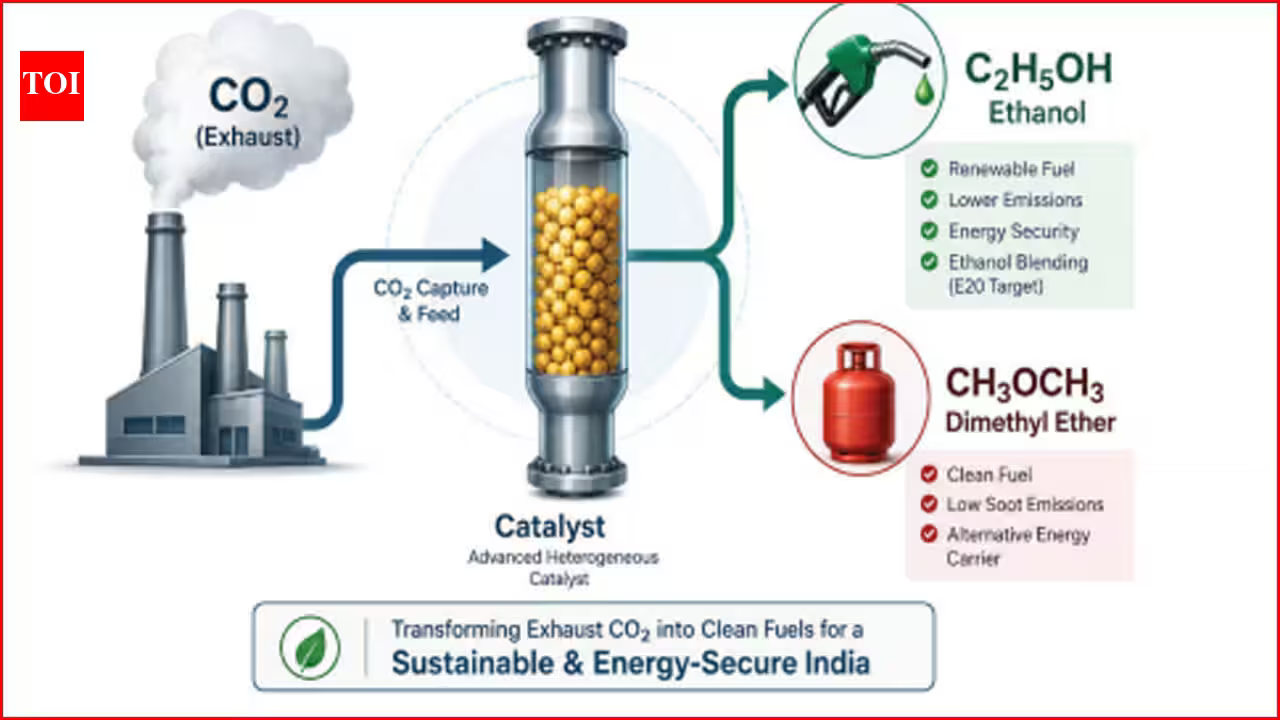
This dedicated team has successfully engineered a unique catalyst capable of directly converting captured CO₂ emissions—originating from industrial sources like power plants, steel factories, and cement industries—into dimethyl ether (DME). DME is a clean-burning fuel that holds immense promise as a supplement for liquefied petroleum gas (LPG), offering a sustainable alternative to traditional fossil fuels. The innovative technology has already demonstrated its efficacy through rigorous laboratory validation and is now poised for an exciting transition to pilot-scale development. What makes this story particularly compelling is its powerful illustration of how academic collaboration, especially involving students, can lead to technological breakthroughs addressing critical real-world problems.
The genesis of this impactful project lies in the collaborative efforts of three distinguished professors: Prof. Sounak Roy, Dean of Research and Innovation, Prof. B. M. Reddy, and Prof. Satyapaul A. Singh, all based at BITS Pilani’s Hyderabad campus. Over the five-year research period, a cohort of more than ten undergraduate, postgraduate, and doctoral students played an instrumental role in every stage of the project. Their contributions ranged from meticulously refining the catalyst and testing various reaction conditions to adeptly overcoming numerous engineering obstacles. The project received substantial financial backing, approximately ₹45 lakh, from the Anusandhan National Research Foundation (ANRF). The research itself was meticulously carried out within the institution’s Materials Centre for Sustainable Energy and Environment, a cutting-edge facility established with an investment of roughly ₹5 crore.
This research carries significant implications for every Indian household. India’s substantial reliance on imported LPG for domestic consumption creates a dual vulnerability, impacting both the nation’s economy and its energy security. Researchers estimate India’s annual LPG import bill to be a staggering ₹1.06 lakh crore. The BITS team’s technology presents a transformative opportunity to mitigate this dependence by transforming industrial waste into a usable fuel source. Crucially, the existing policy framework in India already permits the blending of DME with LPG, paving a clear path for the future adoption and integration of this innovative fuel.
The scientific principle underpinning this breakthrough, while sophisticated in its execution, is surprisingly elegant in its conceptual simplicity. Conventional DME production typically involves a two-step process: first, CO₂ is converted into methanol, and then methanol is subsequently converted into DME. The BITS team has ingeniously streamlined this into a single-step reaction. Their specially designed catalyst possesses a dual functionality: one component facilitates the conversion of carbon dioxide into methanol, while another simultaneously transforms the methanol into dimethyl ether. Consolidating the entire process into a single reactor configuration dramatically reduces engineering complexity, significantly lowers energy consumption, and ultimately enhances the economic viability of large-scale deployment.
A distinctive aspect of this project is the deep involvement of students, who were not merely assistants but integral architects of the technology. This is far from a theoretical exercise confined to academic journals; students actively participated in catalyst development, exhaustive laboratory testing, rigorous process optimization, and intricate reactor design. They were tasked with simulating authentic industrial conditions within the laboratory environment, meticulously adjusting parameters such as temperature, pressure, gas flow rates, and feed composition. The use of hydrogen at extremely high pressures necessitated the design and implementation of extensive safety protocols, adding another layer of complexity to their work. The project also navigated the unprecedented challenges posed by the Covid-19 pandemic, including supply chain disruptions and semiconductor shortages, which delayed equipment fabrication. Despite these hurdles, the research team demonstrated remarkable resilience, adapting their strategies while continuously advancing the technology.
The impact of this technology has already extended beyond the academic sphere. The research team garnered an invitation to present their work at Bharat Innovates 2026 in Nice, France, where the technology was showcased to a diverse audience of Indian and French investors. Furthermore, several private companies have expressed keen interest in forging collaborations with BITS Pilani to advance pilot-scale projects, signaling a strong potential for commercialization.
This project offers a powerful counter-narrative to the long-standing criticism that Indian universities often prioritize theoretical research papers over tangible technological innovations. Here, a dedicated team of professors and students meticulously identified two pressing national challenges—industrial carbon emissions and the reliance on imported LPG—and ingeniously devised a single, elegant solution to address both. While the laboratory work is complete and regulatory frameworks for DME-LPG blending are already in place, the next crucial hurdle lies in scaling this technology for widespread commercial application. Irrespective of whether this specific catalyst ultimately reshapes India’s energy landscape, it has already achieved something profoundly significant: it underscores that meaningful innovation doesn’t exclusively emanate from colossal, multi-billion-dollar research facilities. Often, it begins within the dynamic and inspiring environment of a university education.