









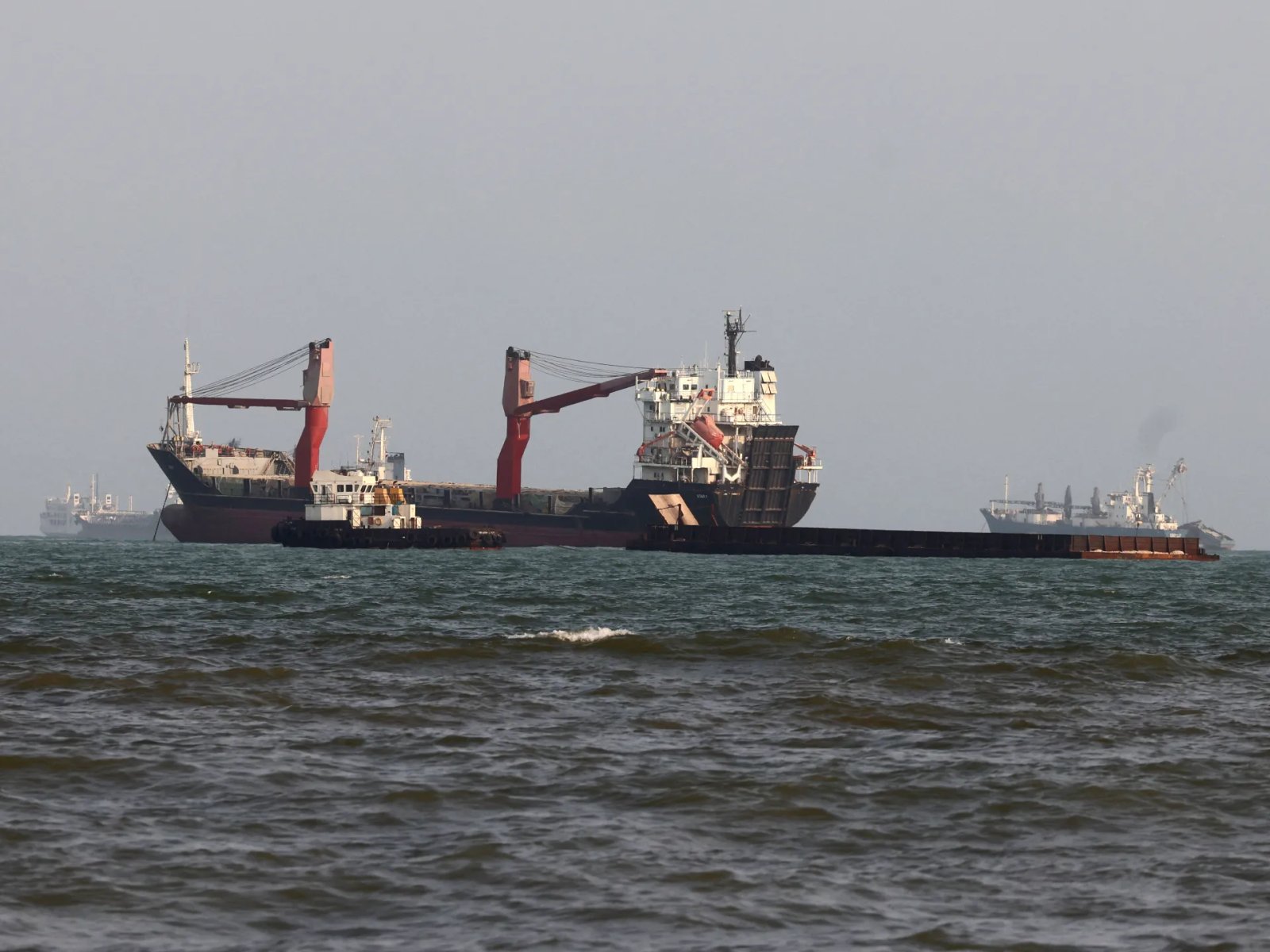
The ongoing diplomatic efforts to de-escalate tensions between the United States and Iran have reached a precarious stalemate, primarily centered on the contentious issue of control over the Strait of Hormuz. Despite persistent claims from the US that it maintains “total control” over the vital waterway, Iran vehemently denies these assertions, maintaining that the strait remains closed and will not be reopened until its specific demands regarding US aggression, reparations, and sanctions are fully addressed.
On Wednesday, US President Donald Trump reiterated his declaration of American dominance over the Strait of Hormuz, a statement that was immediately met with forceful condemnation from Tehran. The Persian Gulf Strait Authority (PGSA), Iran’s governing body for the strategic maritime passage, issued a clear statement on X, emphasizing, “Claims and repeated posts by US officials that the Strait of Hormuz is no longer blocked do not change the reality.” The PGSA further asserted that the strait “remains blocked and will not be reopened until Iran’s conditions are accepted,” highlighting the firm stance Iran is taking in these protracted negotiations. This critical waterway, through which a substantial one-fifth of the world’s oil and liquefied natural gas supplies typically transit during periods of peace, has become a focal point of the broader dispute between the two nations.
Currently, Iranian forces are actively restricting the passage of vessels through the narrow strait, which traverses both Iranian and Omani territorial waters, unless they possess explicit approval from Iran. This blockade has demonstrably impacted global shipping, with traffic through the key waterway plummeting to a one-week low, directly contradicting President Trump’s assertions of US control. Concurrently, the United States has imposed its own naval blockade on Iranian ports situated within and around the strait. A recent incident on Tuesday saw US forces intercept a Panama-flagged vessel in the Gulf of Oman, alleging it was bound for an Iranian port and had failed to respond to warnings.
Iranian officials have sharply criticized the US actions. Iran’s Foreign Minister Abbas Araghchi, in a post on X on Thursday, attributed Washington’s strategies to “intelligence failures,” drawing a parallel to the US’s decision to launch a war on Iran, alongside Israel, with strikes on Tehran on February 28. Araghchi labeled US conduct in the Strait of Hormuz as “an even bigger miscalculation,” stressing that “Worse than fake news is fake intelligence.” Further underscoring Iran’s position, Hojjatoleslam Hossein Taeb, commander of the paramilitary Basij Organisation, an affiliate of Iran’s Islamic Revolutionary Guard Corps (IRGC), emphatically stated that the strait remains “under Iran’s control and management,” adding that “The Americans saw the power of the Islamic revolution.”
While direct US-Iran negotiations regarding the strait remain stalled, Iran has indicated that it is engaged in discussions with Oman, proposing a joint future management of the waterway. A previous memorandum of understanding (MoU) signed between Iran and the US on June 17, which aimed to ensure the strait remained open for 60 days, quickly unraveled due to disagreements over control and shipping routes. Iran’s subsequent actions, including firing on vessels it claimed did not adhere to designated routes, reignited hostilities. A key point of contention also revolves around Iran’s right to levy fees on ships transiting the strait, a practice it seeks to implement. Consequently, the Strait of Hormuz, once freely accessible to all maritime traffic before the US-led conflict, has emerged as the primary impediment to broader peace talks.
Discussions between Iran and Oman are now focused on resolving these intricate issues. Qatar, acting as a mediator, reported on Tuesday that these negotiations have reached “an advanced stage,” with Qatari Foreign Ministry spokesman Majed al-Ansari underscoring the desire for the strait to be reopened without delay. The objective of these talks is to forge a compromise that allows for the resumption of commercial shipping while adequately addressing the security concerns of both Iran and Oman. The Iranian Foreign Ministry spokesman confirmed that the talks are centered on establishing “safe inbound and outbound shipping lanes” that respect sovereign rights and national security considerations for both nations. Last week, Iran announced an agreement with Oman on the specific coordinates for these crucial shipping lanes.
Broader peace talks between Iran and the US have encountered significant hurdles. Iran has refused direct engagement with the US, citing what it perceives as a violation of the June 17 MoU when the US resumed strikes on Iran in July. In response, Pakistan has stepped in as a mediator, actively working to bring both sides to the negotiating table. Pakistani Interior Minister Mohsin Naqvi recently held discussions with senior Iranian officials in Tehran. Earlier attempts at direct negotiations in April, attended by US Vice President JD Vance and Iranian Parliament Speaker Mohammad Bagher Ghalibaf in Islamabad, and the subsequent remote signing of the MoU on June 17, failed to initiate a sustained 60-day negotiation process due to persistent disagreements.
According to Alan Eyre, a distinguished diplomatic fellow at the Middle East Institute, the Iran-Oman talks concerning the Strait of Hormuz are currently the most significant ongoing negotiations. Eyre suggests Iran’s reluctance to engage directly with the US stems from a perception that it “can’t count on anything the US says.” Negar Mortazavi, a senior fellow at the Center for International Policy, highlights the critical question of whether the escalating rhetoric from both sides represents “opening negotiating positions or actual red lines.” Mortazavi believes that if both parties are willing to compromise, a path exists to end the conflict and reopen the strait, but warns that a lack of flexibility could lead to prolonged restrictions and another enduring conflict in the Middle East.
Iran has recently outlined six new conditions for the full reopening of the Strait of Hormuz. These demands include an end to US threats and insults against Iran’s national and religious values, a permanent cessation of attacks against Iran and its allies in Lebanon, Palestine, Yemen, and Iraq, the lifting of the US naval blockade, the withdrawal of US naval and air forces from the region, compensation for damages from what Iran terms two “imposed wars,” the lifting of all sanctions, and the unconditional release of frozen Iranian assets.
In a retaliatory move, President Trump stated on Monday that his administration would seek payment for “50 years” of damage caused by Iran, framing this as a direct counter to Tehran’s demands. He claimed these payments would cover US military casualties in the region and civilian protesters in Iran, alleging 52,000 deaths in Iran over the past four months. Iran, however, reported approximately 3,117 deaths in anti-government protests in January, prior to the US-Israel war, while the US-based Human Rights Activists News Agency (HRANA) reported around 7,000 deaths, including 6,500 protesters, in February.
Observers suggest Iran’s primary focus is on two key areas: security assurances that would guarantee a period of stability for the country, and economic concerns, particularly the removal of the US naval blockade and the unfreezing of sanctions. Despite President Trump’s hardline rhetoric, analysts indicate that the US may find itself compelled to concede to some of Iran’s demands, driven by mounting domestic pressure to avert further escalation. Reports in the US media have also highlighted concerns over dwindling defensive munitions, which may have influenced Trump’s decision to refrain from launching large-scale strikes against Iran, a factor that could influence the ongoing negotiations.