






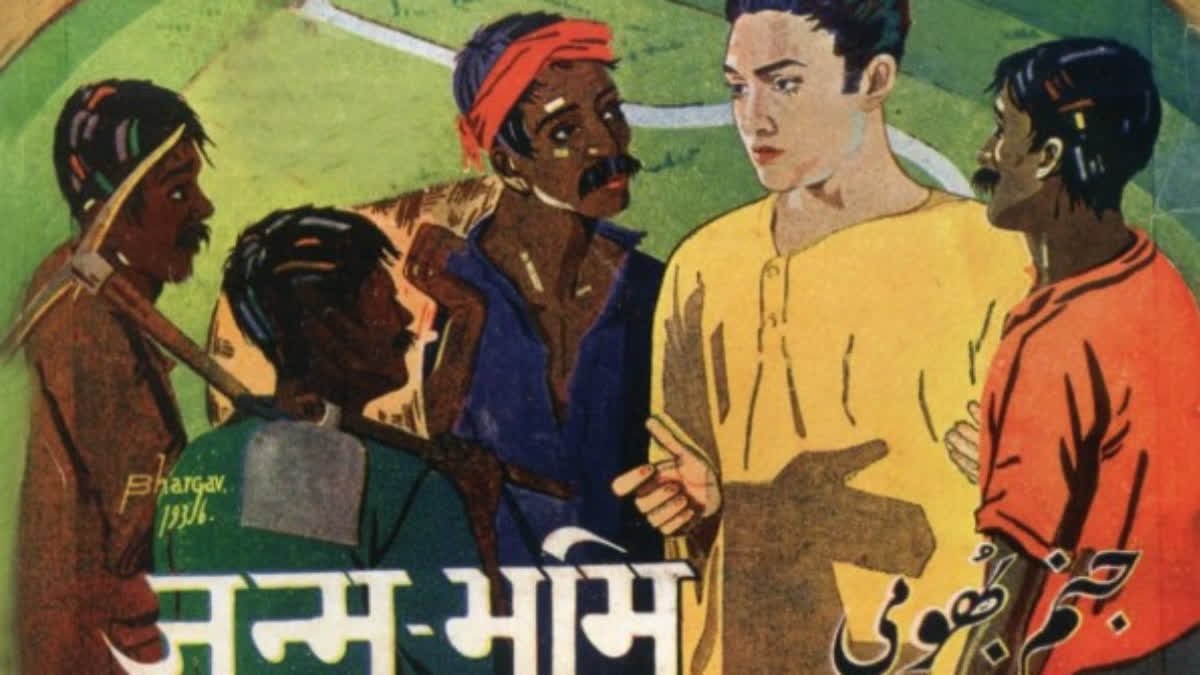
As India celebrates its 80th Independence Day, the tradition of patriotic cinema has become deeply ingrained in the cultural fabric, with films commemorating freedom fighters, soldiers, and national heroes. However, the genesis of this cinematic tradition predates India’s independence by more than a decade. In 1936, a groundbreaking film titled Janmabhoomi emerged, establishing itself as Hindi cinema’s inaugural patriotic film. Directed by the German filmmaker Franz Osten, this pivotal movie starred the iconic duo Ashok Kumar and Devika Rani, weaving a narrative that explored the profound concept of national service through the microcosm of a village.
“Janmabhoomi” premiered during a tumultuous period when India’s freedom movement was rapidly gaining momentum under British colonial rule. Against this backdrop of growing calls for self-rule and social reform, the film masterfully utilized the rural setting to connect the everyday struggles of ordinary Indians with the larger ideals of national service and unity. Ashok Kumar portrayed Dr. Ajoy Kumar Ghosh, a character whose transformation defines the film’s core message. Devika Rani, as Protima Devi, brought a compelling emotional depth to the narrative. Both actors were luminaries of Bombay Talkies, and their presence ensured significant attention for the film. The musical score, crafted by Saraswati Devi, a key figure in early Bombay Talkies music, further amplified the film’s impact.
At the heart of “Janmabhoomi” is Dr. Ajoy, a physician whose life undergoes a profound shift following the tragic death of a friend. This incident impels him to forsake a comfortable urban life and dedicate himself to the welfare of his ancestral village. This decision, however, carries a personal cost, as Ajoy distances himself from Protima, the woman he loves. Yet, Protima’s unwavering devotion leads her to follow him to the village, where she witnesses his fervent efforts to improve the lives of the villagers. Ajoy’s mission extends beyond medical care; he actively challenges entrenched blind faith, advocates for greater communal unity, and strives to dismantle rigid caste barriers. Such progressive actions inevitably position him as a threat to the existing power structures within the village.
The opposition to Ajoy’s reforms comes primarily from the village zamindar, his assistant Sanatan, the local priest, and the moneylender, who collectively represent the old, rigid order. The conflict escalates dramatically when Sanatan orchestrates the zamindar’s murder by poisoning him with arsenic. The circumstances are cunningly manipulated to cast suspicion upon Ajoy, leading to his arrest. However, the truth ultimately prevails. Ajoy’s medical expertise, combined with an investigation revealing Sanatan’s purchase of the poison from a chemist, exposes the true culprit. Sanatan’s subsequent confession exonerates Ajoy, allowing him to resume his crucial mission of social reform.
A significant reason for “Janmabhoomi”‘s enduring legacy in Hindi cinema history is its iconic music. The film featured “Jai Jai Janani Janmabhoomi,” a nationalist song penned by Jamuna Swarup Cassyap, which is widely recognized as the first explicitly patriotic song in Hindi cinema. This song resonated deeply with audiences during the freedom struggle, becoming an anthem for national pride. The very title of the film, “Janmabhoomi,” meaning “the land of one’s birth,” evoked powerful emotional and nationalistic sentiments. Rather than relying on overt political speeches, the film ingeniously wove patriotism into the fabric of everyday life, presenting acts of service to the village, struggles against social divisions, and efforts to foster unity as tangible expressions of devotion to the larger nation.
“Janmabhoomi” also holds a special place due to its celebrated lead actors. Devika Rani, revered as the First Lady of Indian cinema, was a towering figure of her era, later becoming the inaugural recipient of the Dadasaheb Phalke Award and also being honored with the Padma Shri. Ashok Kumar, though still early in his illustrious career, delivered a compelling performance as Ajoy, anchoring a narrative that seamlessly blended romance, social reform, and nationalism.
In contemporary times, patriotic Hindi films frequently coincide with Independence Day celebrations, often narrating tales of military valor, historical events, and national heroes. “Janmabhoomi,” however, emerged from a distinctly different epoch. Released before India achieved independence, its patriotism was articulated through the profound idea of societal betterment and unwavering service to one’s community. This characteristic makes the 1936 film an indispensable cornerstone of Hindi cinema’s rich history. Nearly nine decades after its release, “Janmabhoomi” stands as a poignant reminder that the intrinsic connection between Indian cinema and the spirit of patriotism was forged long before August 15, 1947.