







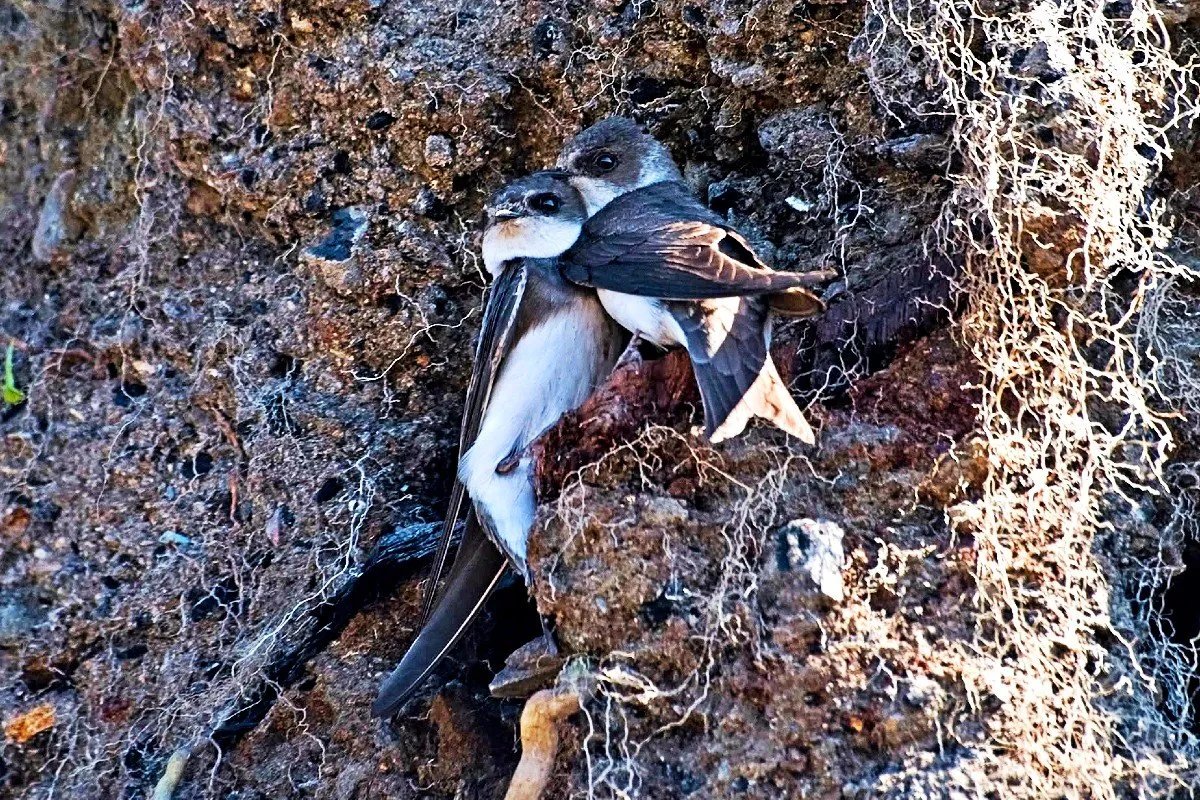
These delicate Sand Martins, weighing a mere 13–14 grams, are easily distinguished by their understated grey-brown backs, pristine white undersides, and subtly forked tails. Each spring, these resilient birds undertake an arduous migration from sub-Saharan Africa, gracing the UK skies between March and October. However, the once common sight of these aerial acrobats has become increasingly infrequent, raising considerable concern among conservationists.
A stark warning about the declining Sand Martin population emerged in 2020 with the publication of the Hertfordshire’s State of Nature report, which consequently designated the species a ‘Hertfordshire Species of Conservation Concern’. This alarming trend was further corroborated in 2024 by the Hertfordshire Bird Report, revealing a precipitous 50% decrease in the species’ presence within the county since 1970. With only two known breeding colonies remaining in Hertfordshire – one nestled within the Stanborough Gravel pits near Welwyn Garden City, and another within a quarry close to the village of Cold Christmas in East Hertfordshire – the urgency for intervention became undeniably clear. In response, the Herts and Middlesex Wildlife Trust has spearheaded critical conservation efforts.
Typically, Sand Martins meticulously excavate burrows into sandy, steep cliffs adjacent to water bodies to construct their nests. At Amwell Nature Reserve, a mere 8.8 kilometers from Ware, an innovative solution has been implemented. Purpose-built nesting banks, meticulously designed with individual chambers to mimic the birds’ natural habitat, have been strategically erected by the reserve’s lake. The Herts and Middlesex Wildlife Trust confirmed that Amwell was specifically chosen for this ambitious project due to the pre-existing presence of Sand Martins, which already frequent the site’s lake for insect hunting. The initiative thus aims to capitalize on and bolster an established population.
Amy Barker, representing 100 Green, a UK-based renewable energy provider that contributed to the funding of the Amwell Nature Reserve project, articulated the profound environmental impact of these new nesting sites. She highlighted a common oversight: the intricate connections between renewable energy development and wildlife conservation. In recognition of this, 100 Green diligently ensures that its wind turbine installations are strategically located away from critical migratory bird routes and vital biodiversity hotspots.
This crucial Sand Martin conservation project arrives at a pivotal moment for global environmental protection. A recent report from the RSPB underscores the pervasive impact of climate change on UK bird populations, manifesting in altered species distribution, the loss of seasonal food sources, and intensified pressures on protected areas. The escalating frequency of heatwaves and prolonged droughts, for instance, has led to soil hardening, making it increasingly challenging for birds and other wildlife to access essential nutritious worms and soil-dwelling creatures.
Other prominent renewable energy companies, such as Ørsted, a leading offshore developer, also integrate migratory routes into their infrastructure planning. Samir Whitaker, Biodiversity Lead Specialist at Ørsted, emphasized that all developers, including Ørsted, are mandated to conduct comprehensive pre-consent environmental impact assessments that explicitly consider migratory birds. The findings of these assessments then directly inform the implementation of measures designed to avoid, minimize, and mitigate risks to ecologically significant species and habitats, including the precise positioning and layout of wind farms. Whitaker further clarified that passerine birds, a classification that includes the Sand Martin, are explicitly considered within these critical evaluations.
The Amwell Nature Reserve project is designed to ensure the long-term replenishment and sustainability of the Sand Martin population. The sand within the nesting banks will be refreshed annually, an act intended to continuously attract new flocks of birds to nest year after year. Kathryn Dunnet, Reserves Officer at Herts and Middlesex Wildlife Trust, articulated the profound significance of these new nests, describing them as “another step in the Trust’s ongoing work to restore habitats and reverse wildlife decline locally, ensuring that species such as the sand martin have a better chance of thriving in the future.”
Beyond their immediate conservation benefits, these newly established dwellings for the Sand Martins also hold significant potential for future educational initiatives. Debbie Bigg, Communications and PR officer at the Herts and Middlesex Wildlife Trust, conveyed that the Ware Swift Group, a key supporter and funder of the project, maintains strong ties with local schools. This connection suggests a high probability that students will be educated about the vital importance of migratory species, using the compelling case study of the Sand Martins’ recently unveiled nests at the Amwell Nature Reserve.
These energetic and graceful birds, with their distinctive flight patterns as they skim over lakes and wetlands in pursuit of insects, are a truly beautiful spectacle. There is widespread optimism that the Sand Martins will successfully establish a flourishing colony within these new nesting banks. Should this prove to be the case, it will not only profoundly benefit the species itself but also provide a captivating wildlife spectacle for visitors, offering a unique opportunity to observe these remarkable birds nesting and raising their young in their newly enhanced habitat.